

C-Notch & Step Notch: When Your Drop Needs Frame Clearance
How low can you drop a truck before the rear axle starts to hit the frame? Most trucks find that limit near a three-inch drop, and past it the fix is a C-notch, a reinforced frame cutout sold as one complete kit that restores upward travel.
TrueSuspension stocks the plates, brackets and hardware for both notch styles at its Scottsdale, Arizona store, and the team helps builders pick the right parts for Ford, GM and classic trucks every day. Start with the C10 frame notch kit for 6 to 7 inch drops if your build is a 1973 to 1991 C10, since that kit anchors this whole guide.
Every lowering enthusiast on the forum eventually asks how much frame clearance a drop really needs, and plenty of builders need to C-notch sooner than they expect. This guide compares both notch styles, walks through Ford and GM fitments, and shows how to keep the ride smooth after the cut for the 2027 build season ahead.
Quick Summary
- A C notch restores travel for drops in the 3 to 4 inch range, while a step notch suits drops past five inches.
- A flip kit almost always pairs with a notch, since the axle needs room the factory rail never had.
- One complete notch kit with reinforcement plates keeps the frame strong, often stronger than stock.
- Weld-in and bolt-in kits both work, and the right pick comes down to your tools and your target height.
- Shock length and stop tuning after the notch decide whether the lower truck stays smooth or slams on rough roads.
C-notch vs step notch, which kit fits your truck and your drop
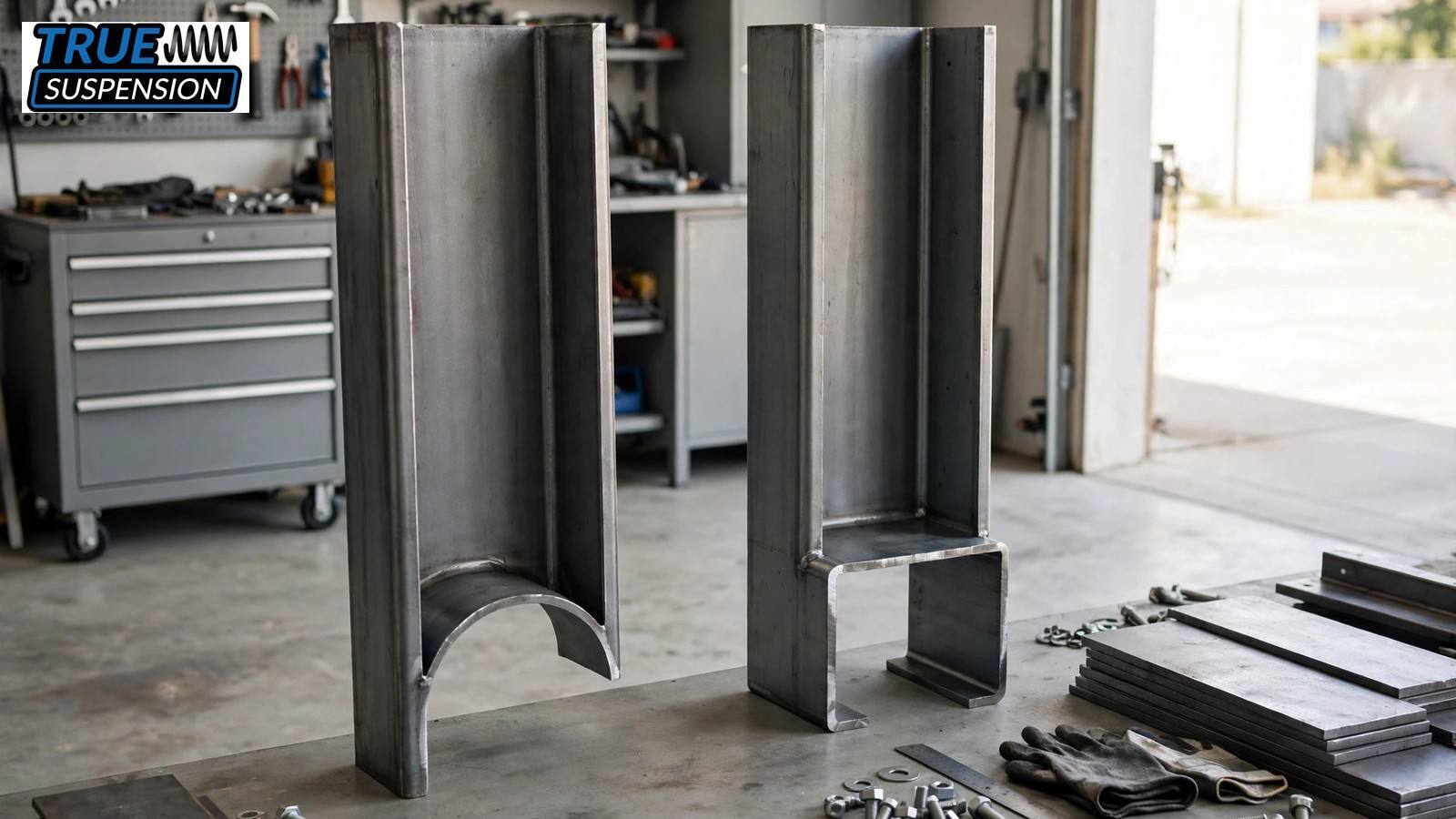
A C-notch adds two to three inches of axle travel for moderate drops, and a step notch adds four to six inches for extreme drops. The C-notch is a C-shaped cutout in the rail above the axle, and a reinforcing plate will box the opening so the frame stays strong. The vs call follows how low you want to sit, and it shapes the whole suspension plan.
Source, Wikipedia
|
Feature |
C-Notch |
Step Notch |
|
Cut shape |
Smooth C curve |
Squared step |
|
Added clearance |
Two to three inches |
Four to six inches |
|
Best drop range |
3 to 5 inches |
5 inches and more |
|
Install difficulty |
Moderate |
Advanced |
How much clearance does a c-notch add for a moderate drop?
Most C-notch designs add two to three inches of upward axle travel, which suits a moderate drop well for a daily-driven truck. With a 3-inch drop, the axle gains room and cannot hit the frame over rough roads, and the bolt-on C10 frame notch kit for a slammed stance shows the plate layout that keeps the ride smooth and safe.
Source, Wikipedia
How does a step notch raise the frame rail for extreme drops?
A step notch goes further, since the frame gets cut in a squared step pattern that raises the rail, and tall boxing plates rebuild the rail at the new height. Step notch kits suit extreme drops where the axle hits the frame without four or more inches of clearance, and the box section keeps the rail stiff.
Source, Wikipedia
How do you choose by how low you want your truck to sit?
Choose by how low you want to go, and match the notch to that target before ordering parts. For a daily-driven truck with a 3- to 4-inch rear drop, the classic C-notch kit is the proven answer, and thousands of Silverado, GMC, and F-150 builds run one. The 10 mistakes people make when lowering their truck guide warns against guessing this call.
Source, Wikipedia
Quick Summary
- The c-notch vs step notch call comes down to drop depth for a lower truck, with a c-notch for 3 to 5 inch Silverado drops and a step notch past five inches.
- A box section keeps either cut strong, so the frame holds its strength after the notch opens the rail.
- An enthusiast on the forum pairs the notch with the right suspension parts for Ford and GM trucks and measures twice before cutting.
Source, Wikipedia
Ford F-150 frame clearance, when a drop needs a notch
Ford trucks dominate the lowering scene, and the F-150 is the most common platform to need a notch on the road. On a stock F-150, the frame rail sits close above the rear axle, so even a mild drop brings the two together over big bumps. The classic symptom starts when the axle hits the frame hard.
Source, Wikipedia
Why does the axle hit the frame on a lowered F-150?
That impact is pure geometry, and no shock can fix it, because the problem is clearance, not damping. GMC owners report the same bang over driveway aprons and speed bumps. The front 3-inch drop I-beams for 65 to 79 F100 and F150 show how Ford builders pair front and rear drops on classic trucks.
Source, Wikipedia
At what drop height does a Ford truck need to c-notch
The fix depends on your target height, and a two-inch shackle drop usually clears fine on its own. Anything past a 3-inch drop on a Ford likely means you need to C-notch, so a C-notch kit belongs on the parts list. A hanger and shackle pairing covers the mild end before framework starts.
Source, Wikipedia
How do you measure axle clearance at full bump before ordering?
Measure your current axle clearance at full bump, then compare that number against how low you want the rear to sit before ordering anything. If the numbers overlap, plan the notch before the first cut, and cycle the suspension by hand on stands. The stock suspension vs drop kit, what lowering does to your truck guide explains how travel shrinks as ride height falls.
Source, Wikipedia
Quick Summary
- Ford rails sit close to the axle, and Silverado rails follow the same close pattern, so drops past a shackle setup can hit the frame on a lower truck without a notch.
- Measuring at full bump tells GMC and Ford builders the truth before a hanger order or a notch order goes in for the build.
- Once the axle hits the frame, an enthusiast tip from the forum is to check the hanger and measure again before driving further.
Source, Wikipedia
1999-2006 Silverado 1500 2WD, axle clearance and ride after the notch
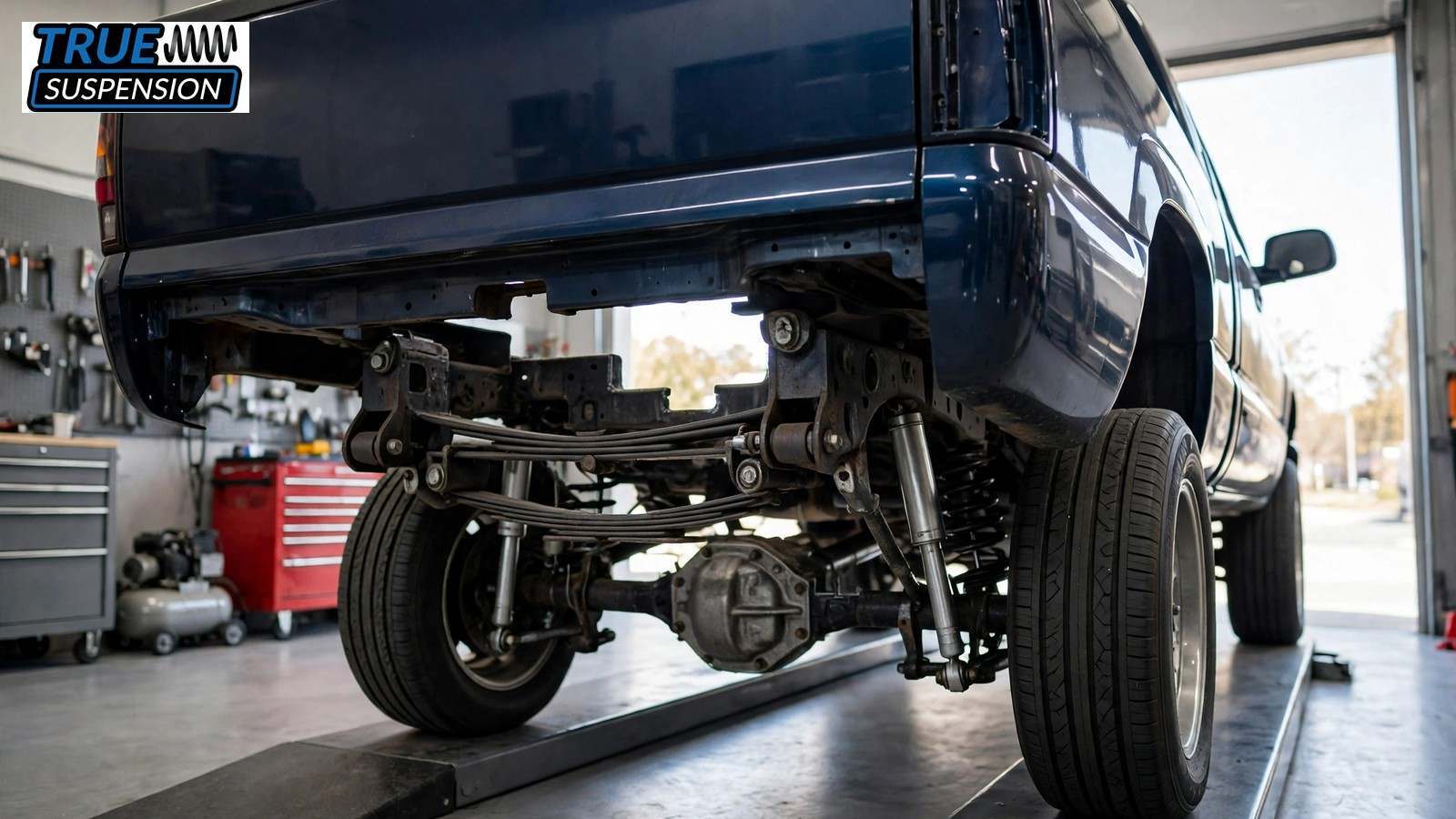
The 1999-2006 Silverado and Sierra are the sweet spot for affordable lowering, and their frames respond well to a notch for this gen. On a 1500 2wd, the rear axle sits under a flat rail, so a standard CC-notch adds all the clearance most street builds need for a composed ride, calm suspension travel, and a stronger chassis feel. Builders prize this gen for value and parts choice.
Source, Wikipedia
How do you find the contact point by cycling the suspension on stands?
Start by cycling the suspension with the truck on jack stands and the wheels off, then push the axle up until it touches the rail. Mark that contact point carefully, because it shows exactly where the notch goes. The rail shape stays shared across 1999-2006 Silverado and Sierra, so one template serves both nameplates, and the 10 questions to ask before buying a lift kit cover planning checks.
Source, Wikipedia
Why does axle diameter change where the notch gets placed?
Axle diameter matters here because a larger diameter tube reaches the frame sooner, so trucks with upgraded rear ends need the notch placed with extra care. Measure the tube before marking the cut, compare that diameter against the template, and leave room for full travel. TrueSuspension in Scottsdale helps builders match that placement to the drop planned.
Source, Wikipedia
How does boxing the cut improve chassis rigidity?
Once cut, the opening gets fully boxed with plate steel, leaving the frame stronger than stock in that section. A boxed notch improves chassis rigidity because the box section resists twisting better than the open C-channel. For a 1500 2wd running a 3 3-inchhackle and hanger drop, this modification transforms the ride, and a C-notch kit helps, alongside Sierra 1500 rear lowering parts.
Source, Wikipedia
Quick Summary
- Cycle the suspension first and mark the contact point before any cut.
- Record axle clearance and diameter before you cut, then box the cut fully for this gen.
- A 1999-2006 Silverado 1500 2wd street build gains clearance and rigidity from this modification in one job.
Source, Wikipedia
Flip kit vs shackle drop, how low before your truck needs frame work
A flip is the deep route, since a flip kit drops the truck so far that a C-notch kit becomes mandatory rather than optional, while an axle flip relocates the axle from below the leaf springs to above them. That move drops the truck five to seven inches in one step. Decide the rear height first, because that answer drives the bolt work and travel planning.
Source, Wikipedia
|
Method |
Rear drop |
Needs a notch |
|
Shackles and hangers |
2 to 3 inches |
Rarely |
|
Flip kit |
5 to 7 inches |
Usually |
|
Flip kit plus notch |
6 to 9 inches |
Yes |
What drop do shackles and hangers give with simple bolt work?
Shackles and hangers give two to three inches of rear drop with simple bolt work, and most trucks clear the frame fine at this height. The hanger sets the front eye of the spring, the shackle swings at the rear, and together they set the drop. TrueSuspension stocks the rear 2-inch lowering shackles for 87 to 96 F150 2WD with fitment help from Scottsdale.
Source, Wikipedia
Why does an axle flip spend the travel the stock frame budgeted?
Compare a shackle drop with a flip, and the difference is travel, since the flip spends travel the stock frame never budgeted. An axle flip moves the axle above the springs, so upward movement starts closer to the rail,l and big bumps use the remaining clearance fast. Read lift kits vs leveling kits, what truck owners must know before choosing this route.
Source, Wikipedia
When does a build require a C-notch ordered with the flip kit?
If you require a C-notch for your build, order the C-notch kit at the same time as the flip kit so the brackets and U-bolts arrive together. Builds that require a C-notch also need that timing, because a second teardown wastes a weekend. The Scottsdale team at TrueSuspension helps match the notch, flip kit, and hardware to your truck, drop,p and tools before ordering.
Source, Wikipedia
Quick Summary
- Shackle and hanger drops rarely need framework and use simple bolt work alone.
- Order the notch with the axle flip, and save a second teardown later.
- Builds that require a C-notch gain travel and keep the ride composed after the modification.
Source, Wikipedia
Axle flip pairing, bump control for maximum rear drop
An axle flip gives the axle a huge amount of upward travel, so the frame needs a notch sized to match that new stroke. Pairing the flip with a c notch kit keeps the suspension cycling smoothly through its full stroke, while a bump stop setup prevents the axle from ever touching steel during hard hits on rough roads.
Source, Wikipedia
How does the bump stop prevent the axle from touching steel?
Set the bump stop so the axle kisses the stop just before the notch reaches its limit, a timing choice that prevents the axle from slamming into bare steel. Without that cushion, the first big bump sends the tube straight into the rail, and the stop becomes a hammer. Reading the top 10 trucks that benefit most from a lift kit shows how travel planning protects every build.
Source, Wikipedia
How do air shocks and helper bags fine-tune ride height?
Many builders add air shocks or helper bags to fine-tune the ride height once the flip and notch are paired, and owners who tow lean on that adjustability to level a loaded bed. A complete C-notch kit with tall boxing plates handles the deepest combos with room to spare, keeping the full stroke smooth after everything settles at final height. That pairing gives the axle room on loaded miles.
Source, Wikipedia
Why does the flip pairing protect the leaf in the rear spring pack?
The same pairing protects the leaf in the rear spring pack, since the springs keep their stock position while the axle moves above them during the flip. Travel that used to end in a bang now ends on rubber, without harsh topping out. Before you order, check the fitment on the bolt-on C10 frame notch kit page and confirm the notch depth matches your drop.
Source, Wikipedia
Quick Summary
- Pair every flip with a notch, and set the bump stop so it prevents the axle from touching steel.
- Air shocks fine-tune ride height, and the pairing protects the leaf in the rear pack.
- Travel ends on rubber, and the pairing gives the axle a smooth, controlled landing.
Source, Wikipedia
Weld-in vs bolt-in notch kits, install steps, tools and strength
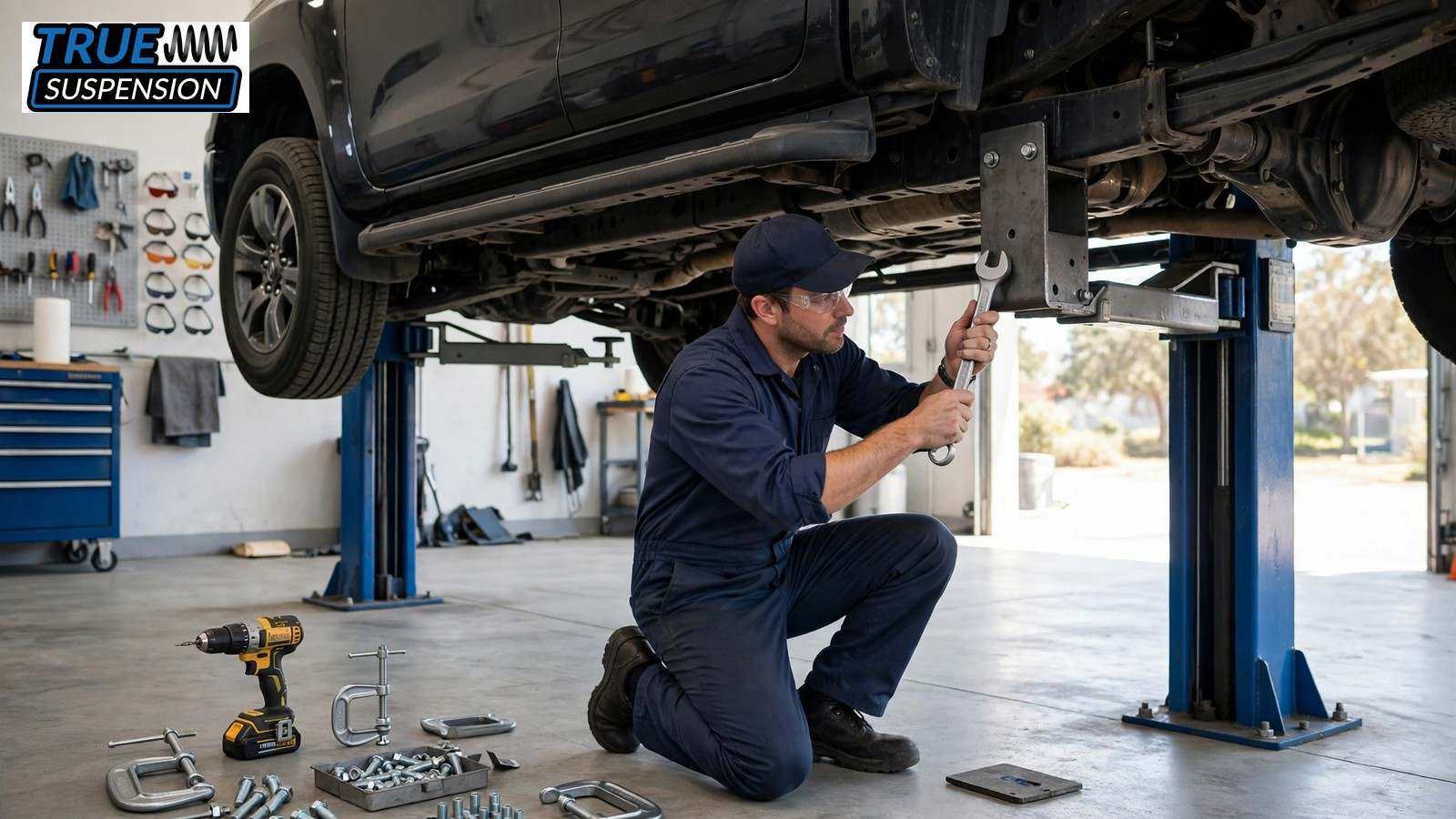
A weld-in notch becomes part of the frame and suits extreme drops, while a bolt-in kit makes install work simple with grade eight hardware through bored holes for daily drivers. The better route will depend on your tools, your welder access, and how low the truck will sit. A quality C-notch kit includes detailed templates that take the guesswork out of cutting for builders.
Source, Wikipedia
|
Factor |
Weld-In |
Bolt-In |
|
Strength |
Highest, fully boxed |
Very good with hardware |
|
Tools needed |
Welder, grinder |
Drill, wrenches |
|
Install time |
Full weekend |
One day |
|
Best for |
Extreme drops |
Daily drivers |
What tools does a weld-in install demand for full penetration?
A weld-in install demands a competent welder, a grinder, and careful frame prep, since every weld must penetrate fully before the beads cool, and strength will depend on it. That full penetration ties the notch into the rail as one boxed section, which is why this route suits extreme drops and show builds. The Scottsdale team at TrueSuspension helps builders match that tool list to their goals before ordering.
Source, Wikipedia
Why does the bolt-on C-style suit a home tech with a drill?
The bolt-on C-style has proven itself on thousands of daily-driven trucks, and a home tech with a drill and basic hand tools can finish the work in one day. Modern kits fit so tightly that strength differences rarely matter on the street. Builders often pair the rear work with rear 2-inch lowering shackles for 94 to 01 Ram 1500 for a balanced drop.
Source, Wikipedia
How does a bolted install help at resale and inspection?
A second bolt-on benefit shows up at resale, since a bolted install can be documented and inspected without cutting the truck apart again. That clear record helps the next owner see exactly how the frame was reinforced. Reading the top 10 lift kit myths debunked helps separate that proven strength from guesswork, and the Scottsdale team can steer buyers toward the right documented kit.
Source, Wikipedia
Quick Summary
- Weld-in wins on strength for extreme drops, and bolt-in wins on tools and time.
- The right pick will depend on your tools, your access, and your target height.
- Abolt-on c-installl stays documented and inspectable for resale.
Source, Wikipedia
Suspension ride quality after a notch, bump stops and shock tuning
A notch changes nothing about spring rate, so suspension ride quality comes down to shock choice, bump stop tuning, and matched length at the new height. Shorter bodies keep damping in the sweet spot through the whole stroke, and the Scottsdale team matches theC-notchh kit parts to that travel before any order ships. A coil helper also steadies the rear when the bed carries weight.
Source, Wikipedia
Why does bump stop timing decide whether the ride stays smooth?
Parts Bench Note: the tech team repeats one detail most- bump stop timing matters because the stop engages before the axle tube reaches the top of the notch. Check the gap at final ride height on the ground, since jack stand measurements can lie by half an inch. The bottom of travel lands on cushioned rubber, never bare steel, and every C-notch kit gets this check before leaving Scottsdale.
Source, Wikipedia
How do fresh bumpstops and matched shock length protect the stroke?
Fresh bumpstops cushion the last inch of travel and protect the suspension stroke when the axle rises fast over rough roads. Matched shock length keeps the damper working in range, while a worn stop lets the bump end in steel contact. Builders pairing rear 2-inch lowering shackles for classic Ford trucks should refresh both stops together for balance.
Source, Wikipedia
How does a coil helper steady the rear under load?
A coil helper steadies the rear when the bed carries weight, adding support without changing the main spring rate. It keeps ride height level under load, helps the shock control bounce, and fresh bumpstops soften the bottom of its travel. Read the 4-link suspension guide for classic truck builds before choosing helpers for towing or hauling work.
Source, Wikipedia
Quick Summary
- Fresh bumpstops and matched shock length protect the full stroke on rough roads.
- A coil helper keeps height steady when the bed carries extra weight today
- Careful tuning keeps the bottom of travel cushioned, quie,t and free from steel contact
Source, Wikipedia
Custom bed notch fabrication for show trucks
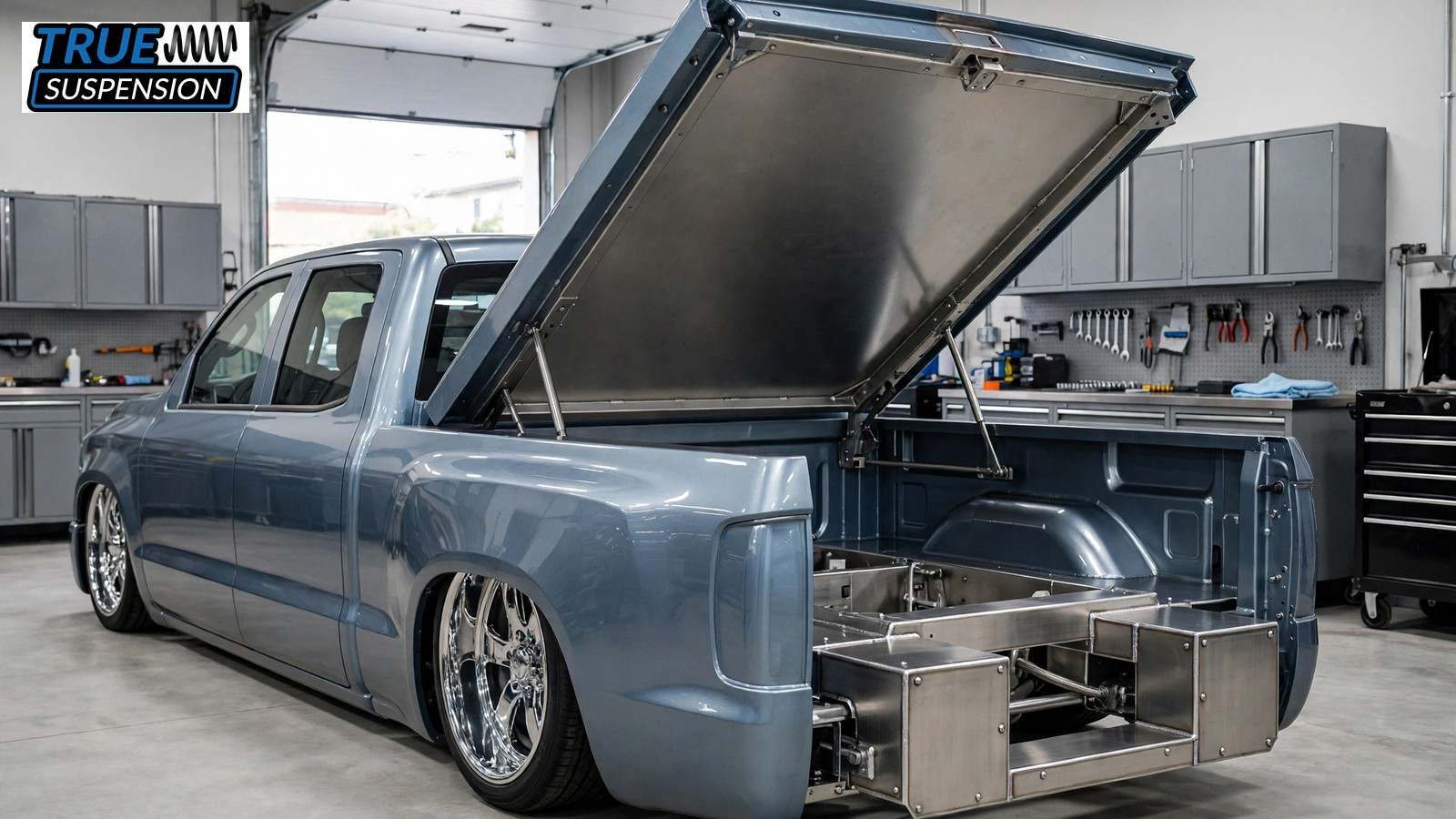
When the drop goes beyond any catalog kit, a custom bed notch raises the frame rails above the bed floor and demands full fabrication. The rails step up four to six inches and get fully boxed, giving the axle room the stock rails never promised. TrueSuspension stocks the supporting parts, and the Scottsdale team helps show builders plan each cut carefully.
Source, Wikipedia
What does a bed notch change above the bed floor?
Above the bed floor, a bed notch changes the space the axle and wheels use at full drop, so new wheel tubs rebuild the lost floor area. The raised rails clear the axle tube, the tubs seal the bed again, and the finished work looks clean at shows. Careful measuring protects tire clearance and keeps the bed useful after fabrication.
Source, Wikipedia
How do you plan tub width around the wheel and tire package?
Plan tub width around the wheel and tire package before the first cut, and mock the bed back on the frame before final welding. A custom tub must clear the tire at full drop, much like the fitment checks for rear 2-inch lowering shackles for Ford 4WD trucks demand care. Rushing to clear tires and fixing painted tubs costs far more later.
Source, Wikipedia
Why do narrowed rear ends and fuel cells join a custom bed notch build.
Most builders pair a custom bed notch with a narrowed rear end and a fuel cell, since the stock tank rarely survives the new rail position. That pairing goes far beyond a bolt-on C-notch kit, and the tech choices shape axle width, tank safety, and bed layout. The guide to keeping factory ride quality after a lift kit offers useful planning habits for any build.
Source, Wikipedia
Quick Summary
- Raised rails and new tubs give show trucks axle room above the bed floor
- Scottsdale tech advice helps builders sequence tubs, rails and fuel parts safely
Source, Wikipedia
How to weld a C-notch safely, frame prep, clearance and final checks?
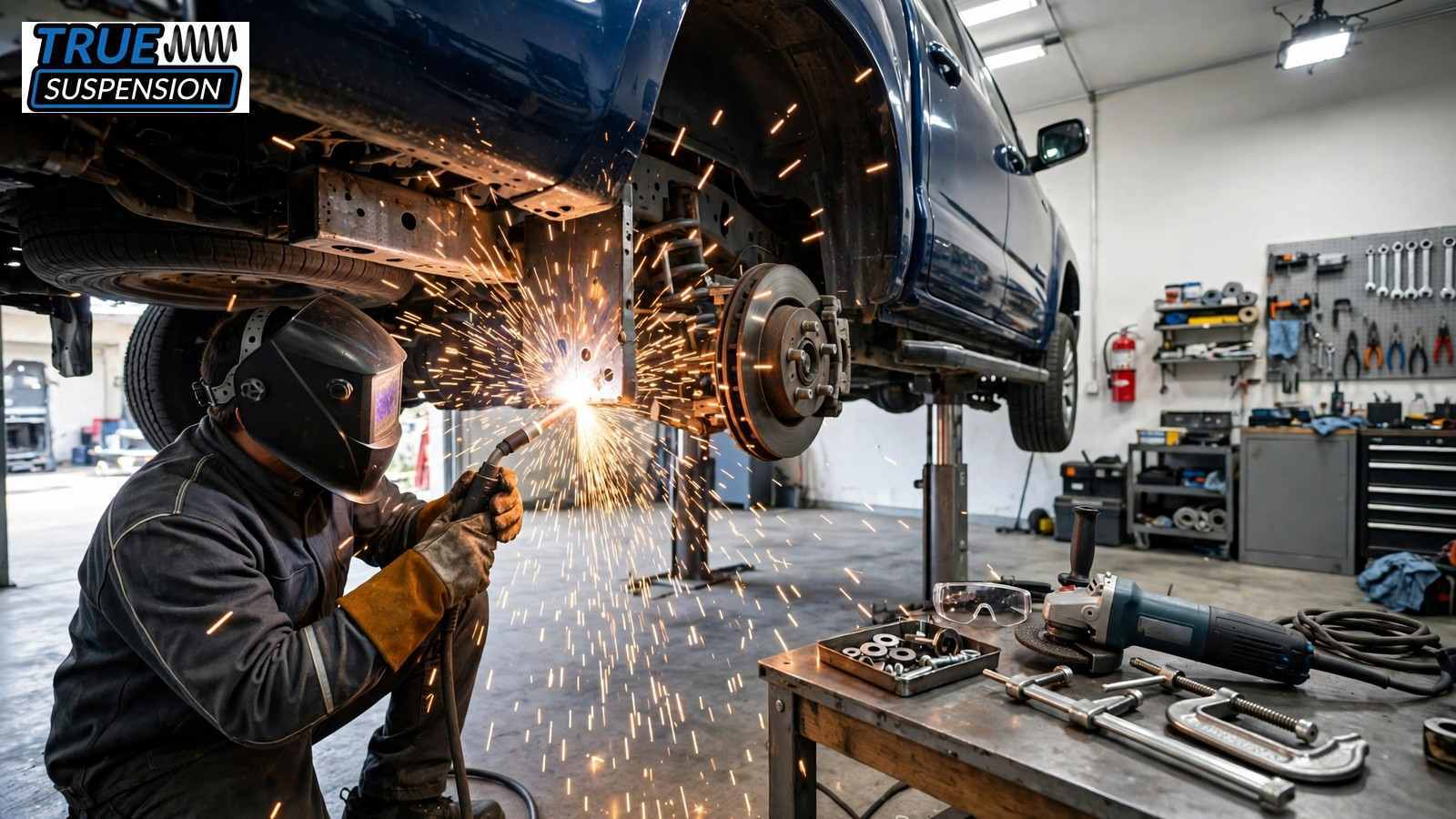
Safe notch work starts with bare metal prep, clamped plates and a full suspension cycle check before the first arc ever gets struck. Grind the rail clean, confirm the tube diameter against the template, and check clearance through the full travel before you weld anything in place. A qualityC-notchh kit with thick laser-cut plates forgives a shaky hand far better than thin steel does.
Source, Wikipedia
How do you prep the frame to bare metal before the first arc?
Grind the rail to bare metal well beyond the cut lines, because paint and rust contaminate every weld. Clamp the notch plates in place, stitch in short passes to control heat, then grind smooth and seal the work with quality paint. A rushed bead on a frame rail is a safety issue, not a cosmetic one, so slow down and check each pass.
Source, Wikipedia
What tools and time should you gather before the first cut?
Gather everything before the first cut so the job never stalls halfway. You will need a grinder with cutoff and flap discs, a drill with sharp bits, jack stands rated for the truck, and the full C-notch kit with every bolt and plate laid out and counted. Budget a full weekend for a weld-in job or a single long day for a bolt-in install.
Source, Wikipedia
How do you cycle the suspension and record the final gaps?
Document the final numbers with photos and a tape measure before the first drive. Write down the axle-to-frame gap at ride height and at full bump, then keep those figures with your build records. Future tweaks go faster when you know exactly how much travel the notch provides, like the gains covered in top 10 suspension upgrades that improve towing safety.
Source, Wikipedia
How can you drop without cutting corners on safety checks?
You can drop without cutting corners by treating every safety check as part of the drop itself. Cycle the suspension by hand, confirm the bumpstops engage before metal contact, and torque every fastener to spec before the truck leaves the stands. Set the stance, get an alignment, and use parts like this rear adjustable lift shackle kit for 96 to 04 Tacoma trucks only where the fitment matches.
Source, Wikipedia
Quick Summary
- Prep to bare metal, stitch in short passes, and cycle the suspension by hand before the first drive.
- Record the final gaps, land the bottom of travel on rubber, and drop without skipping the torque check.
Source, Wikipedia
Final Takeaway
Match the notch depth to how low you want to go, keep the bump stop ahead of the steel, and remember that clearance turns a low truck into a drivable truck. Measure the settled height after the springs relax, then keep one C notch kit matched to your frame and your drop on the parts list, so you can drop without guesswork when the weekend comes.
Source, Wikipedia
For the full build picture, start with the C10 frame notch kit built for a 6 to 7 inch drop, review the complete 1965 to 1979 Ford F100 lowering system kit, and read how air bags and torsion bars compare for truck leveling before you place the order with the Scottsdale team today.
- Match notch depth to the drop first, then confirm the settled height on the ground.
- Keep the bump stop ahead of steel, so the bottom of travel lands on rubber first.
- Trust the Scottsdale tech team, which has guided thousands of builders through this exact project.
- Expect a calmer ride once the axle stops hitting steel on rough roads.
Frequently Asked Questions
How do I know if my truck needs a C-notch?
Yes, you need one if the axle hits the frame over bumps after lowering. Measure the gap between the axle tube and the frame at full bump with the suspension cycled by hand. If the tube can reach the bottom of its travel and touch steel, the notch belongs on your build list before you order anything else for the rear.
Source, Wikipedia
Does a C-notch weaken the frame?
No, a properly boxed notch does not weaken the frame when the work is done right. The cut section gets rebuilt with thick boxing plates that tie the rail back together, and many builders find the boxed section stiffer than the original open channel. Strength comes from full plate coverage, clean beads, and hardware torqued to spec on bolted kits.
Source, Wikipedia
C-notch or step notch, which should I choose?
Choose aC-notchh for drops under five inches and a step notch for extreme lows on show trucks. The C-notch covers most street builds, costs less, and goes in faster with simpler tools at home. The step notch raises the rail several inches for trucks that lay frame, and it asks for more cutting, more boxing, and more fabrication time.
Source, Wikipedia
I flipped my axle, and now it bangs the frame on every bum. Didd I mess up?
No, you did not mess up; you just found the limit every flip kit owner finds sooner or later. The flip moved the axle above the springs and spent the travel the stock rail allowed. A notch restores that travel, bump stop tuning keeps the last inch quiet, and the ride settles once the axle stops banging steel.
Source, Wikipedia
Be honest, is a bolt-in notch actually strong enough for a daily driver?
Yes, a bolted notch is strong enough for a daily driver when the hardware is grade eight and torqued to spec. Thousands of daily driven trucks run bolted notches without issue, and the design can be inspected or removed later. Check every bolt twice before the first drive, and a welded notch still wins for extreme drops and show builds.
Source, Wikipedia
Which notch kit should I order from TrueSuspension for my C10?
Start with the frame notch kit built for a 6 to 7 inch drop if your truck is a 1973 to 1991 C10. That kit matches the frame most C10 owners run, and the same kit serves the GMC version of the truck. Check the fitment notes on the product page, and ask the Scottsdale team if your plan sits between sizes.
Source, Wikipedia
Does TrueSuspension install the kit for me?
No, TrueSuspension is a parts-only store, so the team does not install the kits it sells at all. What the Scottsdale team does is help you pick the right C-notch kit for your truck, your drop, and your tools, then ship the brackets, plate,s and hardware you need to do the job right at home.
Source, Wikipedia