
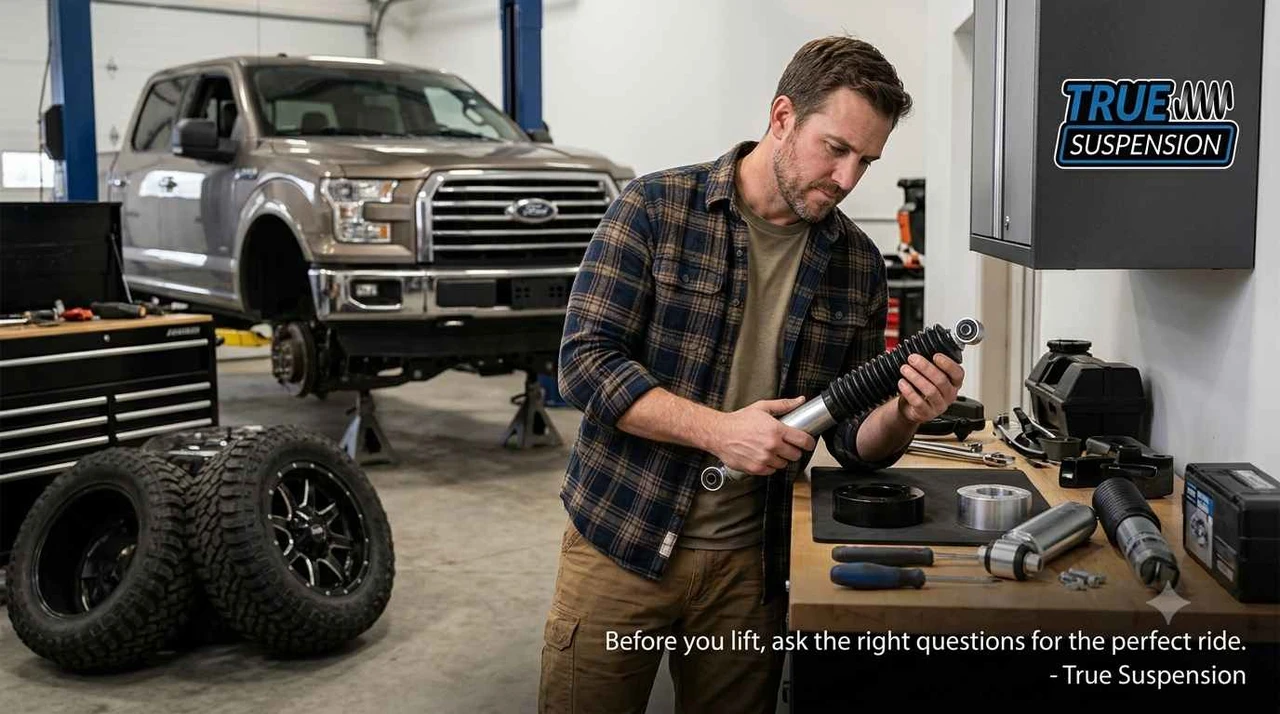
Lifting your truck or SUV is exciting. It changes the look, the stance, and the capability of your ride. But before you spend your hard-earned money, you need the right information. That's why we built this guide around the Top 10 Questions to Ask Before Buying a Lift Kit. It walks you through every decision point, from height to budget to installation, so you buy with confidence.
At True Suspension, we've spent years designing, testing, and shipping lift kits for trucks, SUVs, vans, and classic cars. We know the industry inside and out, and we built this article to be the most complete answer to Buying a Lift Kit questions you'll find anywhere. Whether you drive a Ford, Chevy, GMC, Dodge, or Toyota, these Questions to Ask Before Buying a Lift Kit apply to you.
Let's get into it.
1. What Type of Lift Kit Do You Actually Need?
This is the first of our Top 10 Questions to Ask Before Buying a Lift Kit, and it's the most important one. Not every lift kit is built the same. Some owners just want a small leveling adjustment. Others want a dramatic off-road stance with several inches of clearance.
There are three common categories:
- Leveling kits, raise the front to match the rear, usually 1-3 inches.
- Lift kits, raise the entire vehicle, often 2-6 inches, for larger tires and more clearance.
- Air ride suspension kits, give you adjustable height on demand, perfect for show trucks and daily comfort.
If you're still not sure which category fits your goals, our blog post on lift kits vs leveling kits breaks down the differences in plain language. We wrote it specifically to help customers like you avoid buying the wrong product the first time.
True Suspension carries a full range of options, including kits like our Chevrolet Silverado Sierra front lift kit with Pro Comp ES9000 shocks, engineered for exactly this kind of upgrade. Buying a lift kit without knowing the category you need is the fastest way to waste money, so start here.
2. How Much Lift Height Do You Really Need?
Once you know the category, the next of our Questions to Ask Before Buying a Lift Kit is about height. More is not always better. A 6-inch lift looks aggressive, but it also raises your center of gravity, changes your handling, and may require bigger tires and fender modifications.
Here's a quick reference table we put together from years of customer fitment data:
|
Lift Height |
Best For |
Common Use |
|
1"-2" |
Daily drivers, leveling |
Correcting factory rake |
|
2"-3" |
Light off-roading |
Bigger tires, better clearance |
|
3"-4" |
Moderate off-road use |
Trail driving, towing setups |
|
4"-6" |
Heavy off-road builds |
Rock crawling, show trucks |
Our Ford F150 complete lift kit with Pro Comp ES9000 nitro shocks is one of our most popular mid-range options because it balances height with everyday drivability. Pick the smallest lift that gets you what you need. Going bigger than necessary is one of the most common regrets we hear about after buying a lift kit.
3. Is Your Vehicle 2WD or 4WD?
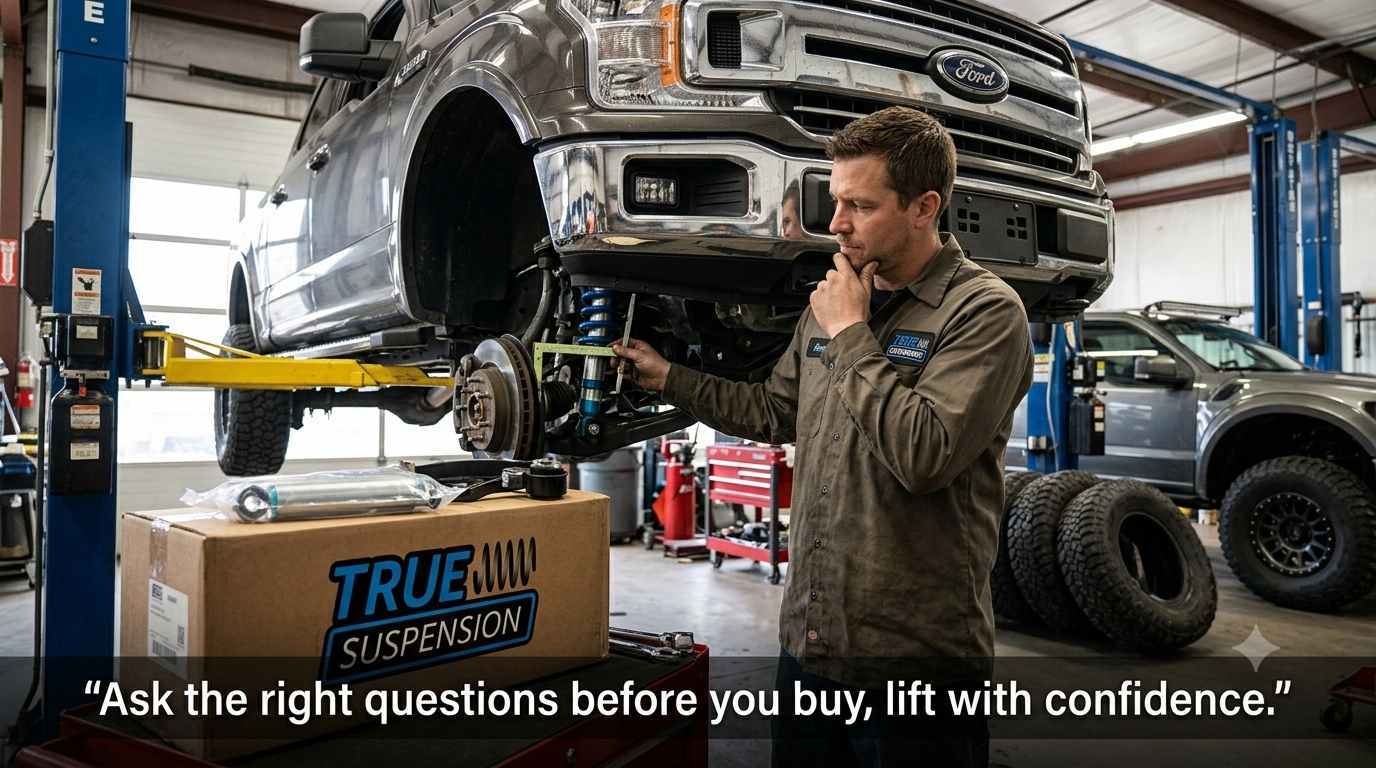
Drivetrain matters. A lot. Many kits are engineered specifically for 2WD or 4WD platforms, and mixing them up leads to poor fitment, uneven ride height, or components that simply won't bolt on.
True Suspension makes this easy by listing drivetrain compatibility directly on every product page. For example, our Dodge 2500 4WD towing assist air ride suspension kit is engineered only for 4WD trucks, while other kits in our catalog are built strictly for 2WD setups.
Before you finalize buying a lift kit, double-check your VIN, trim, and drivetrain against the product listing. This single step prevents the majority of return requests we see in our support inbox. If you're ever unsure, our team is always happy to confirm fitment before you check out.
4. What's Your Realistic Budget?
Lift kits range from affordable leveling spacers to full-blown air ride management systems. Setting a budget early keeps you focused and prevents impulse purchases you'll regret.
Consider these three cost tiers:
- Entry-level leveling kits, budget-friendly, simple installs, subtle height gain.
- Mid-range lift kits with shocks, better ride quality, moderate lift, long-term durability.
- Premium air ride suspension systems, adjustable height, show-quality finish, in-cab controls.
Our universal 4-corner air ride suspension system sits at the premium end and gives you total control over ride height at the touch of a button. Whatever tier fits your wallet, remember that buying a lift kit is an investment in your vehicle's long-term performance, not just its looks. Cheap parts that fail early cost more in the long run than a quality kit bought once.
5. Will It Affect Your Ride Quality?
This question gets overlooked constantly, and it shouldn't. A poorly matched lift kit can turn a smooth-riding truck into a bouncy, harsh one. This is exactly why True Suspension pairs so many of our kits with Pro Comp ES9000 nitrogen gas shocks, they're designed to preserve comfort while still delivering the height and clearance you want.
We go deep on this topic in our guide to maintaining factory ride quality after installing a lift kit. It's required reading if ride comfort matters to you as much as looks.
One more of the Top 10 Questions to Ask Before Buying a Lift Kit worth repeating here: always ask whether the kit includes matched shocks. A lift without proper shock absorbers is only half a solution.
6. Do You Need New Shocks With the Kit?
Some lift kits only include spacers or blocks. Others, like True Suspension's complete kits, include a matched set of shocks engineered for the new ride height. Skipping this step is a mistake many first-time buyers make.
Pros of buying a complete kit with shocks:
- Matched valving for the new ride height
- Better handling and control
- Longer component lifespan
- One-stop purchase, no guesswork
Cons of buying spacers alone:
- Factory shocks may be over-extended
- Reduced damping control
- Increased wear on other suspension parts
- Often requires a second purchase later anyway
Our Dodge Ram 1500 lift kit with strut spacers, coil spring spacers, and Pro Comp ES9000 shocks is a great example of a complete solution. This is one of the Questions to Ask Before Buying a Lift Kit that directly affects your total cost, so ask it early.
7. Will It Void Your Warranty?
Modifying your suspension can affect certain warranty coverage depending on your manufacturer and state laws. Reputable suppliers, like True Suspension, design kits that are bolt-on and reversible, which helps minimize risk.
Always ask your dealer directly about warranty language before buying a lift kit. It's better to know upfront than to be surprised later. We're transparent about what our kits do and don't affect, and our product descriptions include installation notes so you know exactly what you're getting into.
8. What About Alignment and Tire Wear?
Any lift changes your suspension geometry. That means alignment settings shift, and tire wear patterns can change if you skip a post-install alignment. This is a non-negotiable budget for a professional alignment immediately after installation.
Statistically, shops report that up to 70% of premature tire wear complaints after a lift kit installation trace back to skipped alignments, not the kit itself. That's a self-inflicted problem, and it's completely avoidable.
If you're running bigger tires after your lift, also plan for a slight increase in fuel consumption and possible speedometer recalibration. These are small details, but asking about them now is part of being a smart, informed buyer, exactly the kind of buyer this guide to Questions to Ask Before Buying a Lift Kit is meant to create.
9. Can You Install It Yourself, or Do You Need a Professional?
Installation difficulty varies widely by kit type. Leveling kits and strut spacers are often DIY-friendly with basic tools and a weekend of time. Full air ride suspension systems with in-cab management controls usually call for a professional shop, especially when wiring and air line routing are involved.
|
Kit Type |
DIY Friendly? |
Estimated Time |
|
Strut spacers / leveling kit |
Yes |
2-4 hours |
|
Lift kit with shocks |
Moderate |
4-8 hours |
|
Air ride suspension system |
Recommended pro install |
1-2 days |
Our Ford F250 towing assist air ride suspension kit with in-cab management control includes clear instructions, but we still recommend a professional install for anyone new to air suspension systems. Be honest with yourself about your mechanical skill level before buying a lift kit you plan to install solo.
10. Does the Kit Match Your Vehicle's Exact Year, Make, and Model?
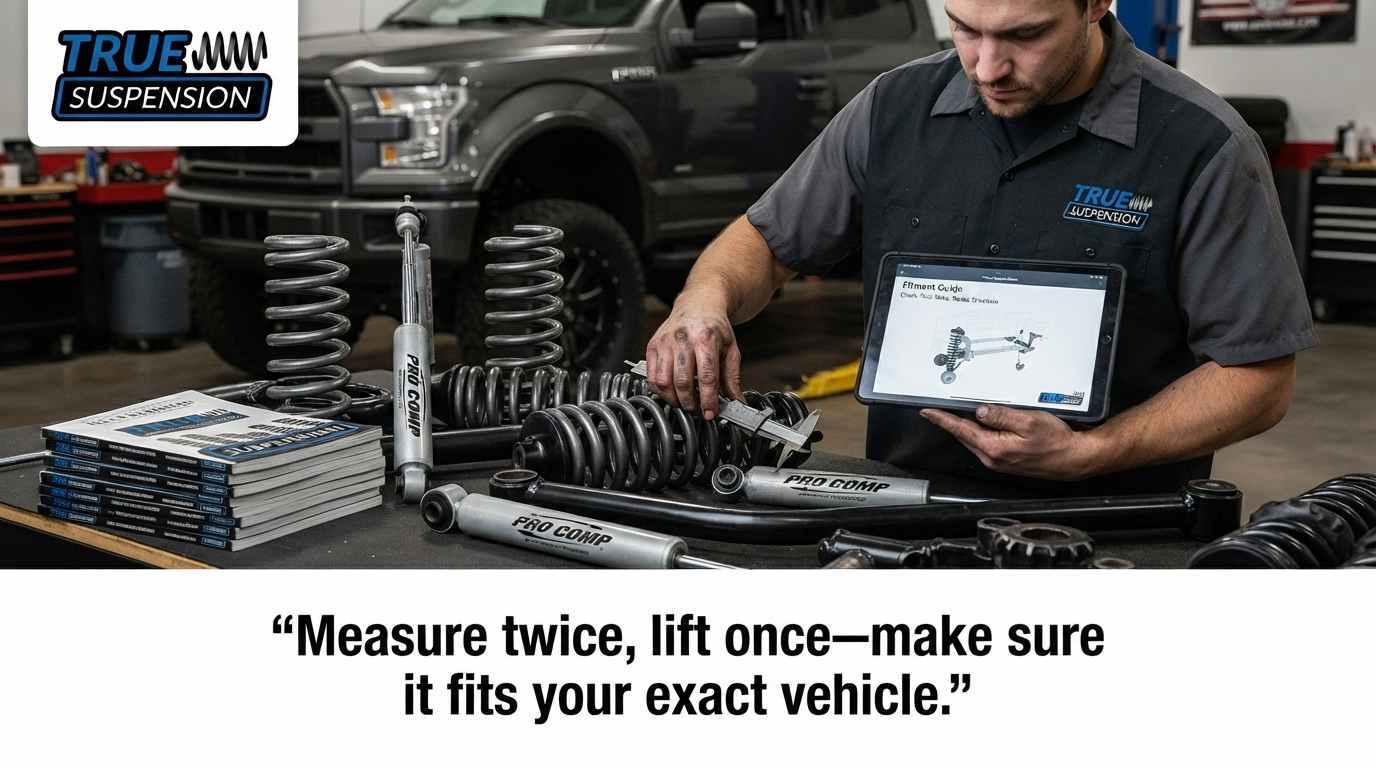
This sounds obvious, but it's the number one reason for returns industry-wide. Suspension components are precise. A kit built for a 2007-2013 Silverado will not necessarily fit a 2014-2018 model, even though the trucks look similar.
Always cross-reference:
- Exact model year range
- Trim level
- Drivetrain (2WD vs 4WD)
- Cab and bed configuration where relevant
True Suspension lists this information clearly on every product page, like our Toyota Tundra rear towing assist air ride suspension kit with in-cab management controls. Double-checking fitment is the final and arguably most important of the Top 10 Questions to Ask Before Buying a Lift Kit, because even the best kit is useless if it doesn't fit your truck.
Why True Suspension Is the Smartest Choice for Buying a Lift Kit?
We didn't write this guide just to inform you, we wrote it because we genuinely believe buying a lift kit should be a confident, well-researched decision. True Suspension has built its reputation on precision-engineered kits, clear fitment data, and components like Pro Comp ES9000 nitrogen gas shocks that protect your ride quality instead of sacrificing it.
Here's what sets us apart:
- Wide catalog coverage, from leveling kits to full air ride suspension systems, for trucks, SUVs, and classic cars.
- Matched components, shocks, spacers, and shackles engineered to work together, not sold as mismatched parts.
- Clear compatibility data, every product page lists year, make, model, and drivetrain so you buy right the first time.
- Educational resources, guides like air ride suspension vs coilovers and rubber block vs air ride suspension help you make smarter choices before you spend a dollar.
If you love the look of a lowered or lifted stance on a classic build, our roundup of the top 10 classic cars on air ride is worth a look for inspiration. It shows exactly what's possible when you pair the right kit with the right vehicle.
Final Thoughts on the Top 10 Questions to Ask Before Buying a Lift Kit
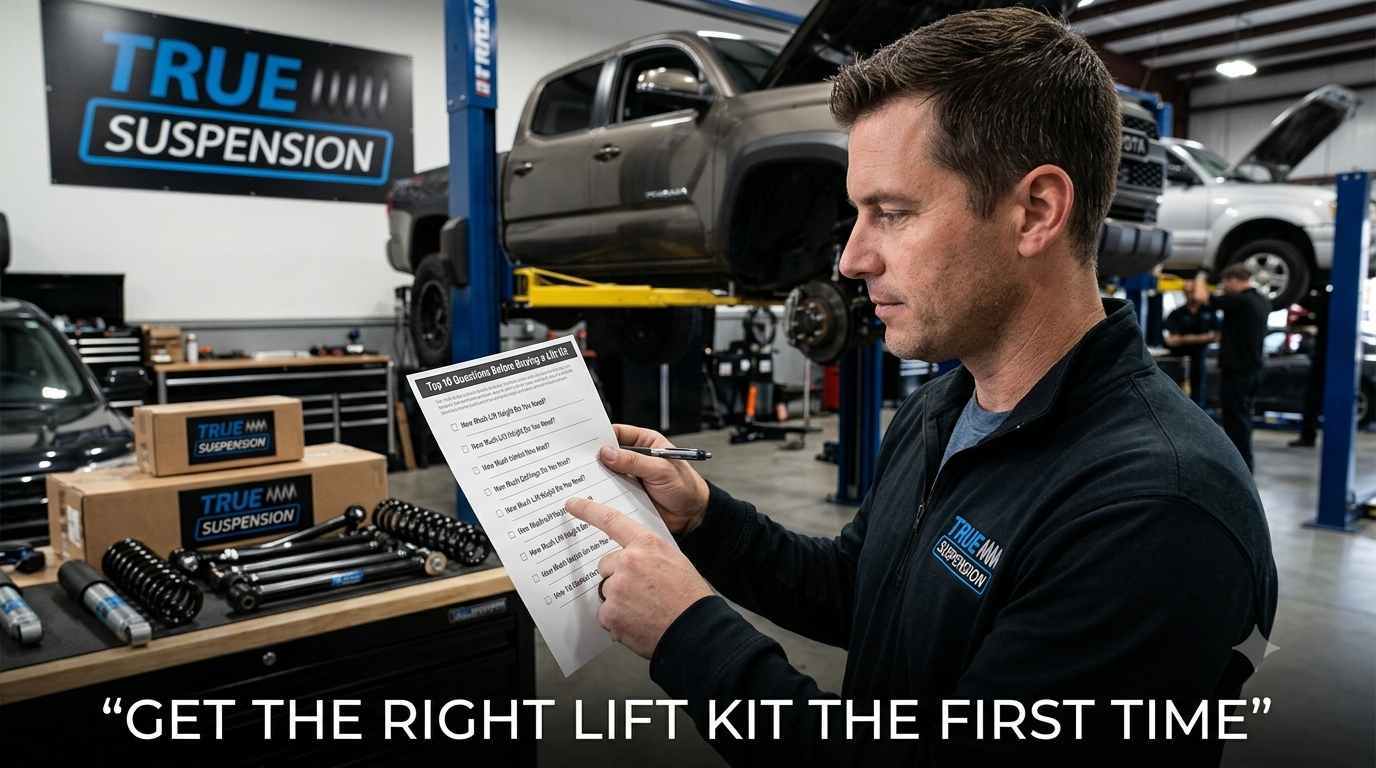
Buying a lift kit is one of the most rewarding upgrades you can make to your truck, SUV, or classic car. It changes how your vehicle looks, handles, and performs. But it only pays off when you go in prepared. Use these Top 10 Questions to Ask Before Buying a Lift Kit as your checklist, and don't be afraid to reach out to our team with fitment or product questions.
True Suspension has spent years earning trust in this industry by selling kits that fit right, ride well, and last. When you're ready to buy, browse our full catalog with confidence, knowing every kit is backed by real engineering and real customer support. These Questions to Ask Before Buying a Lift Kit aren't just theory for us, they're the same standards we hold every product to before it ever reaches your driveway.
Frequently Asked Questions
- What is the most important question to ask before buying a lift kit?
Confirm your vehicle's exact year, make, model, and drivetrain. Fitment mistakes cause most returns, so this check should always come first before anything else.
- Does a lift kit affect ride quality?
Yes, if it's not paired with proper shocks. Choose kits with matched shocks, like Pro Comp ES9000, to keep your ride smooth and controlled after installation.
- Can I install a lift kit myself?
Basic leveling kits are often DIY-friendly. Air ride suspension systems with in-cab controls usually need professional installation due to wiring and air line routing.
- Will a lift kit void my vehicle's warranty?
It depends on your manufacturer and state laws. Always ask your dealer directly, and choose reversible, bolt-on kits to help minimize potential warranty risk.
- How do I know what lift height I need?
Match your height to your goal: 1-2 inches for leveling, 2-4 inches for moderate off-roading, and 4-6 inches for heavy-duty trail or show builds.