

Single vs Dual Compressors, When Your Air Ride Needs More Air
One compressor covers simple daily driving, while dual air compressors earn their place on an air suspension build when you change height often, run a big tank or tow with helper bags and want faster refills plus backup.
Every air system lives or dies on its air supply, and TrueSuspension stocks the compressors, tanks and hardware behind both layouts. The Scottsdale team sizes systems daily, and the Active Air compact compressor with a 100 percent duty cycle shows what one strong unit can do before dual air compressors enter the picture.
This guide compares the two layouts head to head, with real fill times, duty cycle limits, and honest costs. You will learn the signs that one motor has fallen behind, the wiring a pair demands, and the builds that truly need a second unit. Read it before you spend on air you may not need.
Quick Summary
- A single compressor suits daily drivers that set height once or twice a day and rarely play.
- Dual air compressors refill the tank in half the time, share the workload, and keep up with frequent height changes.
- Duty cycle caps how long one motor can run, and no rating fixes slow airflow.
- Tank size and compressor count work as a pair, so size both to your habits.
- A second motor adds cost and wiring, and pays back in speed and backup.
What is the difference between a single and a dual compressor setup?
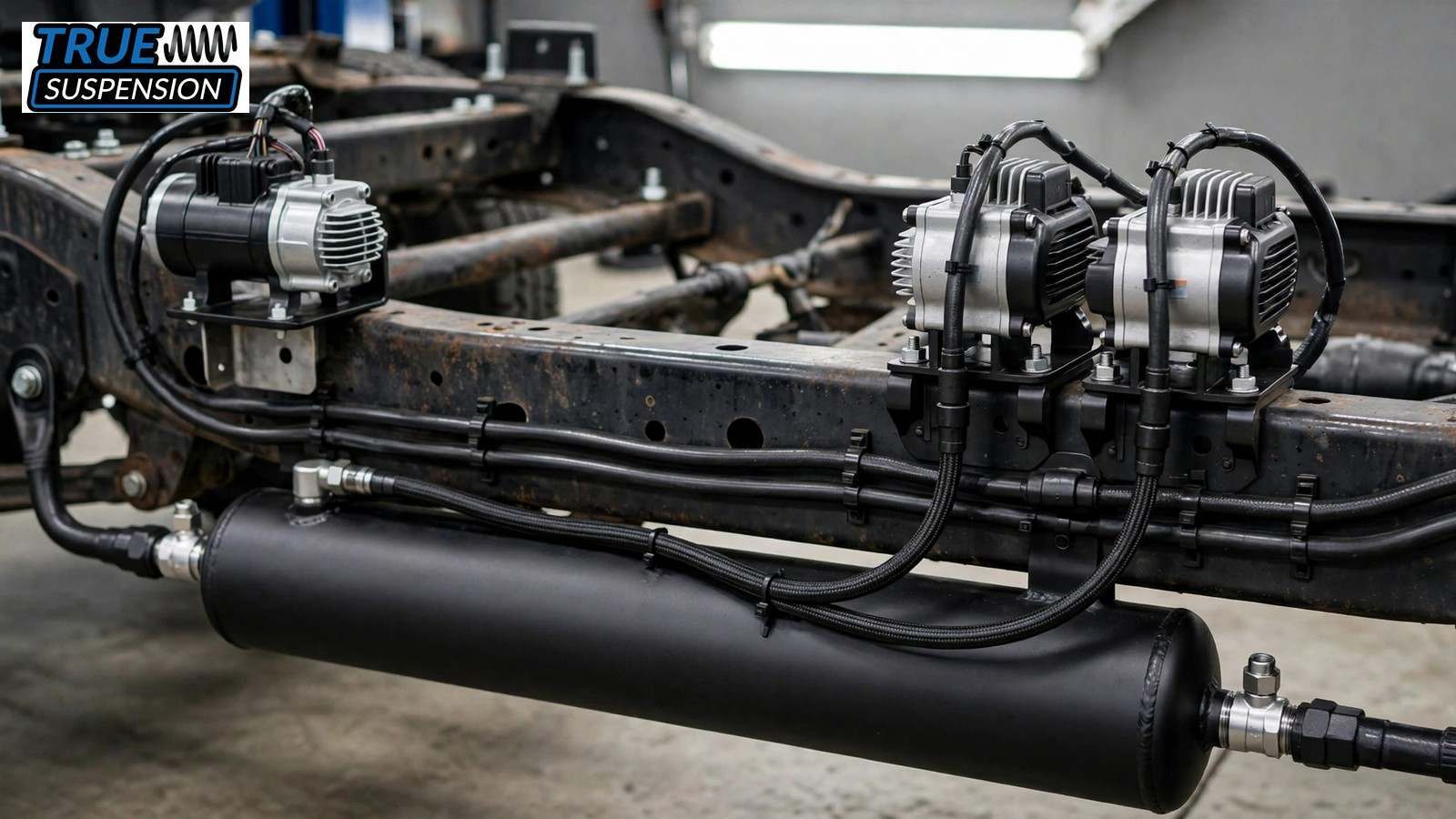
A single setup uses one motor, while dual air compressors use two motors sharing one tank, so refills land in half the time. Each motor works less hard per cycle, and the pair keeps up when drivers change height often. One motor stays affordable, while two trade simplicity for speed.
Source, Wikipedia
How does a single compressor setup fill and rest
A compressor setup uses one motor and piston assembly to push air into the tank through a check valve. A pressure switch watches the tank and tells the compressor when to run and rest. It is simple, affordable, and easy to wire, which is why starter kits use this layout.
Source, Wikipedia
How do two compressors share one tank and one switch?
Running a paired setup doubles the pumping capacity, so the tank refills in half the time. Both compressors feed the same tank through their own check valves and share one pressure switch. For a system, the 2500 series 4-corner universal air ride kit gives the pair a layout to feed.
Source, Wikipedia
What stays the same when you move from one motor to two?
The tank, switch, and valves around the motors stay familiar either way, so the upgrade builds on what you already own. Mounting still matters, because compressors need airflow to stay cool, and sealed corners shorten their life. Our complete air ride management controller buyers guide walks through those same controls.
Source, Wikipedia
Quick Summary
- One motor means simple wiring and lower cost.
- Two motors mean double the airflow into the same tank, with dual air compressors sharing every cycle.
- The tank, switch,h and valves stay familiar, so the upgrade builds on parts you own.
Source, Wikipedia
Does duty cycle decide how hard a compressor can work?
Duty cycle tells you what share of the time a compressor can run before it must rest and cool down. Every compressor carries a rating, and lower-rated units need rest while stronger units work longer at standard pressures. Pushing a motor past its rating shortens its life each day.
Source, Wikipedia
What does a duty cycle rating actually promise?
A duty cycle rating tells you what percentage of a given period a compressor can safely run before it needs to cool down. A 100 percent duty cycle unit can run continuously at standard pressures without overheating. Lower-rated units need rest, and ignoring it wears small motors out early.
Source, Wikipedia
Why does a 100 percent rating still leave a fixed airflow limit?
Here is the catch: even a 100 percent duty cycle compressor has a fixed output in cubic feet per minute, so it can run forever and still refill a big tank slowly. When habits demand more volume, dual air compressors solve the problem by adding a second source of airflow.
Source, Wikipedia
How does heat tell you a motor is working past its rating?
Heat tells the story when a motor stays hot beyond its rating. Short cycles suit a modest unit, while back-to-back lifts punish it. Our digital vs manual air ride controllers guide explains, and the Active Air compact compressor page lists ratings before dual air compressors join the build.
Source, Wikipedia
Quick Summary
- A 100 percent duty cycle motor can run nonstop, yet still moves a fixed amount of air.
- When volume is the problem, a second motor adds airflow instead of more run time.
Source, Wikipedia
How much faster does a second compressor fill the tank?
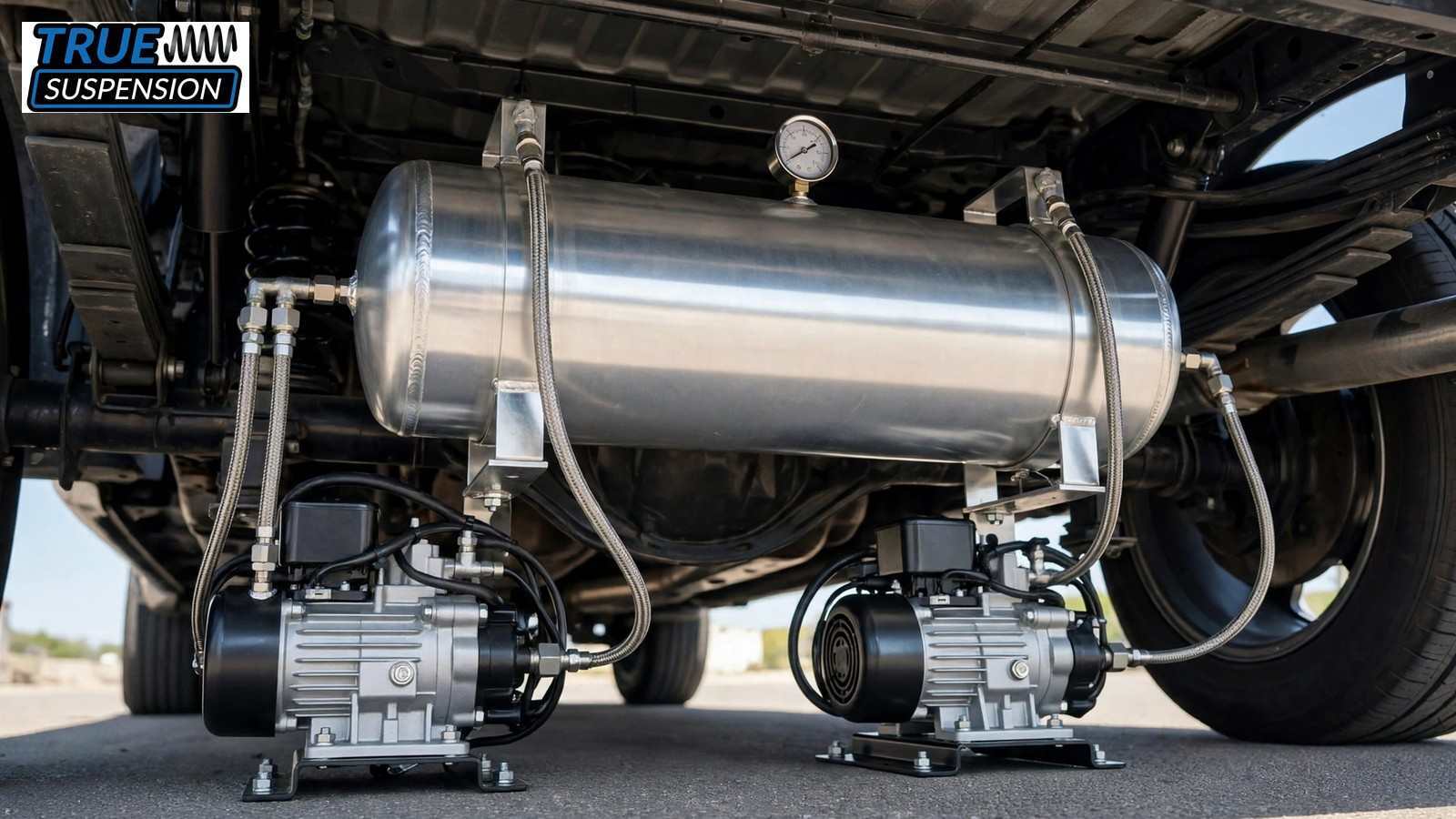
A second compressor roughly doubles the airflow into the same tank, so a 5-gallon tank that needs 6 to 8 minutes with one motor refills in about 3 to 4 minutes. That gap shows up every time you air out fully or lift again soon after the last move.
Source, Wikipedia
|
Factor |
Single Compressor |
Dual Compressors |
|
Fill time, 5-gallon tank from empty |
6 to 8 minutes |
3 to 4 minutes |
|
Recovery between full lift cycles |
Slow, plan your moves |
Fast, play freely |
|
Motor heat during heavy use |
High, works at its limit |
Low, load is shared |
|
Redundancy if one motor fails |
None, system is down |
Yes, one keeps you rolling |
|
Electrical demand |
Moderate, one relay |
High, fused dual relays |
|
Upfront cost |
Lower |
Higher |
|
Install complexity |
Simple |
Moderate |
How fill time shapes daily life with air ride?
Fill time shapes daily life because waiting on air changes how freely you use the system at every stop. With the 8-valve FBSS manifold block for 4-corner systems ready to move each corner, pressure decides how crisp that move feels, and fast recovery keeps every lift feeling immediate and sharp.
Source, Wikipedia
Why does recovery between lift cycles matter more than the first fill?
Recovery between lift cycles matters more than the fill because days ask for repeated moves, not one lift. You air up, drive off, drop at the next stop, then lift again, and recovery turns that rhythm into waiting. The must-have air ride management hardware list shows parts keeping pressure useful.
Source, Wikipedia
Quick Summary
- A 55-gallontank fills in 6 to 8 minutes with one motor and 3 to 4 with a pair.
- Speed is the headline benefit, and recovery between cycles is where owners feel it most.
- In short, dual air compressors turn waiting time into driving time, and the gap grows with every lift cycle.
Source, Wikipedia
How does tank size change the recovery math?
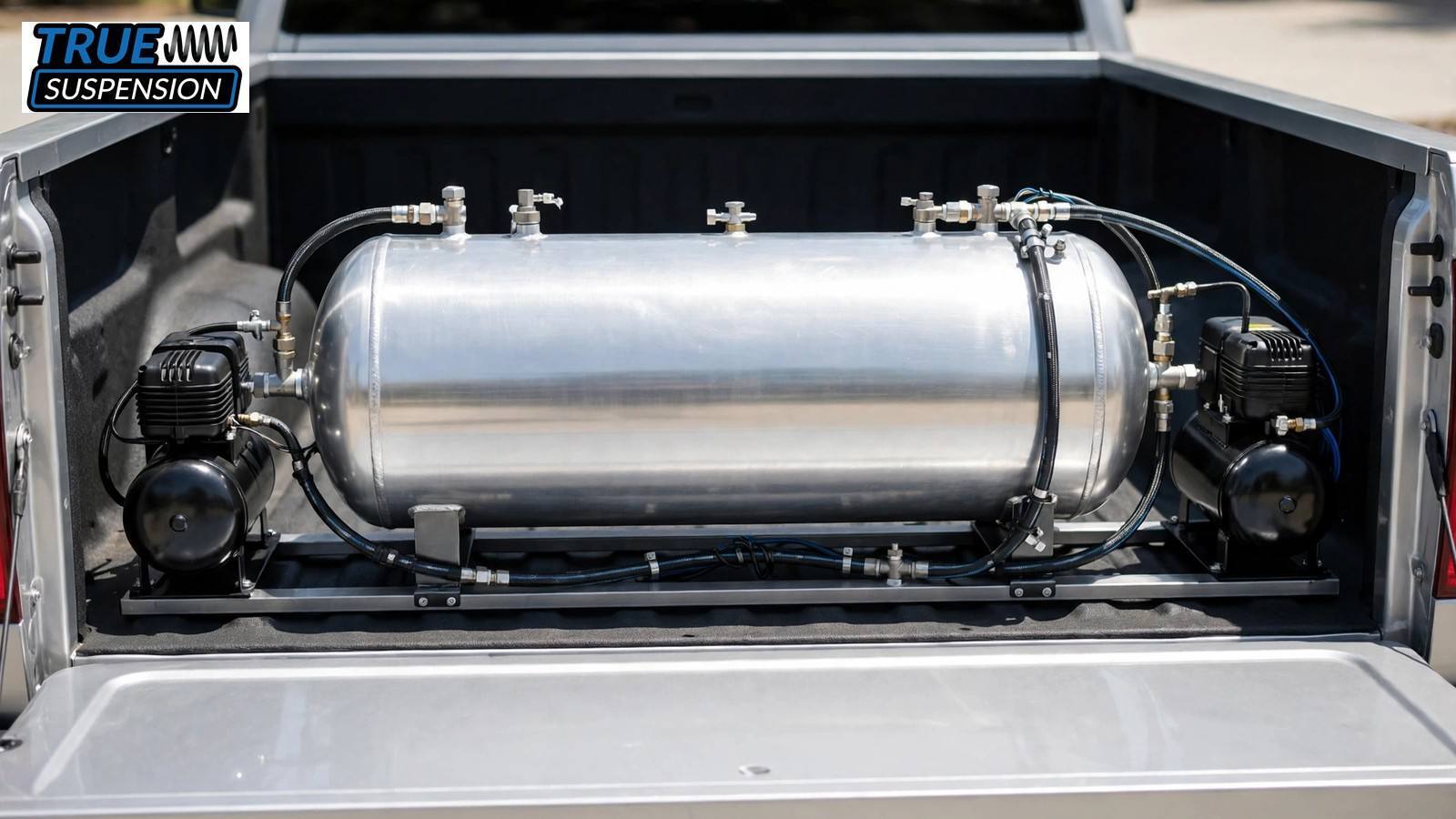
Tank size sets how much air you store, and compressor count sets how fast you win it back after each lift. A small tank refills because there is less volume to replace, while a larger tank holds more play time and asks more from the motor each time pressure drops.
Source, Wikipedia
|
Tank Size |
Good Match For |
Single Fill, Empty to Full |
Dual Fill, Empty to Full |
|
3 gallon |
Daily drivers and simple setups |
4 to 5 minutes |
2 to 3 minutes |
|
5 gallon |
Most street builds |
6 to 8 minutes |
3 to 4 minutes |
|
8 gallon |
Show cars and heavy users |
9 to 12 minutes |
5 to 6 minutes |
Why does a small tank forgive a single compressor?
A small tank forgives a single compressor because a 33-gallontank needs only 4 to 5 minutes from empty to full, so the wait stays short with one motor. The 2600 series 4-corner universal air ride kit suits simple setups where owners set height once or twice a day.
Source, Wikipedia
What changes when you step up to a five or eight gallon tank?
Stepping to a five- or eight-gallon tank adds play time, but a motor needs 6 to 8 or 9 to 12 minutes to recover. With dual air compressors waits fall to 3 to 4 and 5 to 6 minutes, and how to maintain your air ride suspension covers upkeep.
Source, Wikipedia
Quick Summary
- Size the tank for your play time, then let compressor capacity keep recovery short.
- Bigger tanks mean compressors cycle less often, which keeps everything cooler and quieter.
- A big tank feels generous when dual air compressors refill it fast enough that size never becomes a chore.
Source, Wikipedia
What wiring and plumbing does a two-compressor setup need?
Plan the electrical side first because two motors draw serious current and weak wiring slows everything down. Run a fused feed from the battery, keep runs short, and give the pair clean air paths. A dual paddle switch control panel with a 150 psi gauge gives manual control from the cab.
Source, Wikipedia
How to wire two motors with relays, fuses, and clean grounds?
Give each motor its own relay and fused power line so one fault never takes down the system at once. Trigger both relays from the pressure switch signal, use the wire gauge the maker recommends, and ground each unit to bare metal. Weak grounds cause voltage drop and slow pumping.
Source, Wikipedia
How do check valves and one pressure switch run the pair?
Mount both units where intake filters breathe air, then route each discharge line through its own check valve into the tank. That valve lets air flow in but never bleeds into a motor. One pressure switch runs the pair, turning them on as pressure falls and off at cutoff.
Source, Wikipedia
How does a toggle let you run one motor for daily driving?
Many builders add a toggle so one motor handles quiet daily driving while both fire only when speed matters. That habit saves wear, cuts noise, and keeps electrical demand low on short trips. Our guide to custom vs universal air ride kits shows where this layout fits each build path.
Source, Wikipedia
Quick Summary
- Each motor needs its own relay, fused feed, and a ground.
- Own check valves and one shared pressure switch keep the pair as one system.
- Thoughtful control keeps dual air compressors calm for daily use and ready for fast fills.
Source, Wikipedia
What does going dual really cost?
Going dual costs roughly double the compressor hardware, plus the supporting parts that let the pair run safely and well. Budget for a second relay, extra wiring, added fittings, and more weight and space in the trunk or under the bed. The Scottsdale team helps owners price the package honestly.
Source, Wikipedia
What do the second motor and its hardware add to the bill?
The second motor is only the headline cost, because the hardware around it adds up fast. Plan for a relay, heavier gauge wiring, extra fittings, a check valve, and mounts that keep both units cool. A quad paddle switch 4-corner control panel helps manage the pair from the driver's seat.
Source, Wikipedia
What are the honest pros and cons of going dual?
The honest trade is speed and backup against cost and complexity, and most owners feel both sides within the first week. Faster refills, cooler motors, and a spare unit if one fails change driving for the better. Against that sit higher spending, more wiring, and extra weight in smaller trunks.
Pros of going dual
- Tank refills in half the time
- Each motor runs cooler and lasts longer
- Built-in redundancy if one unit fails
- Keeps up with frequent height changes
Cons of going dual
- Higher upfront cost for hardware and wiring
- More space and weight in the install
- Slightly more complex wiring and plumbing
Source, Wikipedia
Why do supporting parts belong in the same budget?
Supporting parts belong in the budget because dual air compressors only perform as well as the switch, relays, and wiring feeding them. Price a pressure switch, gauge wire, and a check valve alongside the motor. Our guide to lift kits vs leveling kits for truck owners helps place that total.
Source, Wikipedia
Quick Summary
- Going dual means roughly double the hardware plus relay, wiring, and fittings.
- The pair pays back in speed, cooler running, longer life and backup.
- Price every supporting part up front so the total holds no surprises.
Source, Wikipedia
Are two compressors more reliable than one?
Yes, because dual air compressors share the load so each motor runs cooler and lasts longer, and one failure still leaves a working system for the drive home. Heat builds cycle after cycle on a single unit pushed hard, while a pair spreads that work and lowers strain and noise.
Source, Wikipedia
Why does shared work slow wear on both motors?
Heat is the enemy of every small compressor motor, wearing brushes, seals, and bearings down early when cycles stack up on a heavy show day. Sharing the workload across two motors lets each one coast instead of straining at its limit, so the pair ages more slowly and stays quieter.
Source: Wikipedia)
How does redundancy turn a failure into a slower drive home?
With one compressor, one failure ends the day and can leave the car at a height you never chose. With a pair, the motor keeps the tank alive while you plan a repair, and a manual tow assist helper air hose fill kit adds a backup layer for tow rigs.
Source, Wikipedia
How do summer heat and winter cold change the workload?
Seasonal changes affect reliability, and a unit smooths those swings by keeping recovery consistent year-round. Cold air makes compressors work harder for the same pressure, while summer heat raises temperatures around trunk-mounted units. See trucks that benefit most from a lift kit for trucks depending on suspension daily.
Source, Wikipedia
Quick Summary
- Shared work means less heat and longer motor life for both units.
- Redundancy turns a failure into a slower drive home instead of a tow truck call.
Source, Wikipedia
Who should upgrade to a second compressor?
Upgrade when you change height often, run a large tank, tow with helper bags, or catch yourself planning drives around refill time instead of the road ahead. TrueSuspension in Scottsdale stocks the tanks and hardware to support the move, and the team helps owners match the setup to real habits.
Source, Wikipedia
|
Build Style |
Typical Air Use |
Suggested Setup |
|
Daily driver, set and forget |
Low |
Single compressor |
|
Weekend show car |
High |
Dual compressors |
|
Tow rig with helper bags |
Medium to high |
Dual compressors |
|
Classic cruiser |
Low to medium |
Single compressor |
Which builds burn air faster than others?
Certain builds burn air faster than others, and dual air compressors keep up where a motor falls behind on busy days. Show cars that lay frame for judges and lift for the drive home can cycle the system dozens of times, while tow rigs adjust bag pressure as loads shift.
Source, Wikipedia
How to judge your own habits before you spend?
Start with a look at your habits before you spend, noting when you wait on air. Builds like the 1965 to 1979 Ford F100 complete air ride kit show how much air a system asks for, and classic truck builds that used air ride prove how hard those trucks work.
Source, Wikipedia
What habits from the bench reveal a system that has fallen behind?
Parts Bench Not: From the TrueSuspension bench, stagger the start with a delay relay so the pair never hits the electrical system at the instant, then track pressure for a week and watch recovery. When recovery stretches past five minutes, treat that as the signal one motor has fallen behind.
Source, Wikipedia
Quick Summary
- Set-and-forget drivers can stay single and save the added cost.
- Play often or tow heavy, and dual air compressors keep up with your life instead of slowing it down.
Source, Wikipedia
Where should you mount a pair so it runs cool and quiet?
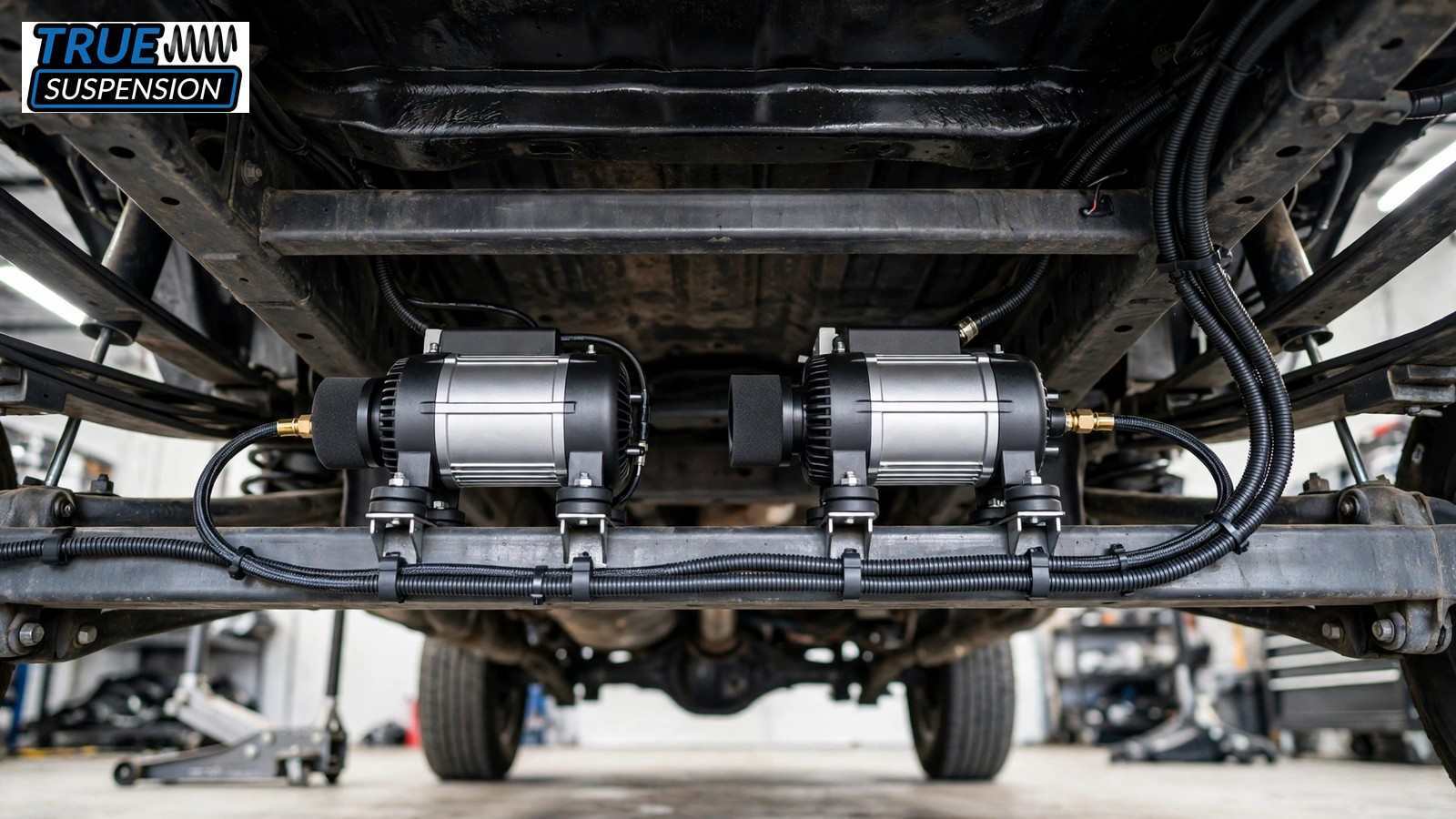
Mounting location shapes how long a pair lasts and how loud it feels in the cabin. Builders favour under-bed spots or trunk areas with room for air to move, and the tank and 8-valve FBSS manifold block for 4-corner systems sit so lines stay short and delivery stays strong.
Source, Wikipedia
Why vented mounting spots protect both motors?
A sealed corner traps heat around both motors and shortens service life, so a vented enclosure or mount protects the pair every drive. Airflow carries heat away from the housings, keeps duty cycles honest, and lets each motor run cooler while sharing the workload, which preserves seals, brushes,s and bearings.
Source:e, Wikipedia)
How do intake filters and short discharge lines protect airflow?
Clean air in and a short path out keep a pair pumping at full strength. Place intake filters facing air away from dust and road spray, and keep discharge lines as short as practical, since long runs add heat and slow the fill, robbing the speed it was bought for.
Source, Wikipedia
Quick Summary
- Vented spots keep both motors cool and long-lived.
- Clean intake air and short discharge lines protect full pumping speed.
Source, Wikipedia
What supporting parts complete a dual compressor system?
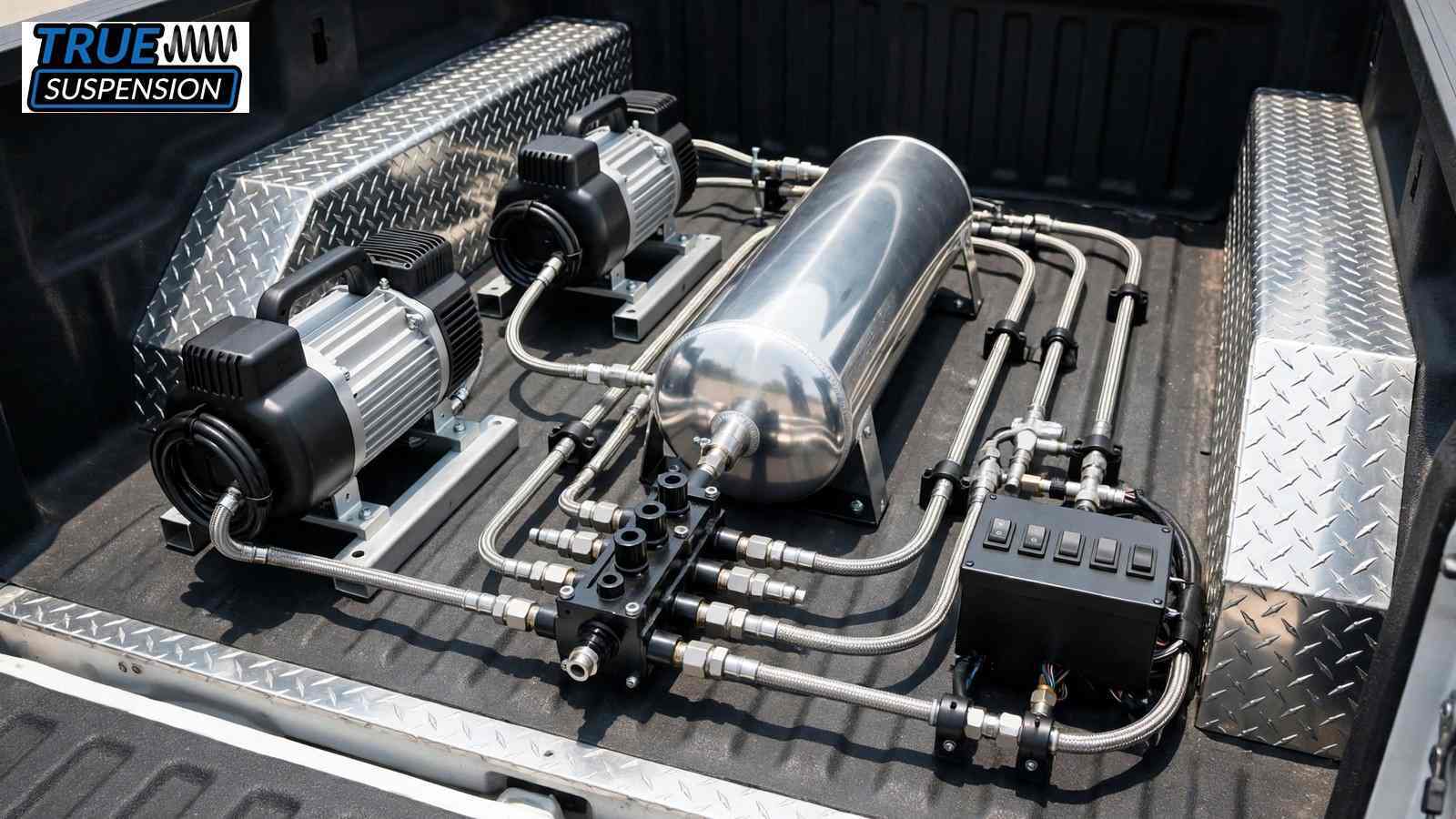
Motors and a tank alone do not make a system, because controls, protection parts, and backup options decide how easy a pair feels daily. The complete air ride management controller buyers guide helps owners choose gear first, then add switches, gauges and traps that keep pressure honest and moisture away.
Source, Wikipedia
Which control gear keeps a pair easy to manage?
A single pressure switch can run both motors together, turning the pair on as pressure falls and off at cut-off, while panel controls keep daily use simple. The dual paddle switch control panel with 150 psi gauge gives drivers clear manual control and a pressure reading on any drive.
Source, Wikipedia
How gauges, traps, and a manual fill kit add backup?
Gauges show tank pressure at a glance, so drivers spot recovery before it becomes a roadside problem. A water trap between tank and manifold keeps moisture out of valves, and a manual fill kit adds a layer of backup, letting owners add air from an outside source when electrics fail.
Source, Wikipedia
Quick Summary
- A pressure switch and panel controls keep a pair simple to run.
- Gauges, a water trap and a manual fill kit add honest backup.
Source, Wikipedia
Final Takeaway
Air ride is about freedom, the freedom to set your stance, clear any driveway and tow with confidence on your terms. That freedom depends on air supply, and air supply depends on honest math about your habits, so size the tank to your play style and wire the system cleanly.
Source, Wikipedia
- Match the compressor count to your air habits, not the biggest build you can imagine.
- A paired setup rewards owners who play often, tow heavy,y or run big tanks.
- A strong single setup still serves set-and-forget drivers faithfully for years.
Ready to size your system, start with the Active Air compact compressor and let the Scottsdale team confirm the pairing before you order.
Frequently Asked Questions
Can I add a second compressor to my existing single setup?
Yes, you can in most cases. Add a matching second compressor with its own check valve and relay, then tie both units into the existing pressure switch and tank. Keep the discharge lines separate until they reach the tank, and check your wiring can carry the combined draw.
Source, Wikipedia
How much faster will my tank fill with two compressors?
About twice as fast, because two motors move double the air per minute of one. A 5-gallon tank that takes 6 to 8 minutes from empty with a single compressor refills in 3 to 4 minutes with a pair. Recovery between lift cycles improves by the same margin.
Source, Wikipedia
Do two compressors need a bigger tank to work well?
No, a pair works with any tank size you already run. Bigger tanks simply let the two motors store more air between cycles, which means fewer starts during normal driving. Many owners upgrade the compressors first and only add tank volume later if play time runs short.
Source, Wikipedia
Is running two compressors on a daily driver just overkill?
For most daily drivers, honestly, yes. If you set your height in the morning and drop it at night, a quality single compressor handles that rhythm for years. The second motor earns its money when you play with the switches daily, run a big tank, or tow.
Source, Wikipedia
My compressor runs forever,r and the tank never catches. What is going on?
Your air demand has outgrown your compressor output. Time a full recovery, and if it stretches past five minutes regularly, the motor is losing the race no matter how healthy it sounds. Check for leaks and a tired check valve first, then treat a second compressor as the real fix.
Source, Wikipedia
Which compressor does TrueSuspension point owners to first for a dual setup?
The Scottsdale team starts owners with the Active Air compact compressor, a 1/3 hp unit with a 100 percent duty cycle that suits pairing. Two units share work evenly, and the team confirms tank size and wiring before you order, so your dual air compressors arrive as a matched system.
Source, Wikipedia
Can the TrueSuspension team help me size a compressor and tank pairing?
Yes, that is the kind of question the Scottsdale team answers every day. Tell them your vehicle, tank size, and how often you change height, and they will point you to a single or paired setup that fits. TrueSuspension sells parts only, so advice stays focused on the right hardware.
Source, Wikipedia