

Air Compressor Sizing: CFM, Duty Cycle & Tank
A slow fill at a show tells the story. You hit the switch, and the car crawls upward while the compressor drones on. The wrong compressor size causes that embarrassment, because honest cfm numbers decide how fast the bags recover. Get the size right, and the bags fill fast; the unit runs cool for years.
What size does an air ride compressor need to be? Most cars and trucks run on a 12 volt air ride compressor rated 1.5-2 CFM at working pressure, paired with a 3-5 gallon tank and 100 percent duty cycle, like the Active Air compact compressor at TrueSuspension for daily drivers.
The Scottsdale parts team at TrueSuspension helps owners size systems every day, and this compressor sizing guide collects bench knowledge. You will learn what flow measures, how understanding air compressor performance prevents slow fills, and how tank choice changes daily driving, whether you bag your truck or fix a slow fill before winter.
Quick Summary
- Size by flow and pressure together, because flow at working pressure decides fill speed, not free flow numbers.
- A 12-volt unit rated 1.5-2 CFM with a 3-5 gallon tank covers most bagged cars and trucks.
- Add 50 percent headroom above demand, so leaks and hot days never strain the unit.
- A 100 percent duty cycle unit runs without rest breaks, while smaller units need rest.
- Drain the tank and fit a water trap, because dry air keeps valves crisp.
Understanding air compressor size and your CFM requirements
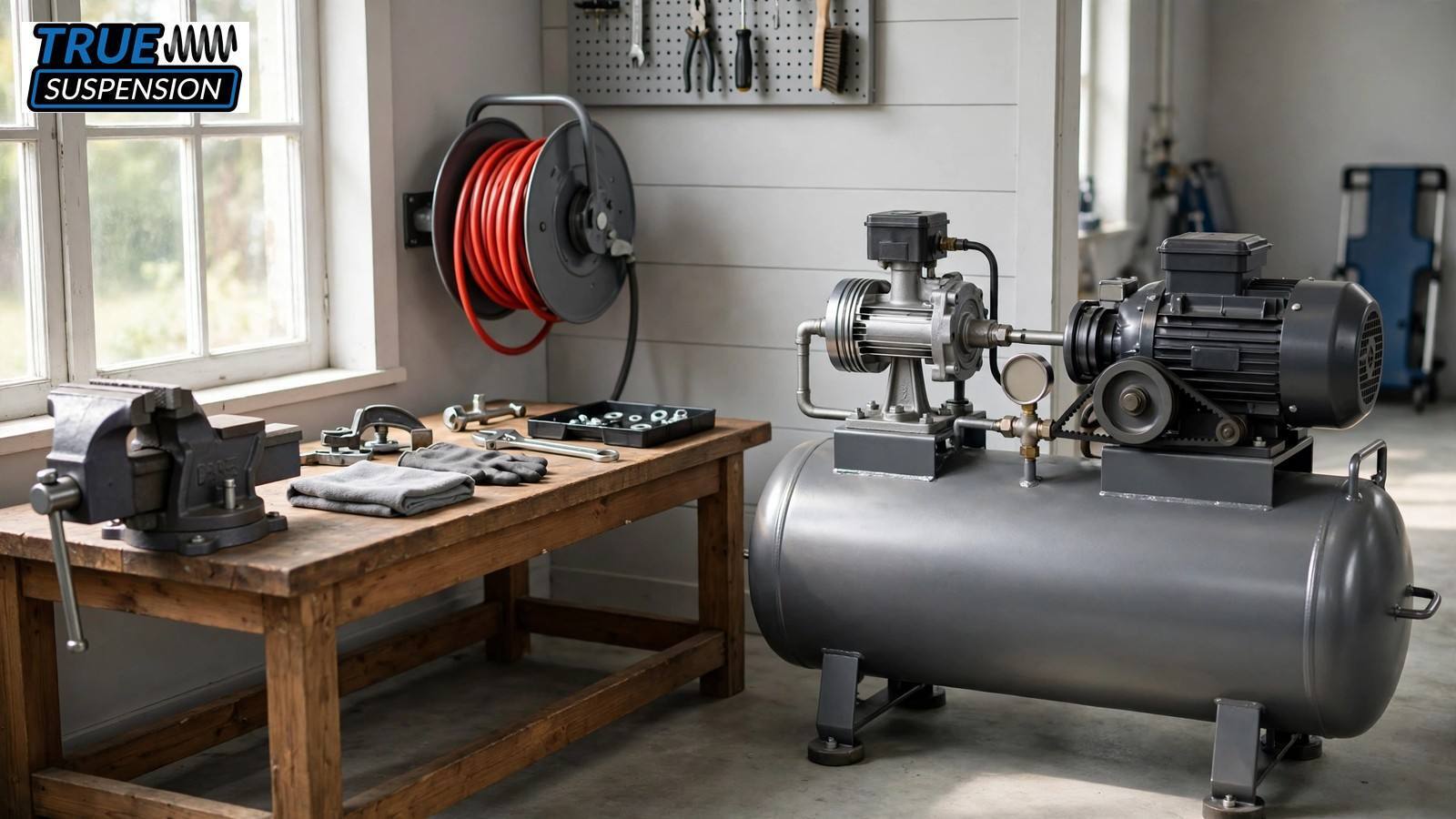
The volume of air your bags need sets the starting point for sizing a bagged car or truck. For an air ride compressor, that flow is called cfm, short for cubic feet per minute, and it measures the volume of air moved each minute. The cfm rating at working pressure then shows recovery speed.
Source, Wikipedia
What cfm really measures in cubic feet per minute
Start with the volume of air the compressor moves at the pressure your bags run, not the free flow figure printed on the box. That honest number indicates the volume of air available for each fill, and our air ride management controller buyer's guide shows how the controller side uses that supply during driving and show use.
Source, Wikipedia
Why the CFM rating at working pressure matters more than free flow
Your CFM requirements come from whatever you run, and your pressure requirements climb with vehicle weight and bag size on heavier builds. Before you buy, understanding the flow and pressure relationship saves money, because flow and pressure requirements must line up. A rating taken at zero pressure hides how the unit behaves near cutoff.
Source, Wikipedia
How compressor size shapes fill time, heat and service life
The size you choose shapes fill time because the compressor can deliver only so much air before heat builds in the motor. Choosing higher CFM shortens the wait and cools the motor, while a weak unit turns every cruise night into a waiting game. A properly sized unit has you aired up before the crowd gathers at shows.
Source, Wikipedia
Quick Summary
- Flow at working pressure sets fill speed, recovery, and motor heat.
- A unit matched to demand runs cool and lasts, while an undersized one strains.
Source, Wikipedia
How do you size an air compressor using capacity and flow rate
To size the unit, start with CFM and PSI, because the pair works on every fill for an air-ride compressor. Psi, or pounds per square inch, is the pressure inside the tank, while flow is how fast the unit replaces used air. When capacity and flow rate line up, fills stay steady without strain.
Source, Wikipedia
How cfm and psi work together on every fill
Ratings change with pressure, so your cfm and psi requirements set the pump size and the cutoff switch. Always size your compressor to both numbers, not one, because flow falls as pressure climbs toward cutoff. Comparing flow at your working pressure, not at zero, keeps the math honest for bags and tools.
Source, Wikipedia
How the specific requirements of your tools set the target
The pro rule is simple: add up the specific requirements of your tools, then match the compressor to 150 percent of that total for headroom. If your tools need 4 CFM, shop for 6, and check the CFM you would need against the working number. Headroom covers leaks, hose runs, and hot days.
Source, Wikipedia
|
Step |
What to Do |
Example |
|
1 |
List every pneumatic tool and its CFM |
Impact wrench 4, blow gun 2 |
|
2 |
Add the CFM numbers |
6 CFM total |
|
3 |
Multiply by 1.5 for headroom |
Shop for 9 CFM |
What the compressor can deliver per minute at working pressure
The air the compressor can deliver at 90 psi is what matters, and a spec sheet lists what the compressor can deliver per minute at that level. Headroom determines how effectively a compressor handles conditions, and it shows how effectively a compressor can perform when everything runs, as the digital vs manual controller comparison assumes behind either style.
Source, Wikipedia
Quick Summary
- Add tool demand together, multiply by 1.5, and check flow at working pressure.
- That habit prevents undersized purchases and keeps the unit loafing instead of straining.
Source, Wikipedia
How to choose the right air compressor size for common air tools
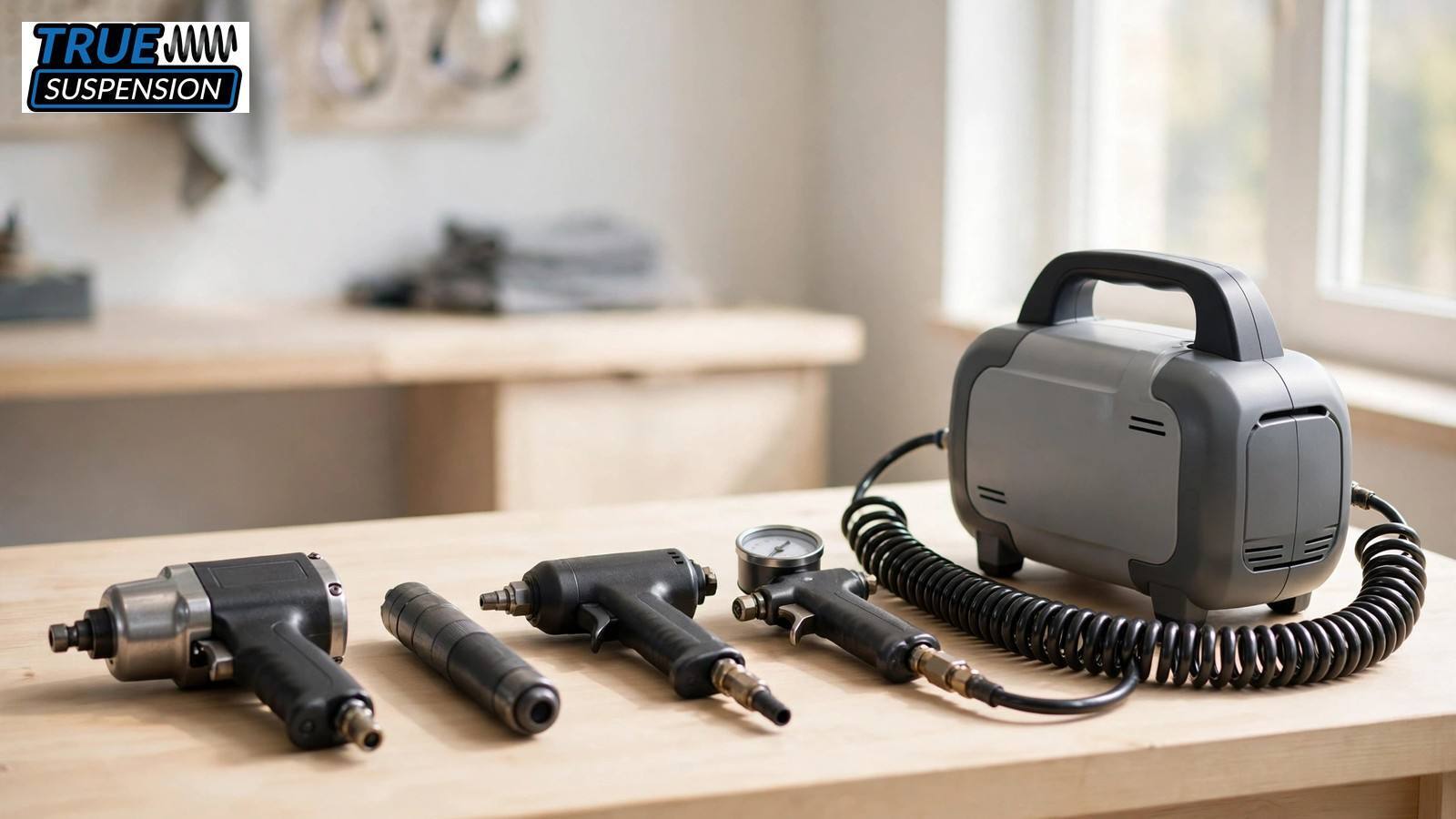
Every air tool draws air in bursts, and common air tools like impact wrenches, ratchets, and blow guns list demand. Finding the right air compressor size starts there, because an air-ride compressor may still fade when you run air tools all afternoon. When you choose a compressor, match the hungriest tool and add headroom.
Source, Wikipedia
How common air tools list their CFM appetite
Makers print the demand on the box and in the manual as a figure for each pneumatic tool at working pressure. That figure tells you how much air the tool drinks while running, not while idle. Read the CFM air figure beside the pressure rating, check it against tools you own, and note the highest number before shopping.
Source, Wikipedia
|
Common Air Tool |
CFM at 90 PSI |
Shop Notes |
|
Half-inch impact wrench |
4-5 |
Popular garage tool |
|
Three-eighth-inch ratchet |
3-4 |
Light assembly |
|
Die grinder |
5-8 |
Air hungry, size up |
|
Blow gun |
2-3 |
Easy |
|
Tire inflator |
1-2 |
Any 12-volt unit |
Why CFM at 90 psi is the honest reference for tools
Most honest spec sheets list CFM at 90 psi because tools work under load at that pressure and free-flow numbers flatter every CFM air compressor. Buyers find choosing an air compressor by that figure shows the right air compressor for work, and selecting the right air compressor becomes simple math instead of guesswork for garage owners.
Source, Wikipedia
How the right air compressor protects the longevity of your air tools
A starved tool loses torque, runs rough, and wears fast, so supply protects the longevity of your air tools. Pick a compressor that meets peak demand and each tool motor works within its design range. The TrueSuspension range in Scottsdale pairs units with the must-have air ride hardware list so builders can protect their tools at shows.
Source, Wikipedia
Quick Summary
- The right air compressor is crucial because size is crucial for ensuring torque, and a compressor that meets or exceeds demand keeps tools healthy.
- You need a compressor with headroom, and the best compressor for tools is rated at working pressure.
Source, Wikipedia
How much air pressure and amount of pressure does your system need
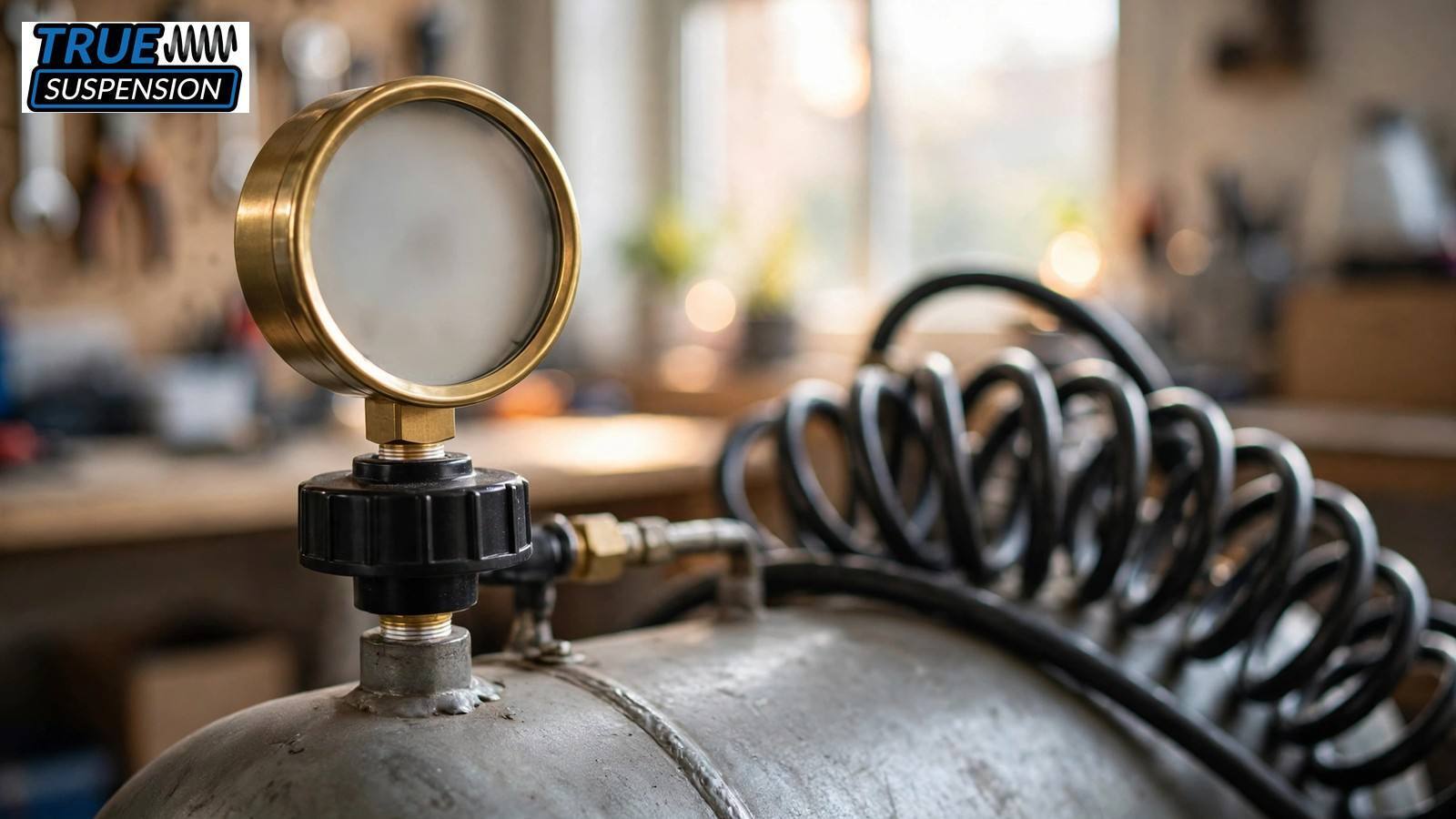
Air pressure does the lifting in every bagged build, and the amount of pressure needed depends on vehicle weight and bag size. Heavier trucks sit high while lighter cars run lower, and using an air system near the low end keeps seals and valves happy. An air ride compressor matched to that load reaches cutoff without strain.
Source, Wikipedia
Why most air ride systems run 150 to 200 psi
Most setups run 150 to 200 psi because that range lifts every bagged car and truck without pushing seals past their comfort zone. Higher pressure lifts heavier trucks while lighter cars stay near the low end, and steady pressure keeps ride height even. The Active Air 8-valve manifold block handles distribution at these pressures for four-corner builds.
Source, Wikipedia
How to consider the duty cycle when pressure climbs
As pressure climbs toward cutoff, flow falls and heat builds, so the duty cycle rating shows run time before rest. A 100 percent rating means the compressor can run without breaks, while smaller ratings need equal rest. Always consider the duty cycle beside pressure, and follow the air ride maintenance guide to keep that performance steady.
Source, Wikipedia
Quick Summary
- Most air ride systems run 150 to 200 psi, with heavier trucks near the top and lighter cars near the bottom.
- Match pressure to weight and bag size, then pick a duty cycle rating that suits your use.
Source, Wikipedia
Piston compressor or rotary screw, which one wins on compressor performance
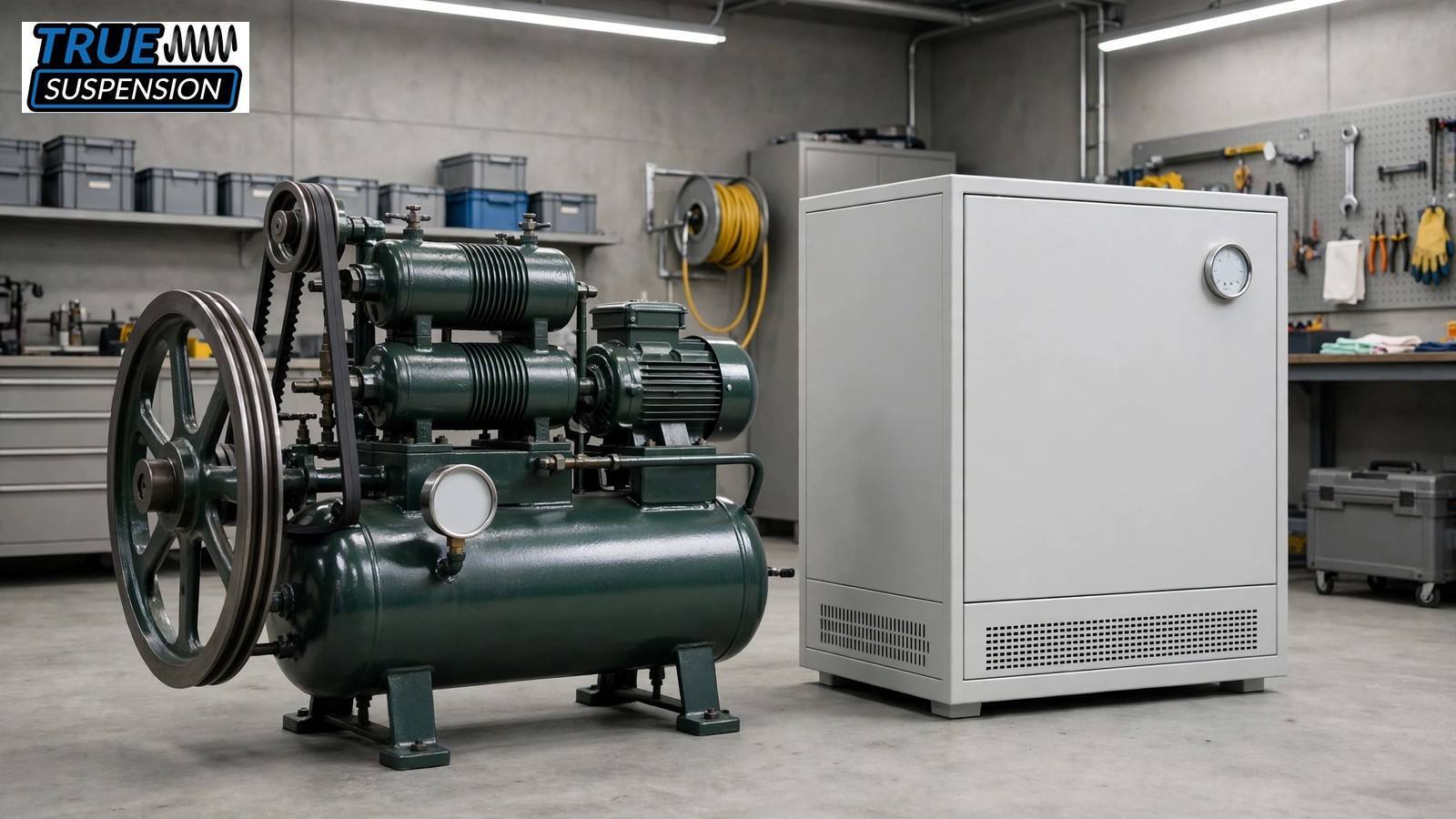
Two compressor types dominate the air world, and the gap between them shapes every build. A piston compressor suits most garages, and portable air compressors of that design stay affordable, tough and easy to service. A rotary screw unit serves nonstop factory demand. For an air ride compressor setup, the piston design wins on price, simplicity and honest performance.
Source, Wikipedia
How a piston compressor squeezes air for garage duty
A piston moves up and down, drawing air in on one stroke and squeezing it on the next. That air pushes through a valve into the tank, where pressure builds for the next lift. The cycle runs in bursts and suits garage duty because bag fills are short and easy on the motor.
Source, Wikipedia
Why rotary screw air belongs in factories instead
Rotary screw air comes from meshing rotors that trap air and squeeze it in a stream without pistons. That design shines for all-day use, yet it costs more and needs factory-scale service. Air compressors typically require little upkeep at garage size, so a smaller compressor covers bag duty without the price or weight of screw equipment.
Source, Wikipedia
What Atlas Copco teaches about honest sizing as a benchmark
Leaders such as Atlas Copco publish flow ratings at working pressure, and that discipline is the lesson to copy. TrueSuspension does not sell those units, and the brand belongs as a benchmark. Apply that honesty to a 12-volt pick, then read the front-only vs full 4-corner comparison to see how corner count changes demand.
Source, Wikipedia
Quick Summary
- Piston units suit garages on price, simplicity, and easy service.
- Screw units serve factories that need nonstop flow all day.
- Honest ratings at working pressure beat big box numbers.
Source, Wikipedia
Buying a compressor with a comprehensive guide to the right size air compressor
Buying a compressor gets easier when you treat this comprehensive guide as a checklist built around compressed air needs. Start by listing jobs, then weigh the aspects of air use across bags, tires,s and tools. The Scottsdale team praises honest ratings at TrueSuspensi because air compressor size is crucial to how an air ride compressor feels daily.
Source, Wikipedia
Why a written job list helps you choose the right air compressor
A written job list turns guessing into math and shows the air compressor for your needs instead of a shiny box. Write each bag, tire,e and tool job, then name the compressor for your needs with headroom. You want to choose a compressor that meets every listed job, because the right compressor runs cool, fills fast and lasts.
Source, Wikipedia
How tank size balances against the amount of air a pump moves
Sizing an air compressor involves balancing storage against flow, because the tank and the pump share one job. A bigger tank holds more reserve, while a stronger pump refills reserve faster after each lift. Match the size of the air tank to your trunk or bed space, then check the amount of air the pump moves at working pressure.
Source, Wikipedia
When a compressed air sales professional should check your math
If your math feels shaky, a compressed air sales professional can check numbers before money leaves your pocket. The Scottsdale team at TrueSuspension does this daily for 12-volt builds, checking flow, pressure, re, and duty cycle against your list. The parts-only guidance stays honest, and the custom vs. universal kits guide helps you pick the setup around the unit.
Source, Wikipedia
Quick Summary
- List every job, then balance tank size against pump output.
- Honest numbers from a specialist beat marketing claims every time.
- Ask the Scottsdale team to check the math before ordering.
Source, Wikipedia
How compressed air systems protect air quality and store free air.
Well-kept compressed air systems pair a pump, a tank, and lines into a layout, yet air compressor systems live or die on air quality from day one. Moisture creeps in each cycle and attacks valves and seals from inside. Your air ride compressor works hardest on humid days, so dry air protects response, ride feel and reliability.
Source, Wikipedia
Why air treatment and water traps keep valves crisp
Good air treatment starts with a water trap where moisture can collect before it reaches the valves. That compressor-based layout stays easy to service, and the trap catches water that would make valves sticky. Drain the trap, keep fittings tight, and switch response follows. Builders who manage moisture early rarely chase leaks, sticky valves, or lift issues.
Source, Wikipedia
How free air becomes stored energy inside the tank
The term free air means the air around us at atmospheric pressure before the unit squeezes it into the tank. Once compressed, air becomes stored energy, and the amount stored decides how long you can run. Tanks sweat on humid days, and the same rules behind compressed air for various jobs apply to your trunk setup.
Source, Wikipedia
Why steady air flow and regular draining protect the whole system
Mount the unit where it gets airflow, because heat and stale air shorten service life. Balanced airflow and pressure keep fills predictable, while draining stops stored water from reaching valves and lines. Our air ride for classic cars guide shows those habits protecting builds, and the Scottsdale team praises owners who make draining a routine before storage and shows.
Source, Wikipedia
Quick Summary
- Dry air keeps valves crisp and protects seals.
- Regular draining and steady cooling air extend system life.
Source, Wikipedia
What an air audit reveals about compressor performance and real demand
An air audit sounds industrial, but it means watching system behavior across a week of driving. It shows compressor performance against demand instead of box claims, and it proves there is no single compressor for everyone. This guide will help you judge an air ride compressor before you spend money on wrong parts.
Source, Wikipedia
How to time a fill and count cycles like an audit
Time a fill, note cycle count, and watch output fall as pressure climbs. Those notes discover the essential air compressor truth, whether it is loafing or struggling. Needing frequent breaks for pressure buildup signals an undersized unit, and the lift kit myths debunked warns against box numbers, because an air compressor can make every drive feel easy.
Source, Wikipedia
What the Scottsdale bench checks before any sizing advice
Parts Bench Note: compare CFM at working pressure rather than free flow numbers, respect the duty cycle the maker asks for, and drain the tank before storage. Those habits add years to any unit. Ready to match parts to your build, check the ratings on the Active Air compact compressor page and compare them against your audit notes.
Source, Wikipedia
Quick Summary
- Timing fills and counting cycles shows whether the unit is loafing or struggling.
- Honest audit notes lead to better sizing choices than box claims.
Source, Wikipedia
How tank size and duty cycle shape an air ride build
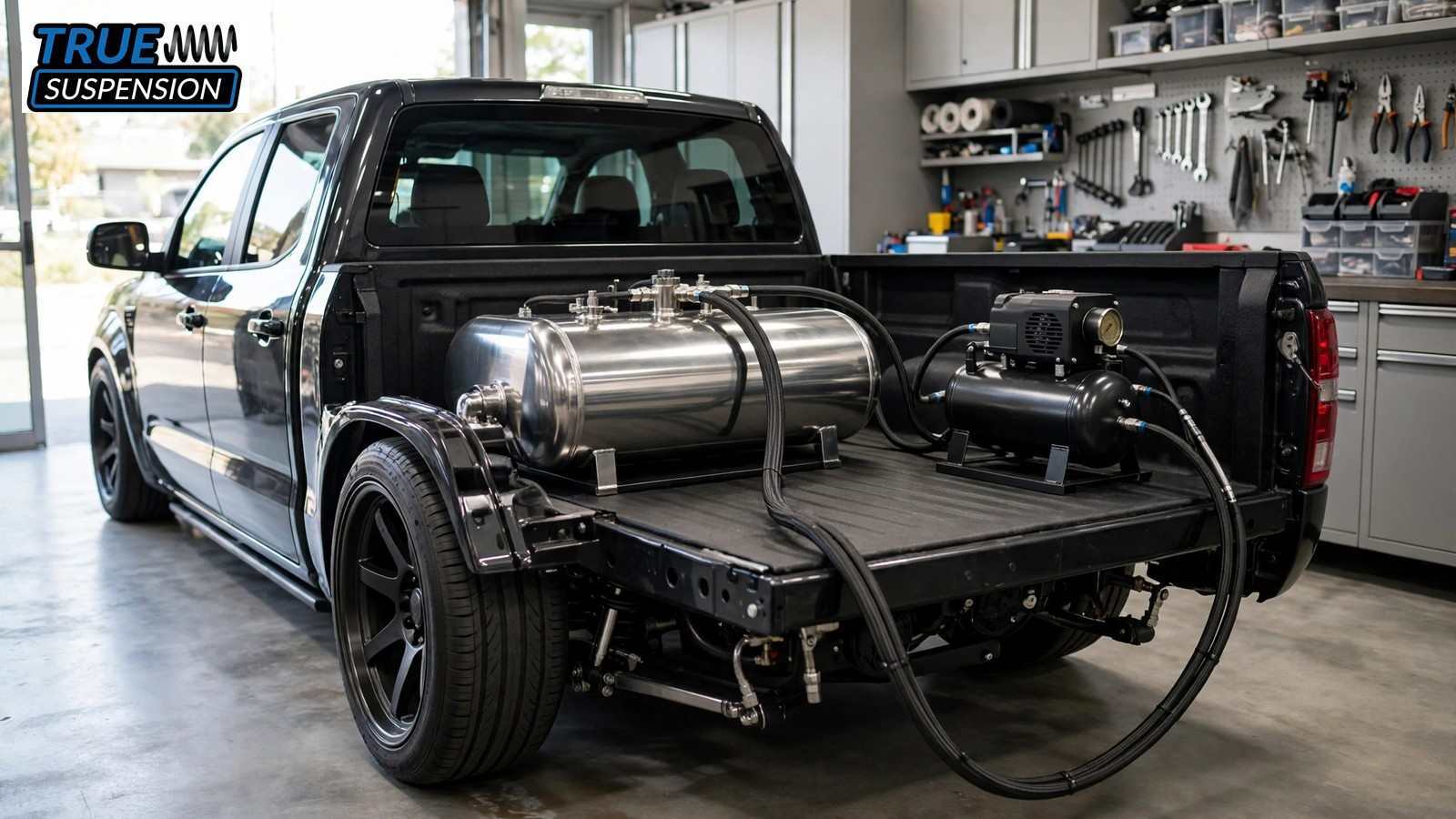
Tank size and duty cycle shape an air ride build more than any part number, because they decide how often the unit runs and how long recovery takes. A bigger tank stores more air for each switch hit, while a stronger rating lets the air ride compressor work longer without a rest between fills on driving days.
Source, Wikipedia
How tank size changes fill speed and cycle count
The size of the compressor decides how quickly air comes back after you use it, and the tank decides how much you can use before the unit starts. A small tank fills fast but cycles often, while a larger tank takes longer from empty yet holds enough air for adjustments between runs.
Source, Wikipedia
|
Tank Size |
Fill Speed |
Best For |
|
2 gallon |
Fast |
Tight trunks and motorcycles |
|
3 gallon |
Medium |
Daily driven cars |
|
5 gallon |
Slower |
Trucks and show builds |
What a 100 percent duty cycle really promises
The size of the compressor impacts fill times, motor heat, and service life, and the rating tells how that work gets shared over time. A 100 percent unit can run continuously without rest, while a 50 percent unit needs equal rest, so ten minutes of running calls for ten minutes of cooling before the next fill cycle begins.
Source, Wikipedia
Which tank size fits daily driven cars and trucks
Picking the right air compressor starts with how you drive, and for most daily drivers, a 3 to 5 gallon tank paired with a 12 volt unit hits the sweet spot. Daily-driven cars suit the 3-gallon end, while trucks and show builds that air out suit the wider 5-gallon choice for longer use.
Source, Wikipedia
Quick Summary
- Bigger tanks mean fewer cycles; smaller tanks fill fast but run more often.
- A 100 percent rating lets the unit run continuously without rest breaks.
Source, Wikipedia
What goes on the final sizing checklist before you buy
You choose the right air compressor when the checklist comes before the purchase, and that list pulls every earlier lesson into one page. Write flow, pressure, tank space, and rest needs, then match each line against ratings at working pressure. That habit keeps the air ride compressor matched to driving instead of box claims.
Source, Wikipedia
How to write your CFM and PSI requirements at the top of the list
Your air compressor size starts with two numbers at the top of the list: the flow your bags need and the pressure they need at ride height. Match the flow you would need for bags, then add 50 percent headroom for leaks and hot days. Confirm the pressure at ride height before ordering parts.
Source, Wikipedia
How the Scottsdale team helps you pick the right size
Tell the Scottsdale team your vehicle, your bag setup, and how you drive, and they help you pick the right size air compressor for that build. They match the unit to your tank, pressure range, and rest needs from a parts selection, and the questions to ask before buying a lift kit guide covers the rest.
Source, Wikipedia
Quick Summary
- Write flow and pressure needs, then add 50 percent headroom over demand.
- Let the Scottsdale team match tank, pressure, and rest needs to your build.
Source, Wikipedia
Final Takeaway
Size it once and size it right, and the build gets easier from the first drive. Start with bags, add 50 percent headroom, pick a tank for your space, and choose a unit that meets your rest needs. Check the ratings on the Active Air compact compressor page and match them against your numbers before ordering.
Source, Wikipedia
Quick Summary
- Match flow and pressure needs to bag demand, then add 50 percent headroom.
- Pick a tank that fits your trunk or bed without killing usability.
- Choose a 100 percent rating for daily cars that air up and down often.
Source, Wikipedia
Frequently Asked Questions
These answers pull the sizing rules into guidance for common buying questions. They cover flow at working pressure, rest ratings, tool demand, slow fills, single and dual setups for a 5-gallon tank, help from the Scottsdale team, and a compact unit that runs without resting, using honest numbers from this guide.
What size air compressor do I need for air ride?
Most bagged cars run on a 12-volt air ride compressor rated 1.5 to 2 CFM at working pressure, paired with a 3- to 5-gallon tank for daily use. Heavier trucks and show cars that air out often should step up to a 100 percent rating or dual units for faster recovery.
Source, Wikipedia
What does duty cycle mean on an air compressor?
It is the share of time a unit can run before it must rest and cool, and a 100 percent rating means it can run continuously without breaks. A 50 percent unit needs equal rest, so run it ten minutes and rest it ten minutes per fill cycle to protect the motor.
Source, Wikipedia
What CFM do I need to run air tools at home?
Plan around the hungriest tool, because a half-inch impact wrench needs 4 to 5 CFM at 90 PSI and a die grinder can need 5 to 8 CFM. Add the tools that run together, multiply by 1.5 for headroom, and buy a unit that meets or exceeds the total at working pressure.
Source, Wikipedia
My compressor takes forever to fill the tank; is it too small, or is something else wrong?
A slow fill usually means the unit is undersized for the tank, worn, or choked by a clogged filter, and the fix starts with a timing test. Time an empty-to-full fill and compare it with the rating at working pressure, because a big gap means the unit works too hard.
Source, Wikipedia
Is one compressor really enough for a 5 gallon tank, or do I need duals?
One unit fills a 5-gallon tank fine for daily driving, and it takes longer to recover after you air out at a show or meet. Dual units earn their cost on show cars and heavy trucks that cycle often, because each one runs cooler, fills faster, and lasts longer in hard use.
Source, Wikipedia
How does the TrueSuspension team help me choose the right compressor?
Tell the team your vehicle, bag setup, and how you drive, and they match the unit to your tank, pressure range, and rest needs for that build. TrueSuspension is a parts-only store, so the team does not sell installation, and the goal is honest ratings and a fit for your build, not the biggest box.
Source, Wikipedia
Does TrueSuspension sell a compact compressor that can run without resting?
Yes, the Active Air compact unit in the TrueSuspension range carries a 100 percent rating, so it runs continuously without rest breaks. It suits daily driven cars and trucks that air up and down often, and the team can confirm whether one unit covers your tank and bag setup before ordering.
Source, Wikipedia