
Strut Spacers vs Complete Replacement Struts for Leveling
Choosing between strut spacers and complete replacement struts is the classic leveling kit dilemma. Both level the front of your truck, but they do it in very different ways, and the right choice depends on your budget, your suspension, and how you actually drive.
This guide breaks down the kit vs. kit battle honestly, what strut spacers really change, what new leveling strut assemblies improve, and where each option makes sense. By the end, you will know exactly which spacer kit or strut upgrade belongs on your truck.
What Spacers Do to Level Your Truck?
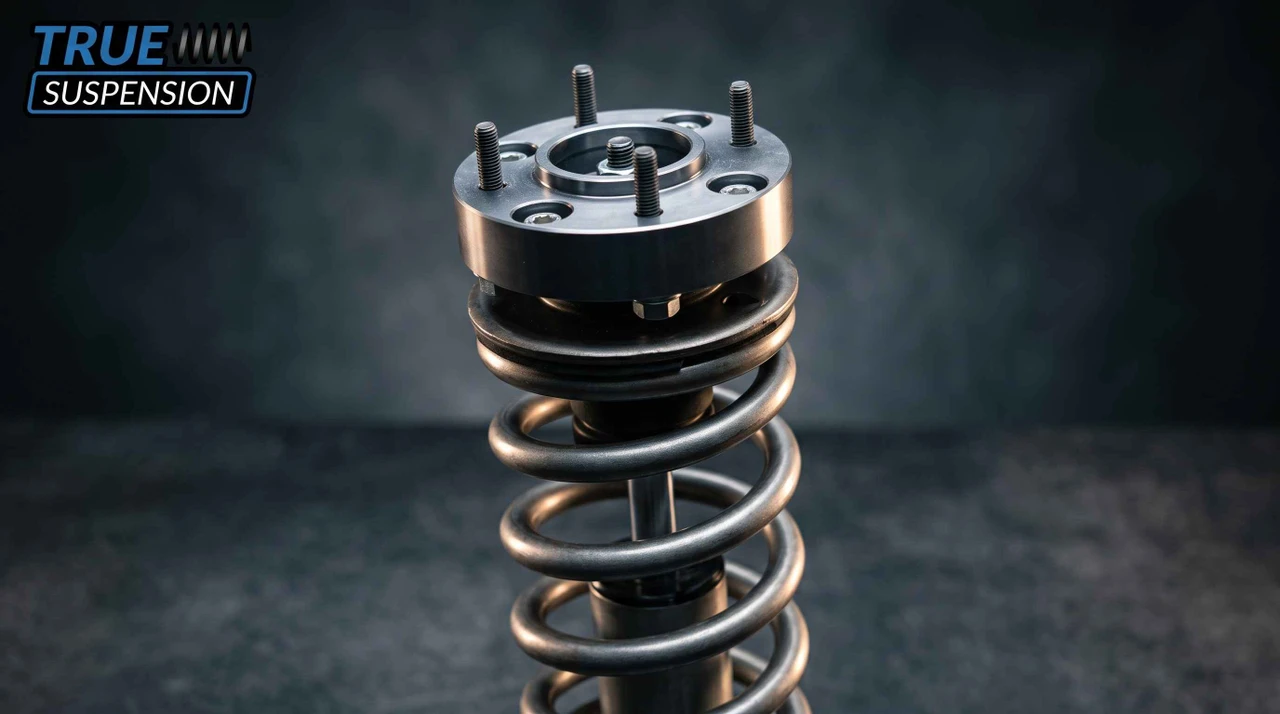
Strut spacers are the simplest way to level a truck. A spacer, often called a puck, bolts to the top mounting point of your factory strut assembly, pushing the whole strut downward and raising ride height without touching the coil spring or shock valving. The coil keeps its stock spring rate, the shock keeps its stock damping, and the truck simply sits taller.
Every truck leaves the factory with rake, a nose-down stance that keeps the rear ready for payload. A spacer lift erases that rake up front for a level stance. Because a level spacer changes geometry rather than spring behavior, the ride feels familiar, just taller.
Why truck owners choose spacers
- Lowest cost way to level the stance
- Keeps the factory ride height feel and shock tuning
- Simple puck-style parts with an easy install
- No change to spring rate or load handling
Shop TrueSuspension, 2-inch front coil-spring spacer leveling kit for the C10
From the blog, lift kits vs. leveling kits, what truck owners must know
Leveling Kit Spacer Kits, How a Spacer Kit Lifts the Front?
Most strut spacers arrive as a complete spacer kit with everything the front suspension needs: spacers, hardware, and sometimes a strut extension or preload spacer for coil-over designs. These leveling kit spacers come in common sizes, and spacer thickness directly determines how much lift you get.
A coil spacer sits inside the spring to add preload, while a top-mount spacer sits above the strut assembly. When you add a spacer up top, the whole assembly drops down relative to the chassis. Trucks that add spacers typically choose 1.5 to 2.5 inches; the 2-inch size is the sweet spot for most half-tons, erasing factory rake without pushing geometry too far. For budget builds, a spacer leveling kit delivers the look for the least money.
|
Spacer type |
Where it mounts |
Typical lift |
Best for |
|
Top-mount puck |
Above the strut assembly |
1.5–2.5 in |
Simple, affordable leveling |
|
Preload spacer |
Inside the coil spring |
1–2 in |
Fine-tuning stance |
|
Strut extension |
Below the strut |
2–3 in |
Extra height on some kits |
Shop TrueSuspension, 3-inch front coil-spring spacer leveling kit for the C10
From the blog, air bags vs. torsion bars for truck leveling
Leveling Strut vs Strut Spacer, What's Actually Different?
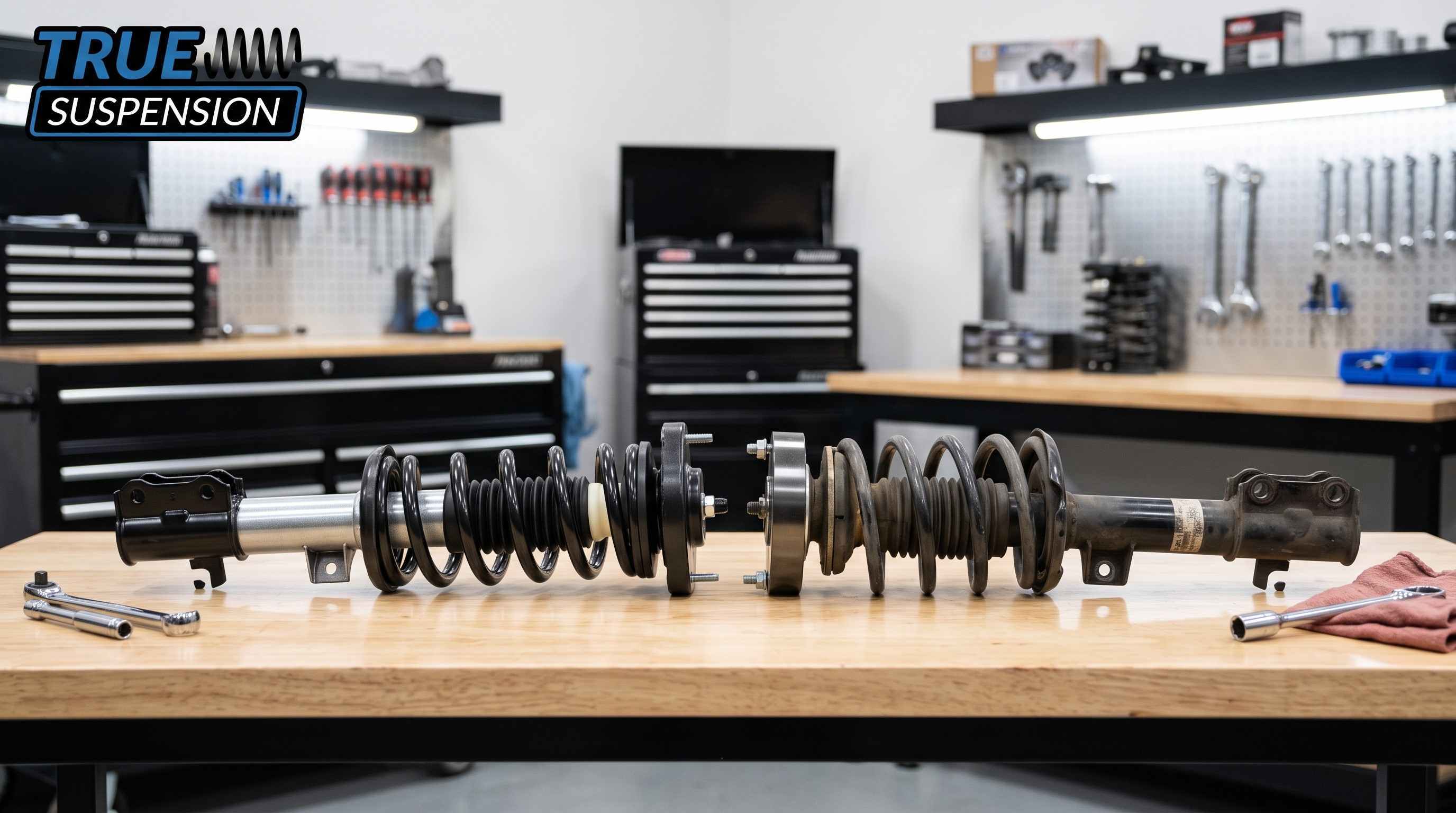
Here is the core difference: strut spacers keep your factory struts and just relocate them, while replacing the strut with a leveling strut gives you new struts engineered for the taller ride height. A loaded strut arrives pre-assembled with spring and mount, while lifted struts use a taller body or revised valving to deliver the lift with proper damping.
|
Strut spacer |
Leveling strut (complete replacement) |
|
|
What changes |
Strut position only |
Entire strut assembly |
|
New struts included? |
No, reuses factory struts |
Yes |
|
Ride quality |
Same as stock |
Often improved |
|
Damping |
Factory valving |
Tuned for the lift |
|
Typical cost |
100–300 |
300–900+ |
|
Best for |
Healthy struts, tight budget |
Worn struts or better performance |
A strut leveling kit built around complete struts is the smarter buy when your factory units are tired. If your struts are fresh and you just want the look, a quality level spacer kit delivers it for less.
Shop TrueSuspension, 2.5-inch front strut spacer kit for the Ram 1500
From the blog, 10 questions to ask before buying a lift kit
Shock Talk: How Each Option Treats Your Shocks
Your shock absorber controls damping; the spacer only changes ride height. Strut spacers leave the factory shock body and valving untouched, which is why the ride barely changes, for better or worse. If your goal is to improve ride quality, new struts beat spacers every time.
This is where benchmark products earned their reputation; the Bilstein 5100 set the standard for leveled trucks, and the 5100's progressive valving is still what engineers compare against. Adjustable struts offering around 2.1 inches of lift let you dial in stance with proper damping, while kits like the Rough Country 2-inch level and the RC level prove how popular the simple spacer route remains.
The honest rule: front shocks with 80,000 hard miles will feel tired and stiffer over sharp bumps no matter what spacer you bolt on. Taller lift shocks with corrected valving and proper rebound damping transform the truck in a way spacers alone cannot. Match the part to the problem, looks, or damping.
Shop TrueSuspension, complete 3-inch front / 2-inch rear F-150 lift kit with Pro Comp shocks
From the blog: how to maintain factory ride quality after a lift
Coilovers and the Step Beyond Spacers
When strut spacers are not enough, coilovers are the next step up. A coilover combines the coil and shock in one threaded coilover assembly with adjustable ride height, so you get leveling, improved damping, and tunability in a single package.
Coilovers shine for truck owners who want more than looks, better articulation on the trail, composed handling on pavement, and ride height you can adjust without disassembly. For serious off-road use, or off-road play on the weekends, a quality coilover conversion delivers what no puck-style spacer can: real performance with the stance.
Shop TrueSuspension, 3-inch front / 2-inch rear Silverado/Sierra lift kit with Pro Comp shocks
From the blog, 10 lift kit myths debunked
Ride-Height Reality, What 2 Inches Really Looks Like
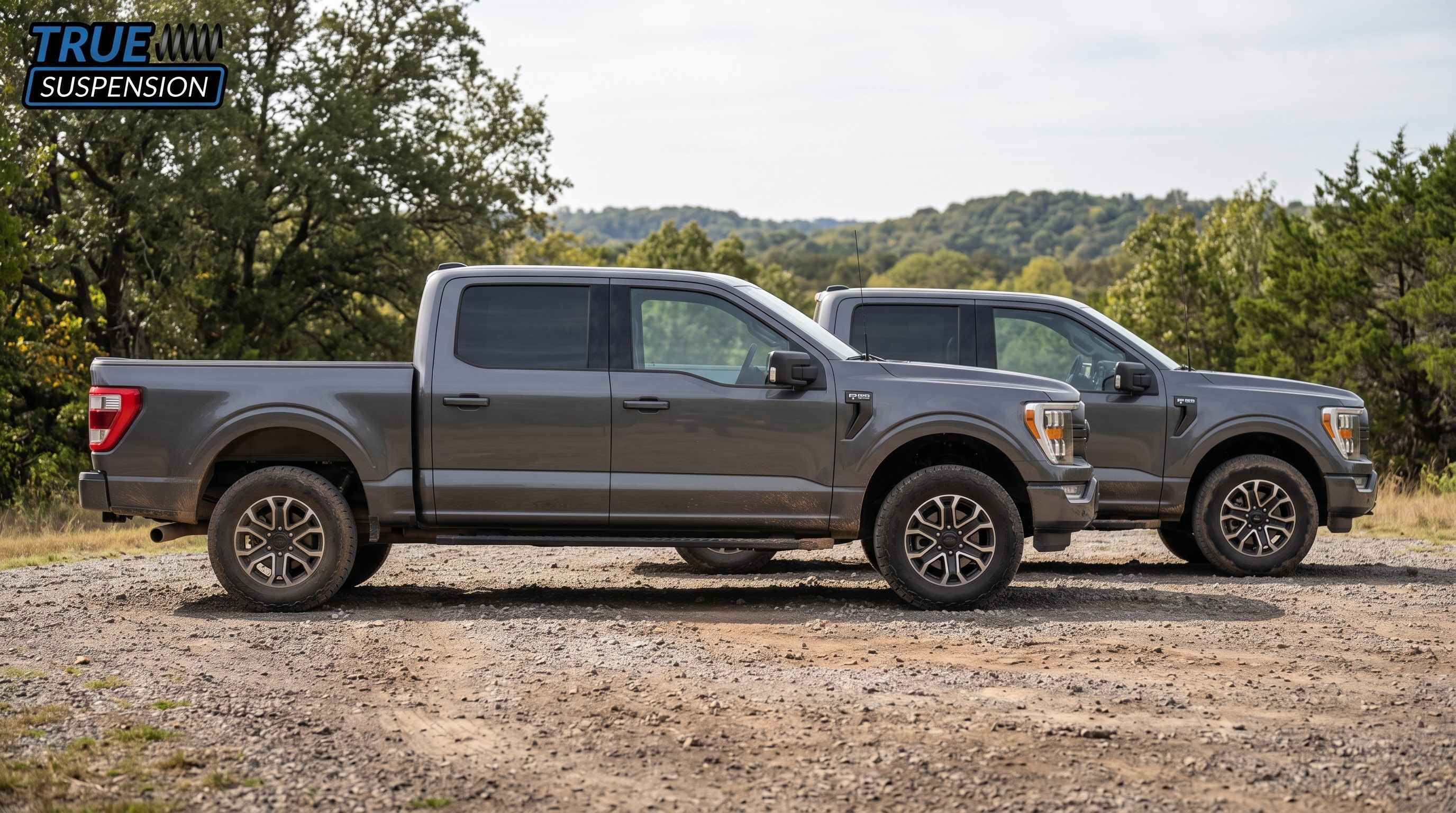
Two inches does not sound like much until you see it. Strut spacers in the 2-inch range transform a truck's stance, filling the wheel well and adding real tire clearance for the wheels and tires you actually want. An F-150 on 33s looks completely different from one at stock height.
Ride-height expectations by size,
- 1-1.5 inches, subtle level, erases most factory rake
- 2inchesh, the classic leveled look, room for one tire size up
- 2.5 inches, aggressive stance, check upper ball joint angles
Remember that ride height is only half the story. Bigger tires raise the axles, which is what truly improves clearance, and the spacer simply makes room for them. Measure your wheel well clearance at full lock before buying rubber.
Shop TrueSuspension, 3-inch front / 1.5-inch rear Ram 1500 lift kit with Pro Comp ES9000 shocks
From the blog, 10 trucks that benefit most from a lift kit
Spacers and Your Suspension, Control Arms, CV Joints & Ball Joints
Strut spacers change suspension geometry, so the supporting parts matter. Raising the front steepens control arm angles, loads the ball joints harder, and increases CV joint angles on 4WD trucks. Most trucks use a MacPherson strut front end, where the strut itself is a structural part of the suspension, so moving it moves everything.
Watch these wear points after installing strut spacers,
- Upper control arm and lower control arm bushings see new angles
- The UCA, specifically the UCA's upper ball joint, runs closer to its limit at full droop
- CV joints and the driveline work harder as angles steepen
- Downtravel shrinks while up-travel grows; consider new bump stops to manage the bump stop contact
None of this disqualifies spacers; millions of trucks run them reliably. It just means a post-install visit to the alignment shop is mandatory, and taller setups deserve an upper control arm upgrade to restore proper geometry through the full range of droop and down-travel.
Shop TrueSuspension, forged 2.5-inch front coil-spring spacer kit for the Ram 1500
From the blog, choosing the right lift kit, F-150 vs Ram vs Silverado
Leveling Kit vs Suspension Lift, Where Spacers Stop Making Sense
Strut spacers are a leveling kit solution, not a suspension lift. The leveling kit vs suspension debate ends wherever your goals exceed about 2.5 inches of lift; beyond that, you need a true suspension lift with corrected geometry.
A full lift or full lift kit raises the whole truck with taller springs, longer shocks, drop brackets, and steering correction, a different league from spacers. Body lifts are another budget option, but like spacers, they only change looks, not capability. If your plans include 35s, real trail work, or heavy towing, skip the spacer stage and invest in the lift kit your goals actually demand.
Shop TrueSuspension, 4-inch torsion-key lift kit for the 1999–06 Silverado 1500
From the blog, 10 suspension upgrades that improve towing safety
Installing a Spacer Ki:, What the Job Involves
Installing strut spacers is a driveway job for most truck owners. The basic sequence,:support the truck, remove the wheel, unbolt the strut assembly, compress the coil spring if needed, bolt the spacer to the top mounting points, reassemble, and drive straight to the alignment shop.
Budget a Saturday morning, basic hand tools, and a spring compressor you respect. The parts are simple; this is genuinely a puck and hardware job, but the alignment afterward is non-negotiable. A good alignment shop will also flag worn ball joints or tired bushings before they become problems, which is valuable intel on any truck with real miles.
Shop TrueSuspension, 11–20 Silverado HD leveling kit with adjustable torsion keys
From the blog, 10 mistakes people make when lowering their truck
Cost Breakdown, Strut Spacers vs New Leveling Struts
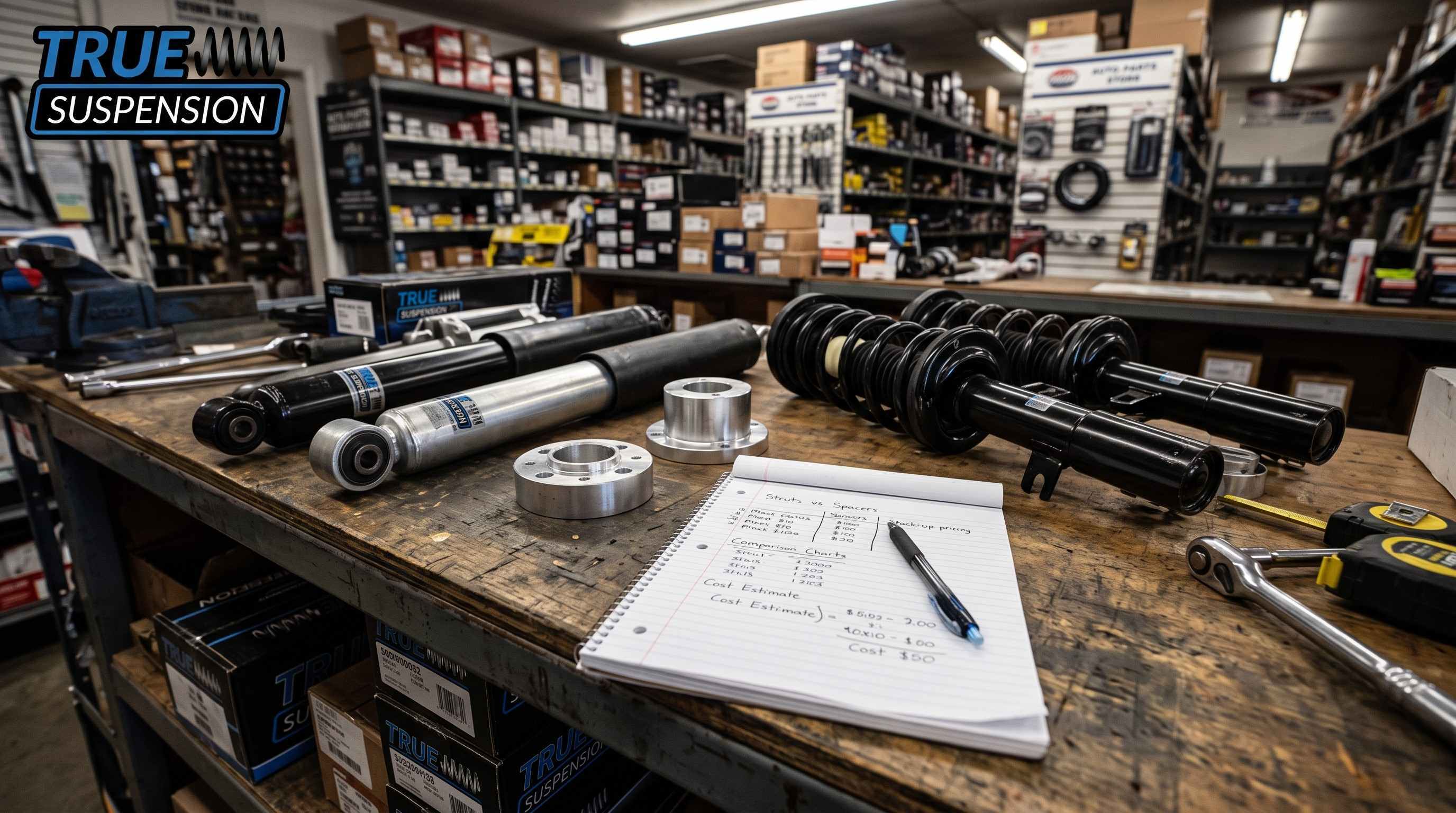
The strut spacers vs complete struts debate usually ends at the price tag, so here is this kit vs kit comparison in plain numbers, typical market ranges, not quotes,
|
Option |
Typical parts cost |
Labor (typical) |
What you get |
|
Spacer kit (puck style) |
100–300 |
200–400 |
Level stance, stock ride |
|
Leveling strut assemblies |
300–900+ |
300–600 |
Level stance, fresh damping |
|
Adjustable struts (2.1-in style) |
400–800 |
300–600 |
Tunable ride height |
|
Coilover conversion |
1,200–2,500+ |
400–800 |
Adjustable everything |
The spacer vs strut question comes down to the condition of your current parts. Healthy struts and a tight budget? Spacers win. Worn struts, or a desire for genuinely better damping? New struts are the smarter money. Either way, buy from a specialist like TrueSuspension, and you get application-correct parts with the hardware to do the job at once.
Shop TrueSuspension, complete 3-inch F-150 lift kit with TS Nitro Control shocks
From the blog, stock suspension vs. drop kit, what lowering does to your truc.k
Conclusion
Strut spacers win on price and simplici;y, they level your truck, keep the factory ride, and install in an afternoon. Complete leveling strut assemblies cost more but reward you with fresh damping and a better ride. Match the part to your truck's condition and your goals, align it afterward, and enjoy the stance.
FAQs
What are strut spacers?
They are puck-shaped spacers that mount atop your front struts, raising ride height to level your truck without replacing any suspension parts.
Do spacers hurt ride quality?
Barely. Spacers keep your factory springs and shocks, so ride quality stays close to stock until the struts themselves wear out.
Spacers or new struts, which should I buy?
Choose spacers for budget leveling on healthy struts. Choose complete replacement struts when yours are worn, or you want better damping.
How much lift do spacers give?
Most spacer kits give 1.5 to 2.5 inches of front lift, enough to level factory rake and fit slightly larger tires.
Do I need an alignment after installing spacers?
Yes. Any ride-height change alters suspension geometry, so visit an alignment shop immediately after installation.