

10 Tools You Need to Install a Lift Kit at Home
A home lift kit install needs ten tools, solid support, and a plan before any bolt loosens on the suspension. Every enthusiast who wants to tackle the job should gather lifting gear and safety basics first, then work in order on flat ground at home.
TrueSuspension stocks a suspension lift range for Jeep and truck owners, including Wrangler builds that suit a diy approach. The complete F-150 lift kit with front strut lift and rear blocks shows how a matched kit pairs with the right tools for a lift kit install.
The ten tools below cover the types of lift kits available, from simple body lift kits to a full long arm lift. Read the kit installation instructions before starting, then lay each tool out in order and check the Scottsdale range matches your truck and year.
Quick Summary
- Ten tools cover every step from lifting to the torque check.
- Support comes first, with rated stands holding the truck while parts hang free.
- A torque wrench matters most, because fasteners hold wheels, axle, and steering together.
- A full socket set in metric and SAE covers nearly every fastener fitted.
- Recheck every fastener after 50 miles, because bushings settle and hardware relaxes.
Why a floor jack and 6 ton jack stands come first when you lift the truck at home
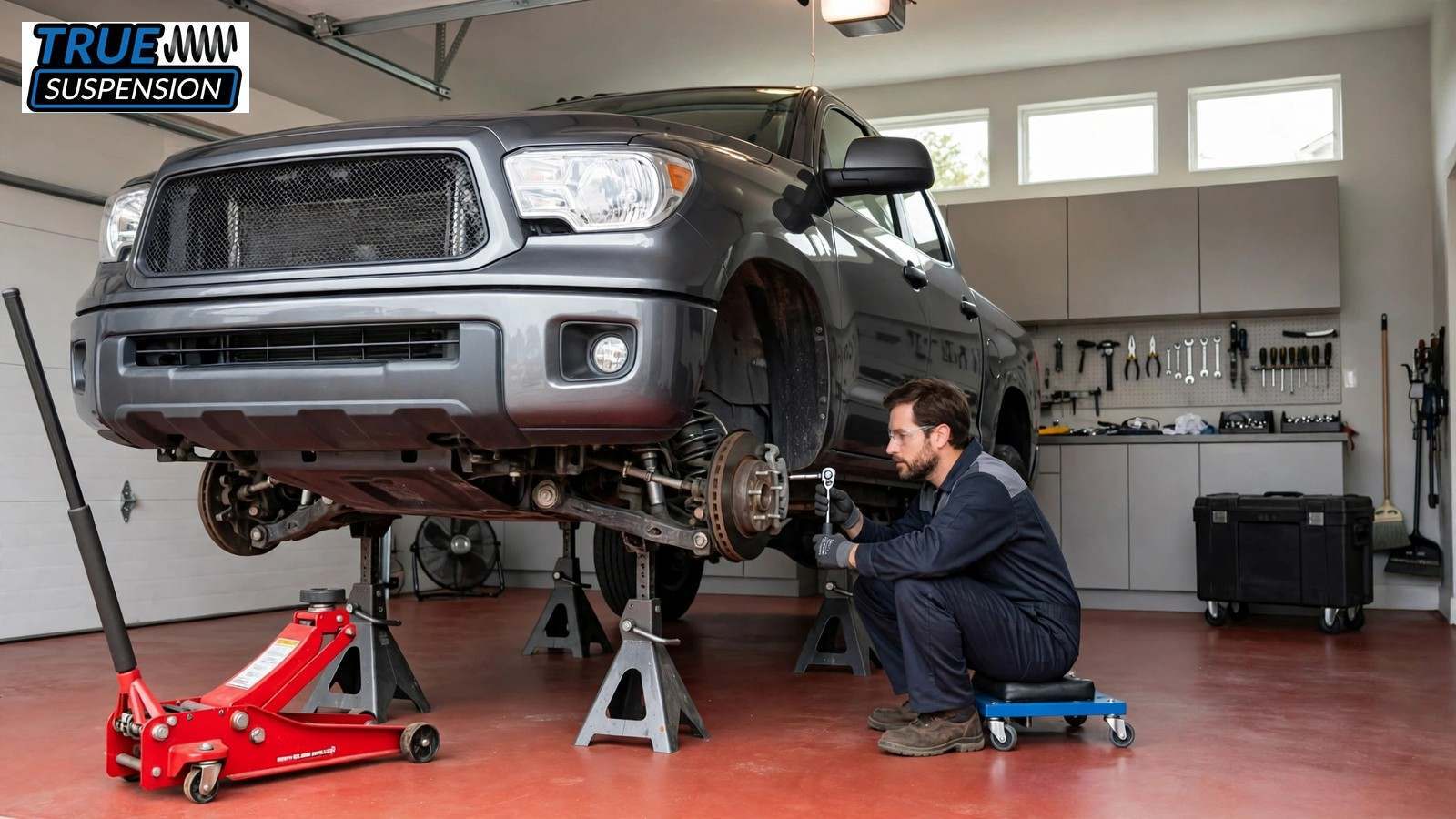
A heavy-duty floor jack and rated jack stands come first, because you cannot work safely under a truck that sits on its own tires. Choose gear with capacity in reserve, lift the truck on flat concrete, and let the stands carry the weight while you complete a lift kit install.
Source, Wikipedia)
How do you choose a floor jack with capacity in reserve
Pick a floor jack rated at 3 tons or more, so the rating stays above the corner you raise. A profile model slides under lowered trucks, while a saddle suits trail rigs. Owners eyeing the F-150 3 inch front lift kit with ProComp nitro shocks should match jack height to ride height.
Source: Wikipedia)
How should 6-ton jack stands be set on flat concrete
Set 6-ton jack stands on flat concrete, never on gravel, dirt, or slabs that can shift under load. Place each of the 6-ton jack stands under a frame rail or axle tube point from the guide, lower the truck until saddles seat, then shake the truck hard. Full axle droop needs that height.
Source, Wikipedia
What safety habits matter before your hands touch the suspension
Chock the grounded wheels, slide the wheels under the frame rails as backup, and keep hands clear until the truck feels solid on the jack stands. Wear eye protection, use a shop light, and read the 10 questions to ask before buying a lift kit guide, because preparation prevents garage mistakes.
Source, Wikipedia
|
Tool |
Why you need it |
Typical cost |
|
Floor jack, 3 ton or larger |
Lifts the truck safely |
$120 to $300 |
|
6-ton jack stands, pair |
Holds the truck while you work |
$60 to $120 |
|
Torque wrench, half-inch drive |
Correct bolt tightness |
$40 to $100 |
|
Socket set, metric and SAE |
Fits every fastener |
$80 to $200 |
|
Coil spring compressor |
Safely removes coils |
$40 to $80, or rental |
|
Breaker bar, 24 inch |
Loosens rusty bolts |
$25 to $50 |
|
Impact wrench, electric |
Speeds up teardown |
$100 to $250 |
|
Ratchet straps |
Aligns the axle |
$20 to $40 |
|
Penetrating oil and thread locker |
Prevents stuck and loose hardware |
$15 to $30 |
|
Angle grinder |
Cuts what will not unbolt |
$50 to $120 |
Quick Summary
- A heavy duty floor jack raises the truck, while stands carry the weight.
- 6 ton jack stands on flat concrete give the height and stability.
- Shake the truck hard before starting, and never trust the jack alone.
Source, Wikipedia
Why is the torque wrench the most important of the right tools when installing a lift kit
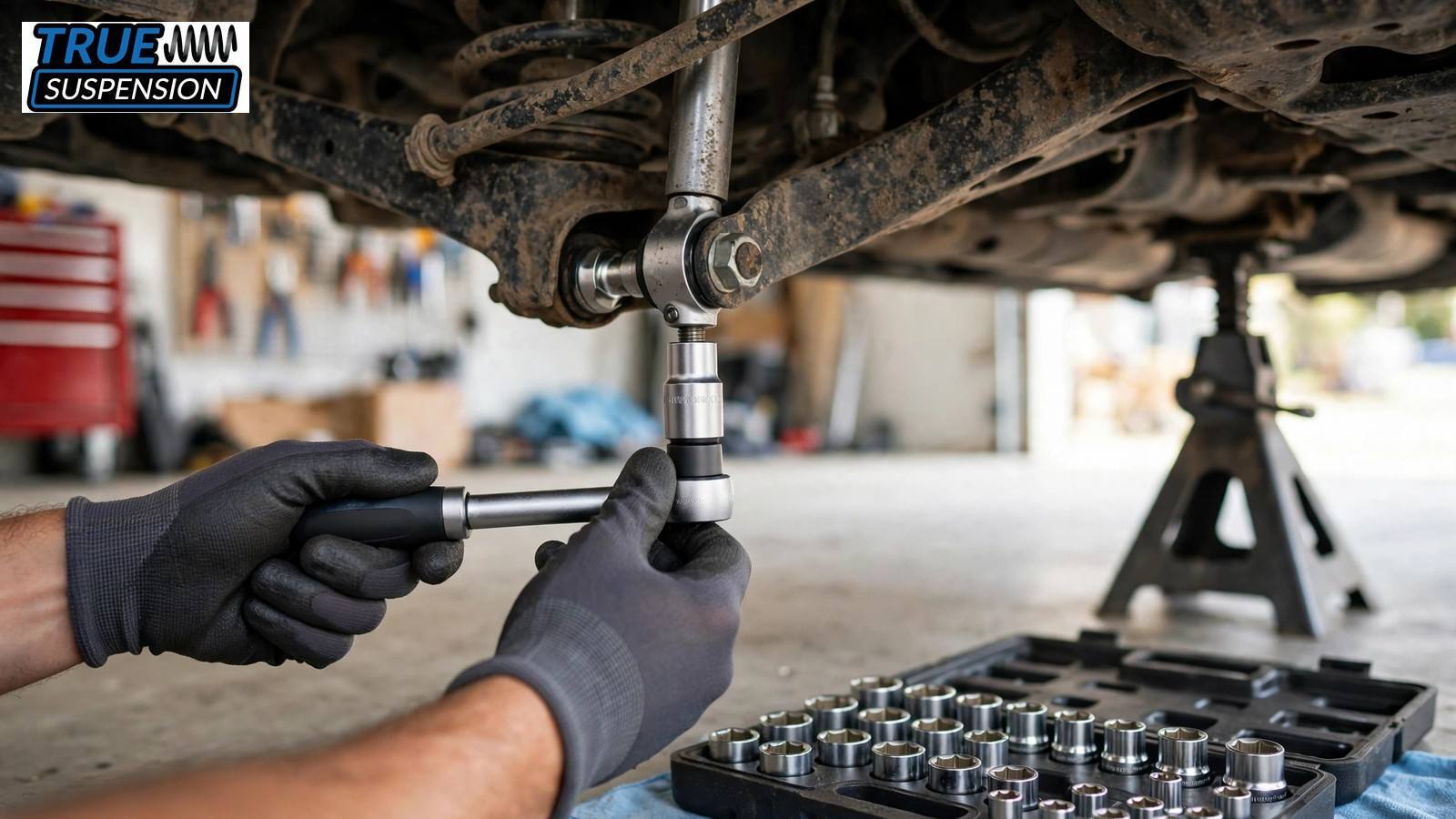
The torque wrench is the one precision tool that decides whether the truck stays safe for years on road and trail. If you buy one precision tool for a lift kit install, make it this one, because the fasteners hold wheels, axle, and steering together, and guessing invites failure on rough ground.
Source, Wikipedia
Why should suspension bolts be tightened in stages to the kit spec
Always tighten each fastener in stages, working in steps toward the spec in the kit guide instead of pulling one side at once.Evenly space seat brackets and keep clamping force balanced. The Ram 1500 front and rear lift kit with nitrogen-charged shocks lists its specs, so follow the numbers for your truck.
Source, Wikipedia
How do a full socket set and careful storage keep the wrench accurate
Pair the wrench with a full socket set in metric and SAE, because trucks mix standards and a fitting socket rounds heads fast. Store the wrench at its lowest setting and never loosen with it. The 10 mistakes people make when lowering their truck guide shows how tool habits damage hardware.
Source, Wikipedia
Quick Summary
- Torque specs exist for a reason, and the torque wrench is how you hit them.
- Tighten in stages, then recheck after 50 miles as bushings settle and hardware relaxes.
- Store the wrench at its lowest setting, and never use it to loosen hardware.
Source, Wikipedia
Which sockets, ratchets and hand tools do you reach for during every lift kit job?
Sockets, ratchets and hand tools do most of the actual work on a truck, so a complete set earns its bench space during every lift kit install. Pair metric and SAE sockets with a sturdy wrench and combination wrenches, keep a magnetic tray nearby, and choose the proven Silverado and Sierra 3-inch front lift kit with rear blocks from TrueSuspension.
Source, Wikipedia
Why do trucks mix metric and SAE fasteners in one job
Newer trucks mix metric sizes into the same job, while older builds, such as a CJ, YJ, orTJ,j carry mostly SAE hardware, so one lift can demand both standards without warning. Poor-fitting socket rounds bolt heads fast, which turns a simple corner into a long repair. Stock both standards before teardown begins.
Source, Wikipedia
Which wrenches and extenders reach bolts behind shock towers
Wrench extenders and universal joints reach the bolts hiding behind the shock towers and bracket mounts, where a straight ratchet simply cannot sit flat. Work slowly in those tight pockets, keep the socket seated fully, and read Lift kits vs leveling kits, what truck owners must know before choosing your next setup from TrueSuspension.
Source, Wikipedia
Why do quality hand tools outlast cheap sets?
Cheap hand tools flex, slip and round hardware, while good ones grip cleanly and last a lifetime with basic care. Forged steel, tight tolerances,s and solid ratchet teeth keep fasteners intact through years of salty, grimy suspension work. Buy quality once, store each piece dry, and the set will outlive the truck it lifts today.
Source, Wikipedia
Quick Summary
- A complete socket set in metric and SAE covers nearly every fastener.
- Quality hand tools grip cleanly and reach hidden bolts safely.
Source, Wikipedia
How does a coil spring compressor keep the front lift safe
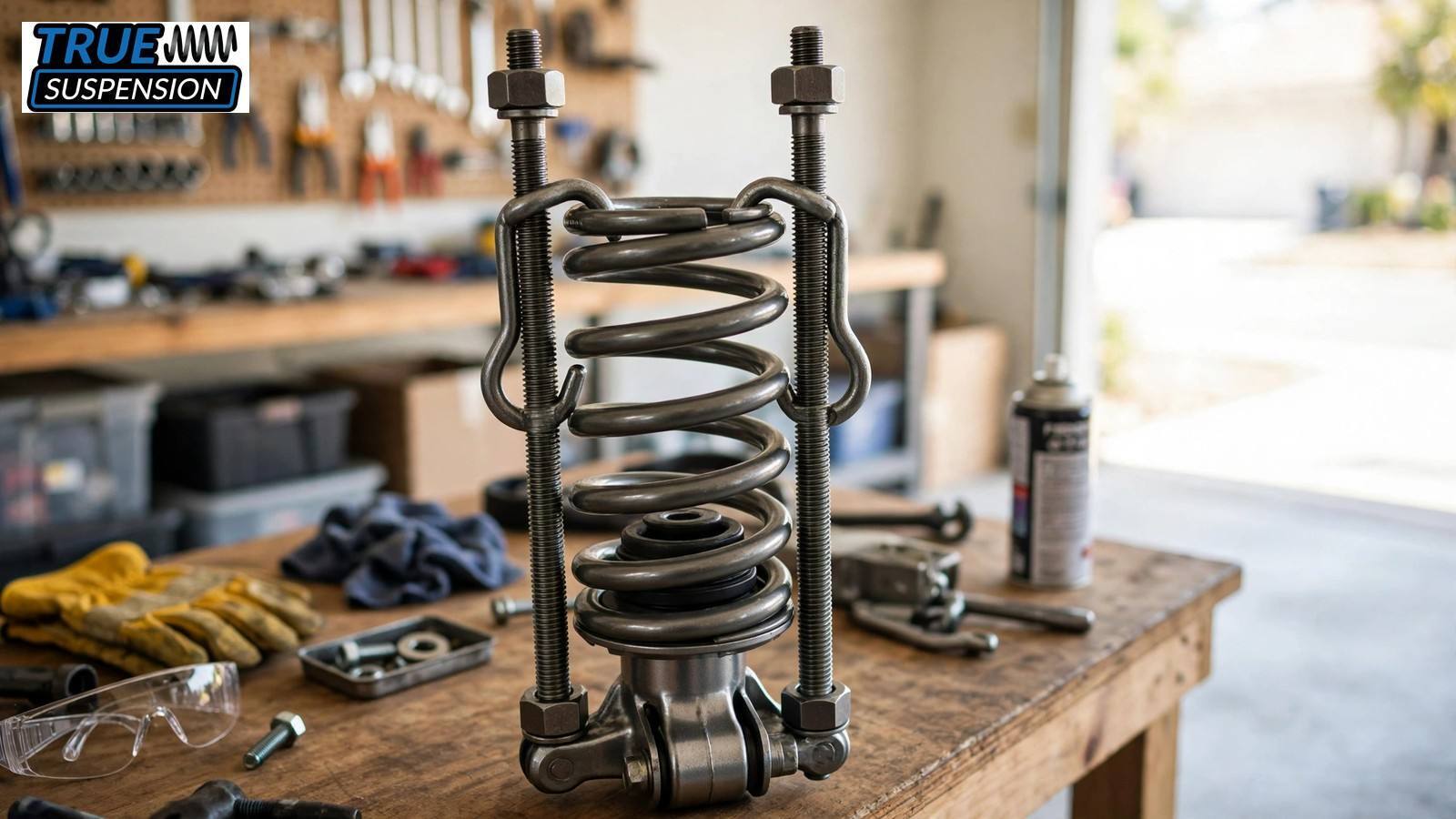
A coil spring compressor controls the stored energy in a front coil, and that control keeps a lift kit install safe. The tool lets you remove the factory coil from the strut assembly when fitting spacer blocks or fresh coils. Work patiently, wear safety glasses, and keep your body clear.
Source, Wikipedia
Why must two compressors squeeze the coil evenly?
Always use two compressors on opposite sides of the coil, because a single spring compressor lets the spring bow and slip under load. Compress evenly a few turns at a time, keep the coil centered, and pause often to check both hooks. Even pressure keeps the coil spring compressor work controlled, slow and predictable throughout.
Source, Wikipedia
What should you check when renting a spring compressor
Rent the threaded rod style from an auto parts store, and inspect the tool before leaving the counter with it. Worn threads are dangerous, bent hooks slip, and missing pins invite trouble once the spring loads up. Check the Silverado K1500 torsion key and block lift kit fitment too, and ask the store team questions.
Source, Wikipedia
When do preassembled struts let you skip the compressor
Many enthusiasts skip the step entirely with preassembled leveling struts, which arrive ready to bolt in without any coil spring compressor work at home. That shortcut suits drivers who value time and calm over saving a rental fee. Read Top 10 trucks that benefit most from a lift kit and choose complete TrueSuspension kits confidently.
Source, Wikipedia
Quick Summary
- Two compressors, even tuturns and patience keep coil work controlled.
- Preassembled struts skip the compressor step entirely for home installers.
Source, Wikipedia
How does a breaker bar beat rusty bolts when you install a lift kit
A breaker bar beats rusty bolts because iits 24-inchlength multiplies your force without snapping a ratchet or rounding a head. During a lift kit install, old suspension hardware often feels welded in place after years of salt and road grime. Slow, steady leverage cracks it loose in a controlled way.
Source, Wikipedia
Why should fasteners soak in penetrating oil the night before
Soaking fasteners the night before lets penetrating oil creep into rusted threads and loosen the grip before you pull the bar. Start Friday evening on the worst bolts so time does the hard work. This habit saves the bushing hardware and makes kits like the Nissan Frontier 3-inch lift kit easier to fit.
Source, Wikipedia
How do you work a cracked bolt back and forth safely
Once a bolt cracks, work it back and forth in small turns so rust leaves the threads cleanly instead of tearing them. Add more oil, wait, then turn again rather than forcing one long pull. Patience keeps the head intact and avoids a snapped stud that turns a simple job into drilling.
Source, Wikipedia
Why should a torque wrench never loosen a bolt
A torque wrench should never loosen a bolt because rusty hardware can knock its calibration out and ruin accuracy for final tightening. Use the breaker bar for loosening and save the wrench for tightening to the kit spec. Read Top 10 lift kit myths debunked for more habits that protect hardware.
Source, Wikipedia
Quick Summary
- Penetrating oil overnight loosens rust first.
- Breaker bar loosens, torque wrench tightens.
- Work cracked bolts back and forth slowly.
Source, Wikipedia
Which power tools save your arms during a home lift kit job
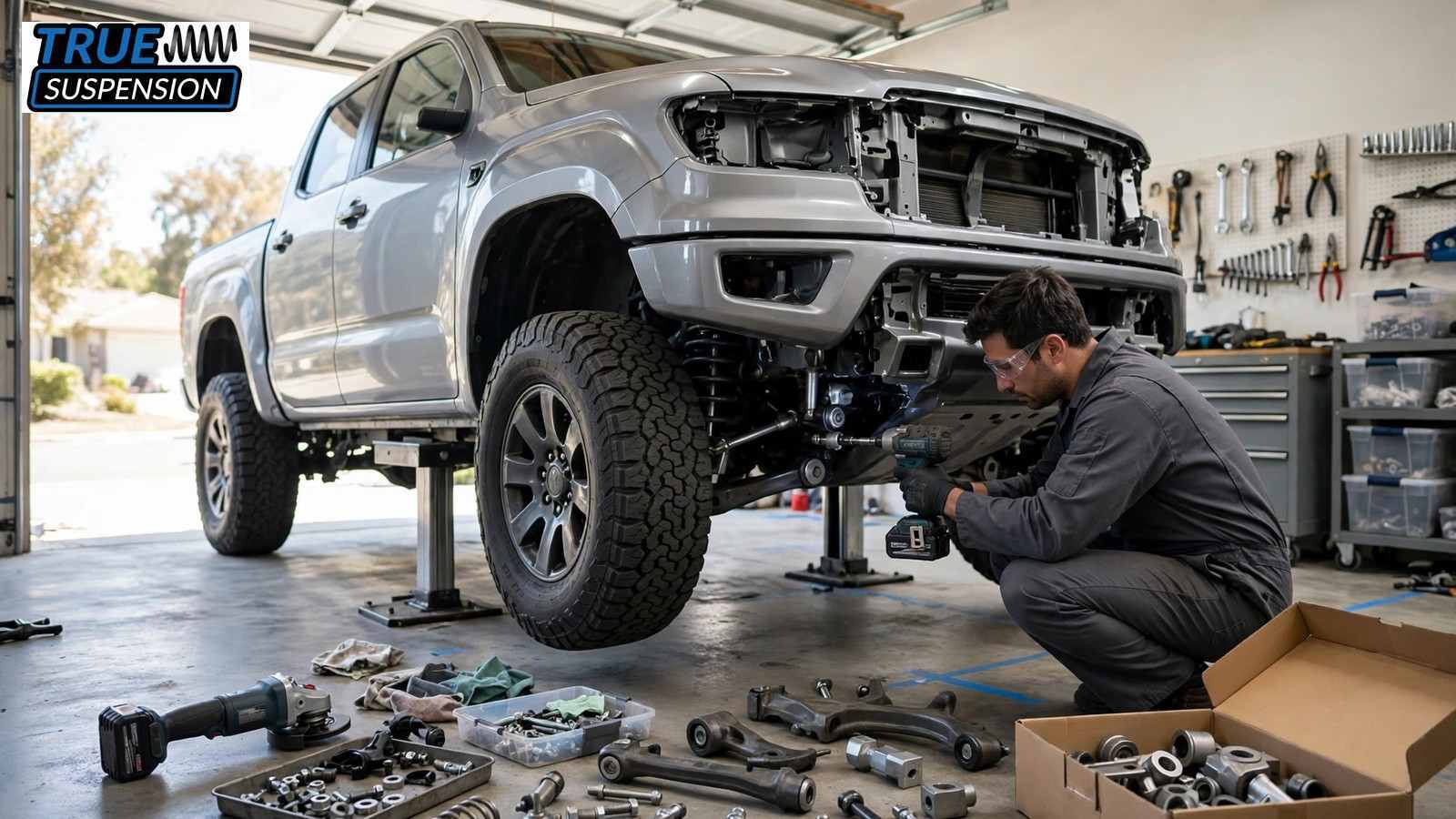
Power tools save your arms because speed on teardown leaves energy for careful assembly later in the day. During your lift kit install, an electric impact wrench and a grinder handle heavy turning and cutting while you focus on support and final checks. TrueSuspension kits from Scottsdale pair well with this pace.
Source, Wikipedia
Where does an electric impact wrench speed up teardown
An electric impact wrench speeds teardown by zipping off lug nuts, shock bolts, and control arm hardware in seconds instead of minutes. A mid-torque half-inch electric model hits the sweet spot of price and capability for home garages. Use impact-rated sockets and keep a charged spare ready.
Source, Wikipedia
When do hand tools beat power tools
Hand tools beat power tools where clearance is tight, feel matters, or final tightening needs precision from a torque wrench. Ratchets fit anywhere, work quietly, and cost less, while impacts need room and risk over-torque. Guidance in choosing the right lift kit for F-150 vs Ram vs Silverado helps match method to truck.
Source, Wikipedia
|
Task |
Hand tools |
Power tools |
|
Breaking loose rusty bolts |
Breaker bar and leverage |
Impact wrench and speed |
|
Final tightening |
Torque wrench and precision |
Not recommended |
|
Working in tight spaces |
Ratchets fit anywhere |
Needs extra clearance |
|
Budget |
Lower cost |
Higher upfront cost |
|
Noise and neighbors |
Quiet |
Loud |
How do you cut safely with an angle grinder
Cut safely by slicing seized brackets, rusted U-bolts, and old mounts with a cutoff wheel while wearing a face shield and keeping a fire extinguisher close. Cut away from axle housing and brake lines, and measure twice before trimming. New shock absorbers from the Jeep Wrangler JK 2-inch coil spacer lift kit fit cleanly.
Source, Wikipedia
Quick Summary
- Keep power tools for teardown only.
- Finish critical fasteners with a torque wrench.
- Cut with shield and extinguisher nearby.
Source, Wikipedia
How do ratchet straps and pry bars line the axle back up
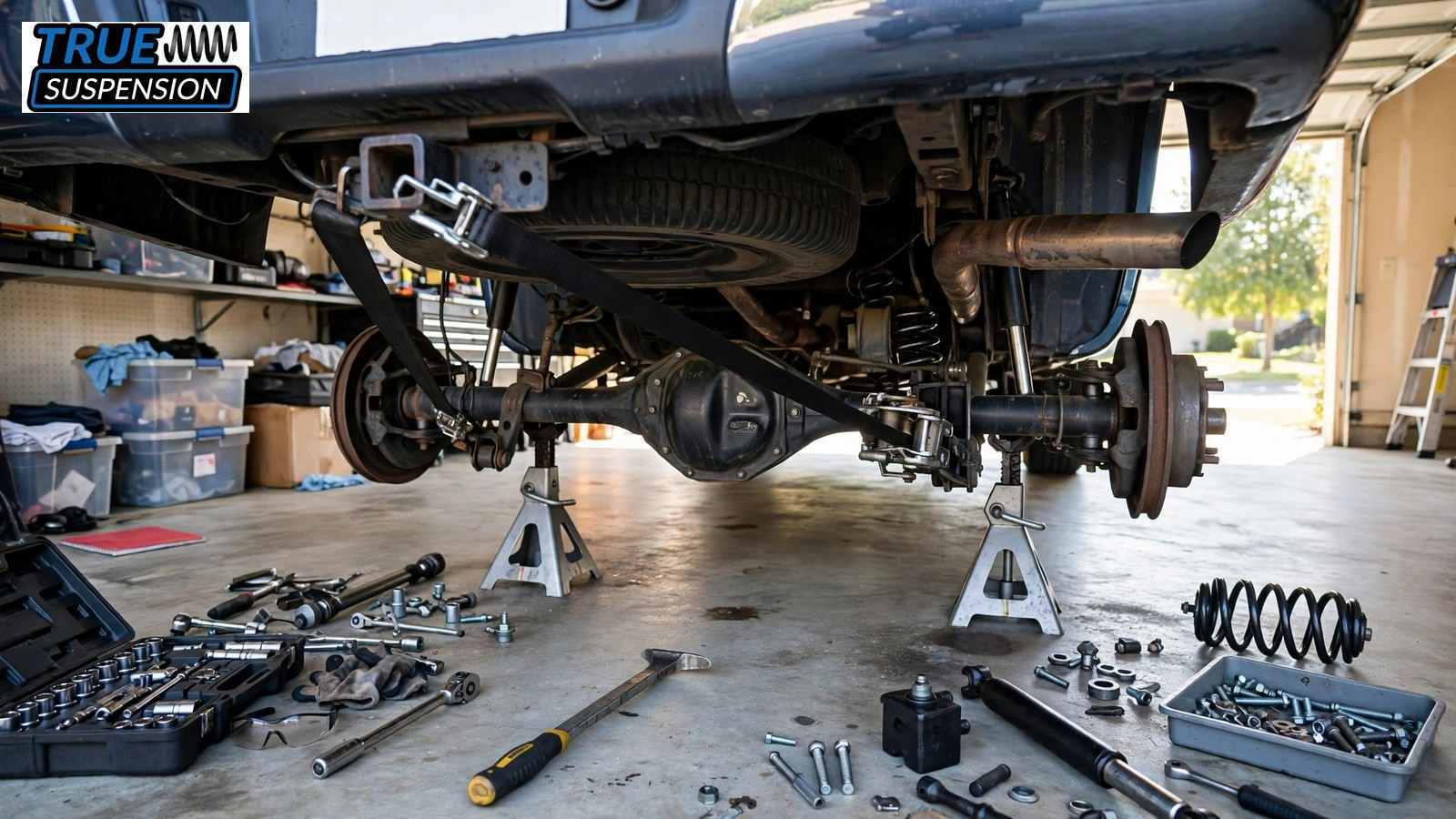
A free-hanging axle swings where it wants, and a ratchet strap from the frame to the axle gives controlled pull during a lift kit install. It draws the axle back into line so bolt holes meet, and kits like the Toyota Tacoma rear lift shackle leveling kit show how rear hardware depends on that alignment.
Source, Wikipedia
How does a strap pull the axle back into line
Hook the ratchet strap to the frame and around the axle housing, then click the handle slowly while watching the holes move. Work on the drivers side first, then mirror the steps across the truck. A second strap lets you ease the track bar into place, and holding ride height protects bushings, as maintaining factory ride quality after a lift kit explains.
Source, Wikipedia
How do pry bars seat ball joint studs and bushings
A pry bar under the ball joint lifts the stud into its taper without tearing the boot, while the flat end nudges bushings and control arm ends until holes line up. Keep pressure slow and steady, check the stud sits straight, and never force a bolt through misaligned hardware, because patience prevents cross-threaded bolts and torn boots.
Source, Wikipedia
What does the Scottsdale team remind every home installer
Parts Bench Note: The Scottsdale team reminds every home installer to recheck all fasteners after 50 miles because new bushings settle and bolts relax. Add medium-strength threadlocker on pitman arm and track bar hardware, where a loose bolt is a safety problem, and check fitment by truck year on the F-150 complete lift kit page.
Source, Wikipedia
Quick Summary
- Ratchet straps pull axles into line, and pry bars seat studs cleanly.
- Recheck fasteners after 50 miles with thread locker on steering hardware.
Source, Wikipedia
Which chemicals stop comebacks after you install a lift kit at home
Chemicals are tools too, and three bottles prevent comebacks. Penetrating oil frees rusty threads, thread locker keeps bolts from backing out, especially pitman arm hardware, and anti-seize helps the next job come apart. A careful lift kit install uses each in the right place and order, and owners can compare setups in stock suspension vs drop kit, what lowering does to your truck.
Source, Wikipedia
Where do thread locker and anti-seize belong on suspension hardware
Apply medium thread locker only to clean, dry threads on pitman arm and track bar hardware, where a loose bolt is a safety problem, because oil weakens the bond. Use anti-seize on shock mount points and bushing sleeves so the next removal comes apart easily, as with the F-150 33-inchstrut and block lift kit with TS Nitro shocks.
Source, Wikipedia
How do you plan disposal of oily rags and old fluids
Plan disposal before you start, with a drip tray for oily rags and old fluids and a bag for rusty cutoff hardware. Auto parts stores accept used oil, so store fluids in sealed containers and take rags in promptly instead of sweeping oily waste into the driveway, where tires find sharp metal later.
Source, Wikipedia
Quick Summary
- Penetrating oil frees rust, thread locker holds bolts, anti-seize eases removal.
- Clean threads and planned disposal keep the garage safe and tidy.
Source, Wikipedia
How does a step-by-step installation guide turn ten tools into one smooth lift kit installation?
A plan turns ten tools into one smooth job because sequence is the tool nobody can buy. The step-by-step installation guide in every TrueSuspension kit orders each step, lists torque spec,s and shows diagrams, while the installation process stays calm when tools and hardware sit staged before first work begins.
Source, Wikipedia
How do the types of lift kits available change your tool list
Kit style changes the tool list because body kits need hand tools while suspension lifts add compressor and impact work. Your suspension system decides the rest, and the Chevy C12-inchch coil spring spacer leveling kit helps, as does reading Air bags vs torsion bars for truck leveling first.
Source, Wikipedia)
|
Type |
Tools |
|
Body lift kit |
Hand-tools |
|
Suspension lift |
Compressor, impact |
|
Long arm |
Grinder, saw |
Why do you work the driver's side first
Start on the driver's sid,e so notes, phot,os and hardware order match the side finished first, then mirror every step across the truck. Jeep builds, a cj, yj or tj included, reward this habit because linkage and steering parts sit close by and small mistakes show up early during checks.
Sou:ce, Wikipedia)
What does the troubleshooting section of the guide prevent
The troubleshooting notes stop small problems becoming big ones because they flag a bump stop or mount that refuses to line up before force enters the job. Reading that section of the step-by-step installation guide early tells you when to adjust, when to wait, and when to check hardware order.
Source, Wikipedia
Quick Summary
- Sequence matters
- Installation process matters
Source, Wikipedia
What final checks finish a home lift kit job safely
Final checks protect the whole lift kit installation because the job ends only when the truck proves itself on stands andthe road. Bounce each corner, inspect every stop for contact marks, and confirm room for larger tires plus the ground clearance you gained before calling the work finished at home.
Source: Wikipedia)
What should you listen for on the first test drive
Drive gently for the first miles and listen with the radio off and windows down. A clunk over bumps, a pull under braking, or a vibration each points back to hardware that needs another look. Photograph axle, ball join,t and driveline angles before driving, then compare them after the drive.
Source, Wikipedia
Why do you torque every tire lug twice at the e?nd
Torque every tire lug twice because wheels settle against the hub as the truck rolls and hardware relaxes durithe ng first miles. Work in a star pattern, hit the kit spec with the wrench, drive gently, then repeat the pass. This habit closes the installation process and guards the next modification.
Source, Wikipedia
Quick Summary
- Listen first
- Torque twice
Source, Wikipedia
Final Takeaway
Every smooth lift kit installation follows one pattern: prepare tools first, support the truck safely, torque everything to spec, and recheck after 50 miles. The step-by-step installation guide keeps that pattern honest, the Scottsdale team helps you choose parts, and your garage does the rest with confidence on build day.
Source, Wikipedia
- Prepare first
- Torque everything
- F-150 complete lift kit
Frequently Asked Questions
Owners ask the same questions before their first weekend under a truck, so these answers collect the points that matter most. They cover the key tool, alignment, timing, rust and kit choice, using only facts from the guide above and advice from the TrueSuspension team in Scottsdale, Arizona for installers.
Source, Wikipedia
What is the most important tool for installing a lift kit at home?
A quality torque wrench is the most important tool because suspension bolts hold wheels, axle and steering together. The kit lists a spec for every bolt, and aclick-type half-inchh drive wrench covers nearly all of them in stages.
Source, Wikipedia
Do I need an alignment after installing a lift kit?
Yes, always book a professional alignment after any lift. Changing ride height alters camber, caster and toe angles, and driving on bad angles eats tires quickly. Treat alignment as part of the job, not an optional extra, before driving resumes.
Source, Wikipedia
How long does the job take at home for a first timer?
Plan a weekend for your first lift kit install at home. First timers need 8 to 12 hours spread across days, while wrenchers finish in 6 hours. Work one corner at a time and start Friday evening with penetrating oil.
Source, Wikipedia
Total beginner here, can I really do this in my driveway with basic hand tools?
Yes, you can, as long as you add the safety tools to your hand tools. Rent a coil spring compressor for strut work, borrow a torque wrench, and never work under a truck held only by a jack at home.
Source, Wikipedia
My suspension bolts are rusted solid, what actually breaks them loose?
Penetrating oil and time break most rusted bolts loose. Soak every fastener the night before, then work it with a 24-inch breaker bar in small back-and-forth turns. Save the angle grinder for bolts that round off or seize completely.
Source, Wikipedia
Can the TrueSuspension team help me choose the right kit for my truck and year?
Yes, the Scottsdale team helps owners match a kit to truck, year, and goals every day. Tell them how you use the truc,k and they point you to the right height and style. TrueSuspension sells parts only, so the install stays yours.
Sour:e, Wikipedia)
Does TrueSuspension sell complete kits, and what comes in the box?
Yes, TrueSuspension sells complete kits with the hardware the job needs, plus instructions with torque specs and diagrams. Check the product page for your truck year to confirm what a kit includes, since contents vary by vehicle and lift height.
Source, Wikipedia