

Axle Flip Kits: The Budget Way to Drop Your Truck's Rear
An axle flip kit drops the rear of a pickup truck five to six inches by moving the axle above its factory mounts, making it the budget rear drop choice for owners who want real stance without cutting the frame at all today.
That deep drop eats frame clearance above the rear axle, so plan supporting parts first. Deep drop builders run the C10 bolt-on frame notch kit on 1973 to 1991 C10 trucks, because the notch gives the axle travel room. Pair it with hardware and the leaf springs, and the suspension stays controlled on rough roads.
TrueSuspension is a store in Scottsdale, Arizona, and its team helps Chevy Silverado and GMC Sierra owners pick the right lower kits, shackles and hangers, praising honest parts, clear fitment notes and patient advice before any order ships.
Quick Summary
- A flip kit gives a five- to six-inch drop for 150 to 300 dollars, the budget way to lower a truck rear fast.
- A flip lowering kit keeps the leaf and spring pack in place, so ride and load character stay familiar.r
- The lowering drop equals tube diameter plus pack thickness, and a drop axle flip needs shocks and a pinion check
- The classic fit covers 1988 to 1998 half tons, including Silverado GMC Sierra trucks sharing one rear layout.
- Unlike coilovers, this setup keeps factory springs and stays reversible with hand tools
How does an axle flip kit lower your truck?
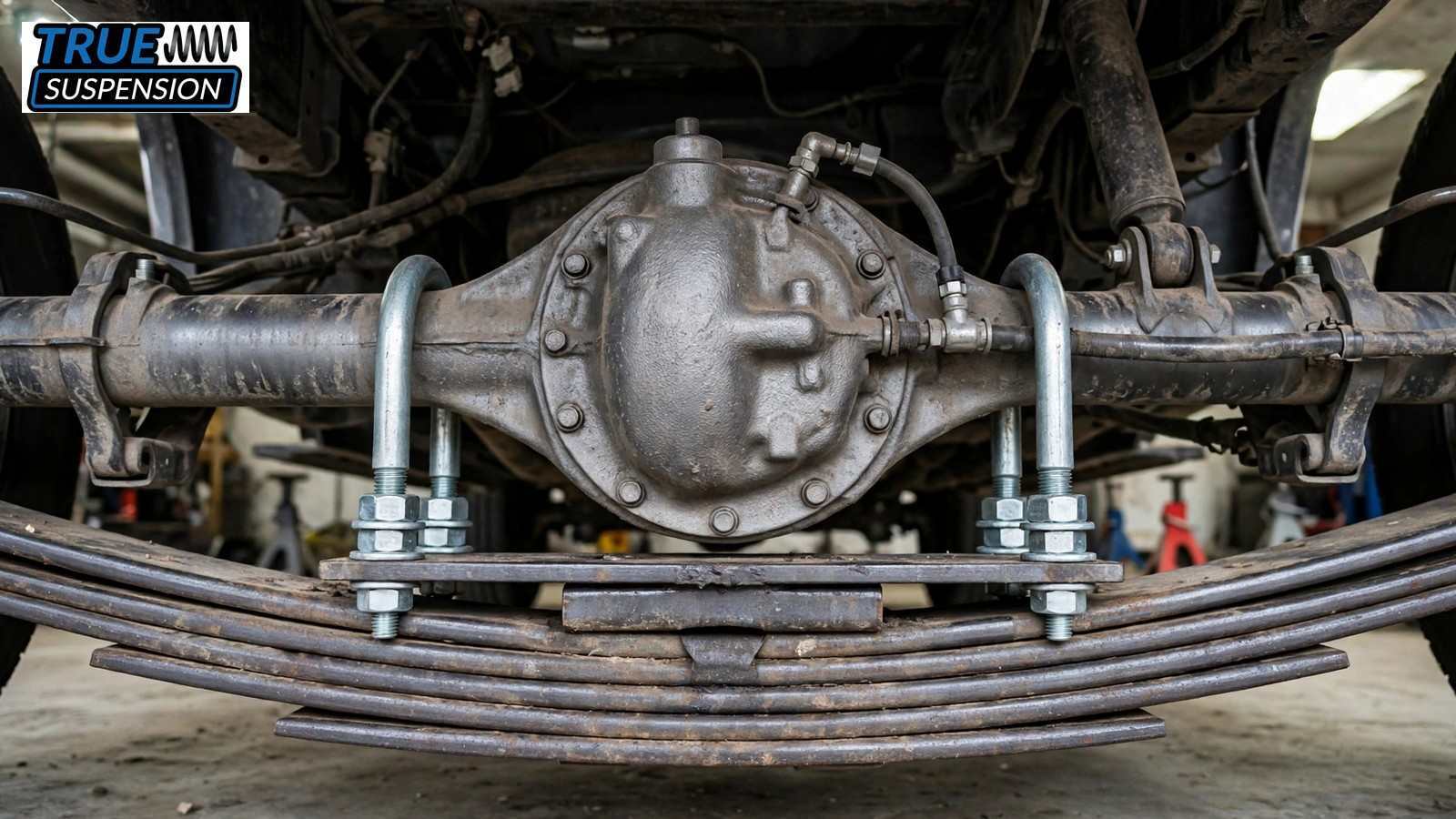
Most pickups leave the factory with the axle below the springs, called spring over axle. Builders call it axle flip kit lowering, because moving the axle above the springs drops it by tube diameter plus pack thickness. Read the 10 mistakes people make when lowering their truck, because skipped parts cause most problems.
Source, Wikipedia
Why does the flip move the axle above the springs instead of cutting the frame?
The flip moves the rear axle above the springs because the springs become the drop, with no frame cutting or welding needed. New perches locate the spring pack under the axle tubes, and U-bolts and hardware clamp the sandwich together. The frame stays intact, and the truck returns to stock height later.
Source, Wikipedia
How do axle tube diameter and spring pack thickness set the exact drop?
Axle tube diameter and spring pack thickness set the drop because the axle moves that distance against the frame. Measure the tube with calipers and add pack height, including any overload leaf, for your estimate. Thicker packs drop slightly more, lighter packs drop less, and most half tons land between five and six inches.
Source, Wikipedia
Quick Summary
- Moving the axle above the springs gives five to six inches of drop without cutting the frame
- Tube diameter plus pack thickness predicts the drop, so measure both before ordering
- Factory springs stay in place, so ride quality and load character stay close to stock.
Source, Wikipedia
How does an axle flip kit compare with lower kits, shackles and hangers?
Shackles, hangers and lower kits drop the rear, but each works elsewhere and gives a different amount. A shackle swap gives about two inches, hangers give two more, and a flip gives five to six inches. The stock suspension vs drop kit changes guide shows what each change does to handling and ride.
Source, Wikipedia
How much drop do shackles and hangers give on their own?
On their own, shackles give about two inches of rear drop, hangers give two inches, and together they give about four inches. The GMC Sierra 1500 rear lowering shackles kit shows the cheaper afternoon job for owners wanting subtle leveling. Hangers take longer, because the hanger gets replaced with a dropped version.
Source, Wikipedia
When do shackles beat a flip and when does a flip win?
Shackles beat a flip when two inches is enough, the budget is tight, and the truck tows or hauls often. A flip lowering kit wins when real stance is the goal, because one purchase finishes the rear instead of stacking changes. Both use simple hardware, keep the factory springs,s and stay reversible.
Source, Wikipedia
|
Factor |
Axle flip kit |
Drop shackles |
Drop hangers |
|
Rear drop |
5-6 inches |
2 inches |
2 inches |
|
Typical cost |
150-300 dollars |
60-120 dollars |
100-180 dollars |
|
Install time |
3-5 hours |
1-2 hours |
3-4 hours |
|
Ride change |
Minimal |
Minimal |
Minimal |
|
Reversible |
Yes |
Yes |
Yes |
Quick Summary
- Shackles and hangers give two inches each, while a flip kit gives five to six inches in one step.
- All three keep the factory leaf springs and stay reversible on Silverado and Sierra trucks
- Choose shackles for subtle leveling and a flip for stance with a matched front drop
Source, Wikipedia
What comes inside a rear axle flip kit box?
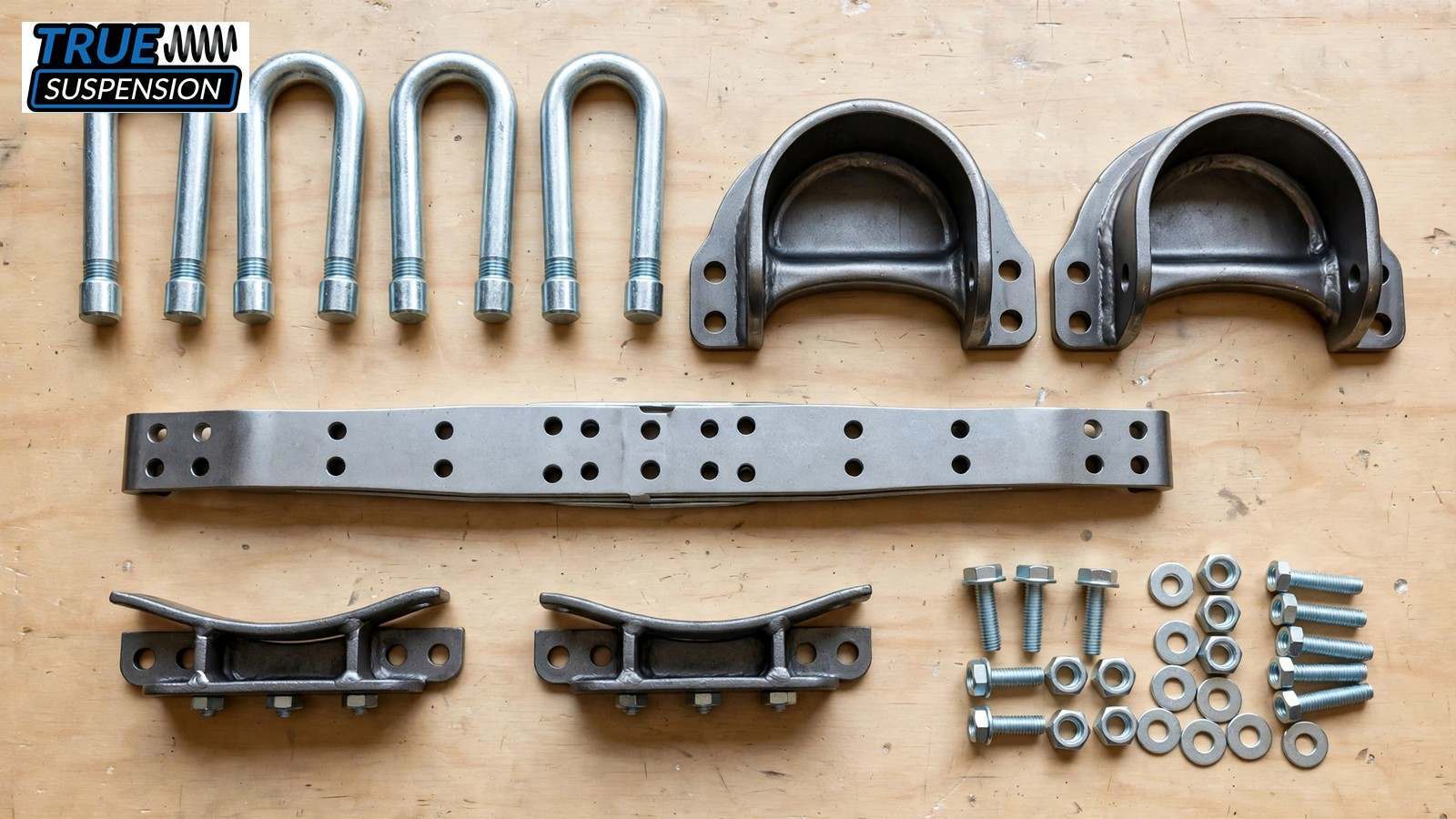
Open the box, and you should find two U-bolt plates, four tall U-bolts, two axle perches or saddles,dles and grade 8 nuts and washers in one package. Better kits add pinion angle shims, because rotating the axle slightly preserves driveline geometry after the drop and keeps the spring pack located during mounting.
Source, Wikipedia
Which brackets, perches, and plates carry the load?
The bracket plates sandwich the pack against the perches, and mounting torque keeps the axle from shifting under load. Thick steel spreads clamping force so the assembly stays tight over bumps. Perches matching your tube diameter locate the axle. The Ford F-150 rear lowering shackles for 1987-1996 2WD trucks show the plate thinking.
Source, Wikipedia
Why do tall U-bolts and grade 8 hardware matter?
U-bolts wrap over the axle tubes and thread through the plates below the pack, clamping the sandwich together with grade 8 nuts and washers. Rolled threads mark stronger bolts than cut threads and hold torque through heat cycles. The Scottsdale team stresses torque in a star pattern and a recheck after 50 miles.
Source, Wikipedia
How do powder coated plates and the warranty signal quality?
Quality shows in powder-coated plates that resist rust and in perches of thick steel that outlast the truck. Before ordering, measure your axle tube and confirm saddle size, then check the warranty on the page for coverage. 10 questions to ask before buying a lift kit cover the hardware checks to do.
Source, Wikipedia
Quick Summary
- A complete box carries plates, U-bolts, perches, pinion shims, and grade 8 hardware.
- Rolled thread bolts and matched saddles mark the stronger kits worth choosing.
Source, Wikipedia
Which 1988-1998 Chevrolet trucks fit an axle flip kit best?
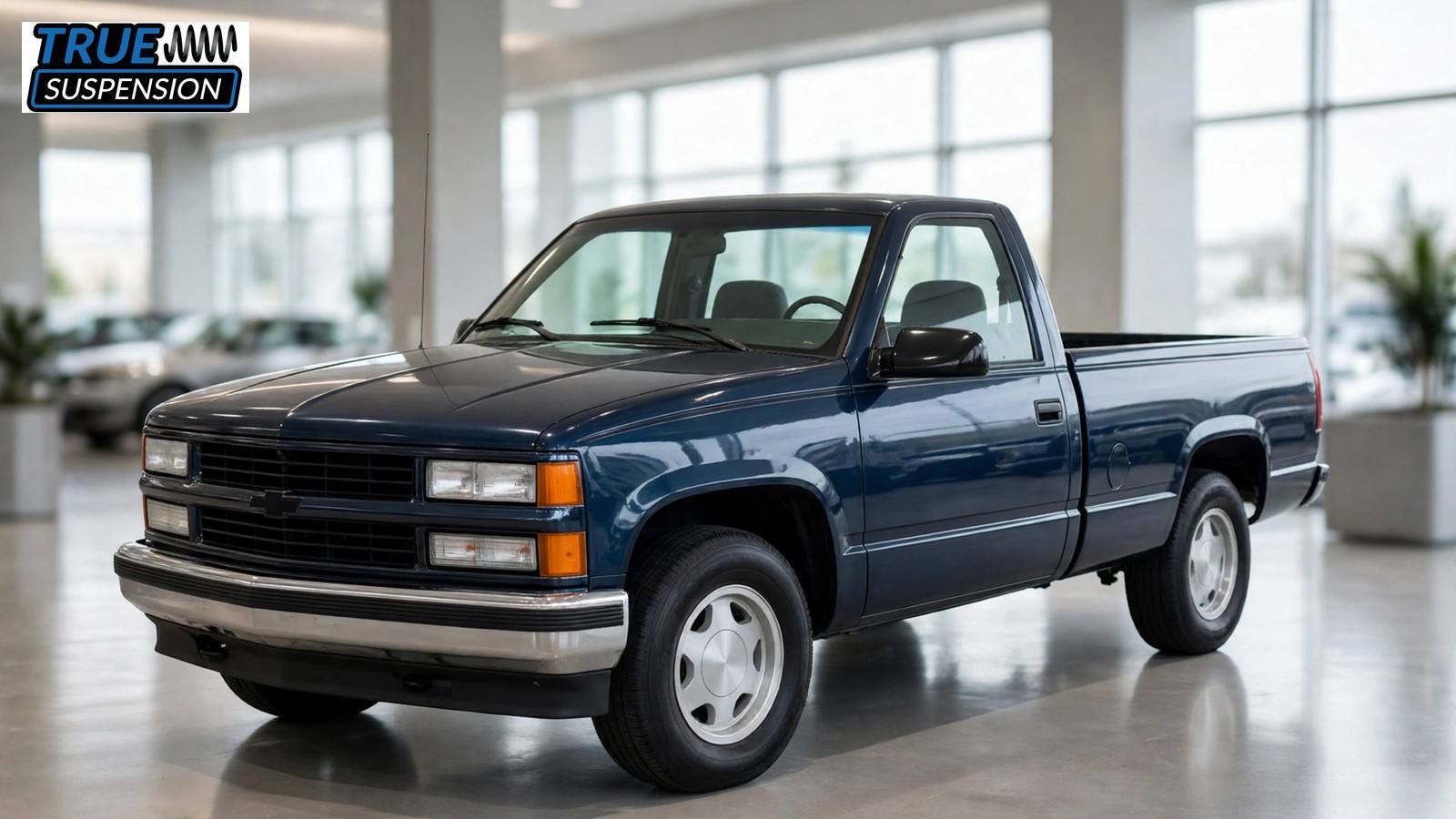
The Chevrolet and GMC full-size trucks from 1988-1998 are the spiritual home of the flip, sold as the Silverado, the Sierra, and theC15000 work truck. Their simple spring rear end, 10-bolt axle, and strong frame accept flip hardware without drilling, and millions still roam United States roads today.
Source, Wikipedia
Why do Silverado, Sierra, and C1500 trucks share one kit design?
Fitment stays simple because a kit for Chevy half-tons bolts to the factory locations with no frame drilling, and the GMC Sierra 1500 shares its rear axle architecture with its Chevrolet sibling. One design covers the family, so a single rear flip serves all Silverado, Sierra, and C1500 owners alike.
Source, Wikipedia
What should Ford owners compare before ordering a flip?
Ford owners cross-shopping should compare drop amount and hardware rather than assuming designs transfer between brands. Compare the Ford F-150 rear lowering shackles for 1987-1996 4WD trucks, and the lift kits vs leveling kits guide explains where a flip sits among height changes. That homework protects Chevrolet C1500 and GMC builds alike.
Source, Wikipedia
Quick Summary
- The 1988-1998 GMT400 family shares one rear layout, so ordering stays simple for all owners.
- One design covers the half-ton family without frame drilling, and fitment checks stay quick.
Source, Wikipedia
How much rear drop does a flip kit deliver?
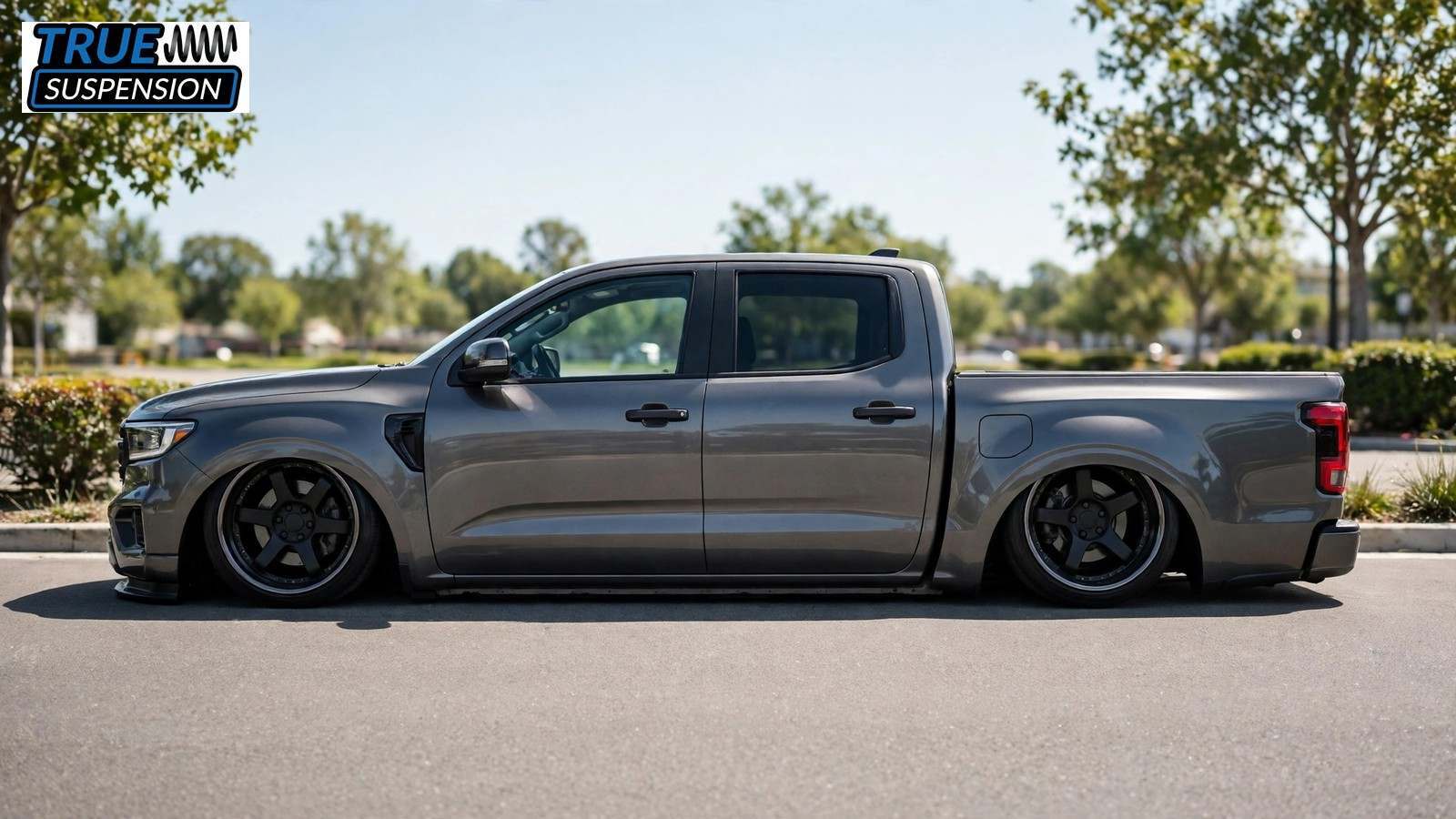
Expect five to six inches of rear drop from a flip kit, because the lowering drop equals your axle tube diameter plus spring pack thickness. Trucks with thicker overload springs drop slightly more, while lighter packs yield a touch less. With a drop axle flip, the rear falls the full amount.
Source, Wikipedia
How do you measure your truck to predict the exact drop?
Measure on level ground with the truck loaded as you drive it, because fuel, passengers, and cargo change ride height. Use calipers on the axle tube, add the spring pack height, and write numbers on the fender. When the plan passes six inches, check the C10 bolt-on frame notch kit for fitment notes.
Source, Wikipedia
How do you match the front drop for a level stance?
Pair the rear with a three- to four-inch drop from spindles or coils. Go too low with a stock front, and the truck looks broken. Combine the flip with shackles and the rear stretches to seven or eight inches, where a notch becomes essential. Compare the Dodge Ram 1500 rear lowering shackles.
Source, Wikipedia
|
Rear setup |
Rear drop |
Matching front drop |
Stance result |
|
Flip kit only |
5-6 inches |
3-4 inches |
Level street stance |
|
Flip kit plus 2-inch shackles |
7-8 inches |
4-5 inches |
Aggressive, rake-free look |
|
Shackles only |
2 inches |
2 inches |
Mild level |
Quick Summary
- The rear drop spans five to six inches, set by tube and pack size.
- The lowering drop matches three to four inches up front for a level stance.
- Measure the truck loaded, in real-world trim, before ordering.
Source, Wikipedia
How do you mount an axle flip kit step by step?
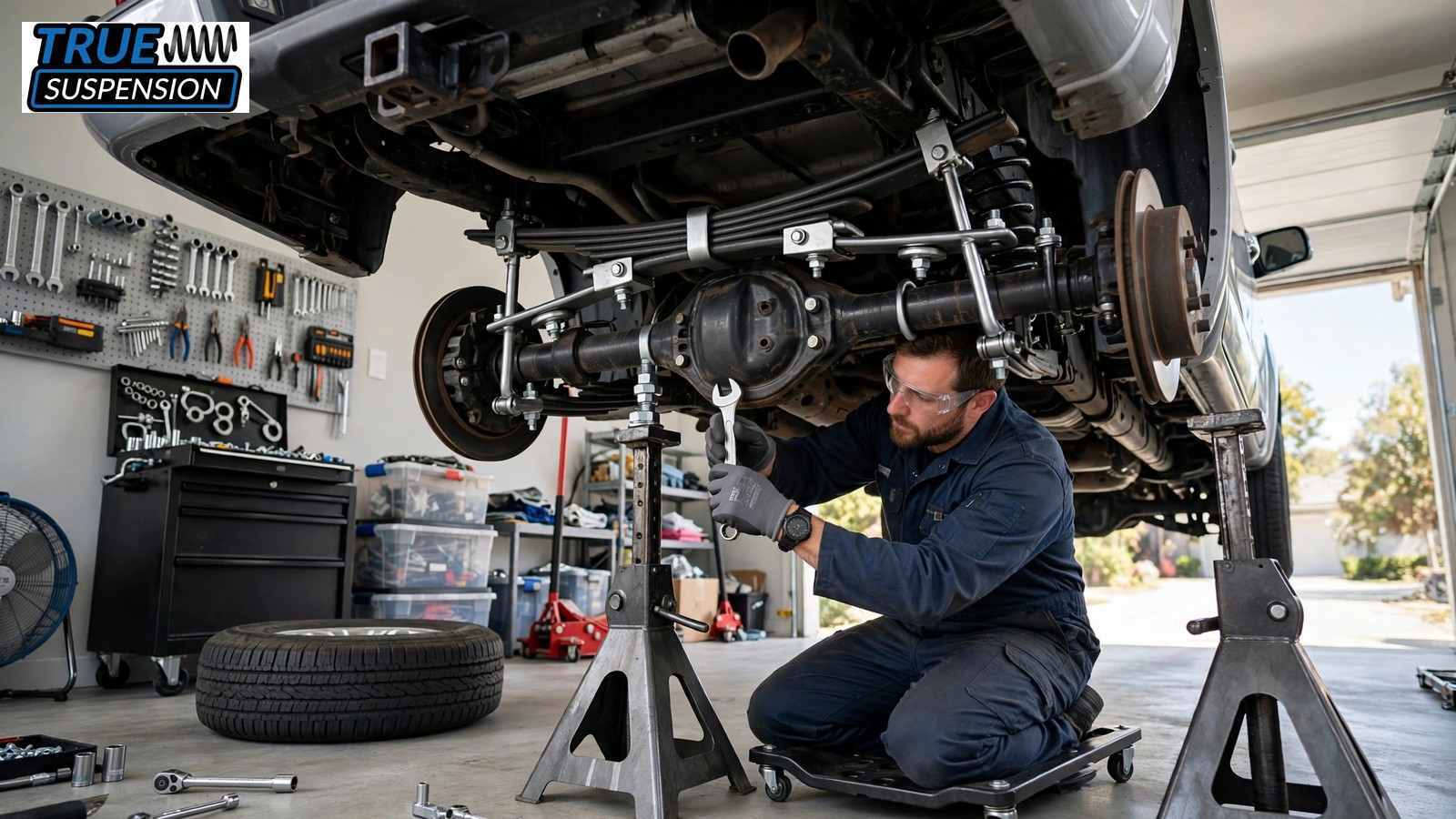
The mounting job takes a floor jack, jack stands, and a torque wrench, and runs three to five hours. The installation rewards patience, and nothing needs cutting or welding. TrueSuspension praises careful measuring first, and the guide to choosing the right lift kit for F-150, Ram and Silverado walks through it before any install.
Source, Wikipedia
What tools and stands does the mounting job need?
Support the truck on jack stands under the frame and let the rear axle hang on the leaf springs before bolts come off. Remove wheels, unbolt the shocks,s and support the axle with a floor jack. Keep sockets, a breakerbarb, ar and the torque wrench within reach, because hardware swaps move fast.
Source, Wikipedia
How do you set the axle above the springs and clamp the sandwich?
Set the axle above the leaf springs and align the spring center pins with the locating holes in the plates. The U-bolts wrap the axle tubes and thread through the plates below the spring pack, clamping the sandwich. On deep drops, check fitment with the C10 bolt-on frame notch kit before clamping.
Source, Wikipedia
Why do torque order andt50-milee recheck matter?
Torque the mounting hardware in a star pattern to spec, then recheck after 50 miles, because the spring pack settles into its clamps. Reconnect the shocks, set pinion angle with kit shims, and leave the brakes untouched. The Chevy and GMC 2500 and 3500 HD rear lowering shackles use the same U-bolt discipline.
Source, Wikipedia
Quick Summary
- Support the frame, free the axle, and clamp the sandwich with U-bolts.
- A drop axle flip settles fast, so torque in a star pattern and recheck after 50 miles.
- A flip lowering kit needs patience and basic tools, not a lift or welder.
Source, Wikipedia
What changes after the flip for shocks, pinion angle and ride quality?
After the flip, shorter shocks, pinion checks, and bump stop trimming keep the rear controlled, quiet,t and free of driveline vibration. The flip keeps the factory leaf springs, so ride quality stays close to stock when supporting parts match the height. Plan details before the first drive, not after the first clunk.
Source, Wikipedia
Why do shorter shocks belong on a flipped truck?
Stock shocks can top out or bottom out at the new ride height, because the axle sits above the spring pack. Shorter shocks matched to the drop keep the rear controlled and protect mounts. The Ford F-100 and F-150 rear lowering shackles for 1965-1981 2WD trucks face the same shock question on Ford builds.
Source, Wikipedia
How do you check pinion angle and stop driveline vibration?
Use an angle finder to check pinion angle after the flip, because it rotates the axle and changes driveline angles. The shims in kits rotate the axle back into spec and stop the vibration owners chase for weeks. Correct angles prevent U-joint wear and keep the Hotchkiss layout working quietly at speed.
Source, Wikipedia
What slack do brake lines and bump stops need?
Inspect brake line routing and the emergency brake cable before the first drive, because both need slack for the new axle position. Bump stops may need trimming or relocating to match the reduced travel. The guide to maintaining factory ride quality after a lift kit covers the checks that protect ride comfort.
Source, Wikipedia
Quick Summary
- Match shock length to ride height and verify pinion angle with an angle finder.
- Give brake lines and the parking cable slack, and trim bump stopsto reduced travel.
- Check bracket faces and hardware while raised, before the first drive.
Source, Wikipedia
How do you keep a flip kit tight on a lowered truck?
Recheck U-bolt torque after 50 miles, because the spring pack settles into its clamps and the hardware needs a second pass. Owners who treat a rear axle flip kit like a fit-and-forget part hear the first clunk. A flipped rear end asks little beyond that recheck and yearly care.
Source, Wikipedia
When should you recheck U-bolt torque and mounting plates?
Recheck U-bolt torque after 50 miles, then inspect the mounting plates at every oil change for rust. Keep the powder-coated finish touched up. Re-torque the bracket hardware yearly, because suspension bolts live a hard life. The Ford F-100 and F-150 rear lowering shackles for 1965-1981 4WD trucks deserve the same habit.
Source, Wikipedia
What should you inspect on leaf springs and shock bushings?
Watch the leaf springs for cracked leaves or a wandering center pin, especially on trucks that tow. Grease any shackles fitted with grease points and check shock bushings for wear. The top 10 suspension upgrades that improve towing safety explains the checks that matter on trucks that work for a living.
Source, Wikipedia
What does the Scottsdale bench check before any flip kit ships?
Parts Bench Note: Measure the axle tube diameter with calipers, because perch and saddle sizes follow it, and confirm the factory mounting width. Owners who skip the tape measure call to swap saddles. The 50-mile torque recheck is the habit the team pushes hardest. The same checks hold for Chevy or GMC kits.
Source, Wikipedia
Quick Summary
- Recheck U-bolt torque at 50 miles, then inspect plates and brackets at every oil change.
- Watch center pins, cracked leaves, and shock bushings while under the truck.
- Five minutes of checks keeps a rear quiet for years.
Source, Wikipedia
Is an axle flip kit the right lower kit for your truck?
Choose a flip when you want maximum rear drop for minimum money,y and you are comfortable with wrenching on your truck. Against coilovers or an air setup, the flip wins on price and simplicity every time. Confirm the warranty terms before you order, and keep the receipt with your build notes.
Source, Wikipedia
Which trucks and drivers suit a flip best?
A flip suits daily drivers, weekendcruiserse, rs and show builds that need stance without air suspension. The factory leaf springs stay, so ride quality stays near stock and load character stays familiar. Owners finishing the front of a Ford build can pair the rear with the Ford F-100 and F-150 front drop I-beams.
Source, Wikipedia
Reasons to flip
- Biggest drop per dollar of any rear method
- Keeps factory leaf springs and the familiar ride
- Hand tool install in one afternoon
- Fully reversible back to stock
Reasons to pass
- Five plus inches may be more than you want
- Towing capacity and ground clearance shrink
- Needs shorter shocks and pinion checks
When should you pass on a flip and choose another drop?
Skip the flip if you tow heavy every day, because the drop reduces load capacity and bed clearance. Think honestly about whether your local roads forgive a lowered truck before you commit. The air bags vs torsion bars guide covers the other classic leveling debate for owners weighing gentler options first.
Source, Wikipedia
Quick Summary
- Flip for maximum drop per dollar with simple tools, fully reversible
- Pass if you tow heavy daily or want a mild change only
- The pros win for most street trucks when supporting parts are planned first
Source, Wikipedia
How much does an axle flip kit cost once the supporting parts are counted?
A flip kit runs 150 to 300 dollars, while drop shackles run 60 to 120 dollars and drop hangers run 100 to 180 dollars for the same rear end. The install runs three to five hours with hand tools. Count the kit and supporting parts before you judge the total cost.
Source, Wikipedia
What does the kit itself cost against shackles and hangers?
Against the flip price, the GMC Sierra 1500 rear lowering shackles kit at 60 to 120 dollars is the cheaper afternoon job when two inches is enough. Hangers at 100 to 180 dollars sit between the two. The flip costs more, yet it finishes the rear in one purchase instead of stacking smaller changes.
Source, Wikipedia
Which supporting parts belong in the real budget?
Plan room for shorter shocks matched to the new ride height, because stock shocks can top out or bottom out after the drop. Add pinion shims for the angle check and trimmed bump stops for the reduced travel. Brake lines and the parking brake cable need slack checks before the first drive.
Source, Wikipedia
Quick Summary
- The kit runs 150 to 300 dollars, with shackles at 60 to 120 and hangers at 100 to 180
- Shorter shocks, pinionshimsh,ims and b-stop work share the same budget
- Three to five hours of hand tool install keeps labor cost at zero at home
Source, Wikipedia
Final takeaway: what should you do before ordering a flip?
Start with measurements of your truck as it sits today, and measure fender to ground at all four corners. Note your tire size and photograph the stance to beat, because a flip lowering kit rewards planning. For deep builds, check the C10 bolt-on frame notch kit so the axle keeps travel room.
Source, Wikipedia
- Measure fender height at all four corners and note tire size first
- Pick the drop first, then match the front and supporting parts to it
- Fit shorter shocks, check pinion angle, and trim bump stops together
- For deep builds, add a frame notch so the axle keeps travel room
- TrueSuspension in Scottsdale stocks kits and shackles for every Silverado GMC Sierra build stage
Quick Summary
- Measure first and let the numbers guide every parts choice
- Plan supporting parts before the truck goes onto stands
- A planned flip rides as good as it looks for years
Source, Wikipedia
Frequently Asked Questions
How much drop does a flip kit give your truck?
An axle flip kit gives five to six inches of rear drop onmost half-tonn trucks. The exact figure comes from your axle tube diameter plus your spring pack thickness, so trucks with thicker overload springs drop slightly more. Measure both with calipers before ordering to know your number before the install begins.
Source, Wikipedia
Do I need shorter shocks after a flip kit?
Yes, you need shorter shocks after a flip, because stock-length shocks top out or bottom out at the new ride height. Shocks matched to the drop keep the rear controlled over bumps and protect the mounts. Measure at the new ride height and pick the shock lengths from that number every time.
Source, Wikipedia
Is a flip kit reversible back to stock?
Yes, an axle flip lowering kit is fully reversible back to stock with hand tools. Unbolt the U-bolts and plates, set the axle back under the leaf springs, and refit the factory hardware in the original positions. Nothing gets cut or welded during the install, so the truck can return to stock height in an afternoon.
Source, Wikipedia
Flipped my truck last weekend and now it vibrates at highway speed, what did I miss?
You most likely missed the pinion angle, because a flip rotates the axle and changes the driveline angles. Check the angle with an angle finder and fit the shims from your kit to rotate the axle back into spec. Also recheck U-bolt torque after 50 miles, since a settling spring pack adds play over time.
Source, Wikipedia
Is a flip kit actually daily driver friendly, or will I hate it in a month?
A flip is daily driver friendly when the supporting parts are right, and most owners forget it is there within a week. Keep the factory leaf springs, fit shorter shocks and trim the bump stops, and the truck rides close to stock. Owners who hate the result usually skipped the shocks or the pinion shims.
Source, Wikipedia
How does TrueSuspension help me choose the right kit for my truck year?
The TrueSuspension team checks your truck year, axle tube diameter,r and spring pack width before recommending a kit, so the saddles and U-bolts match your truck the first time. Tell them the stance you want and how you use the truck, and they will point you at the setup that fits your plans.
Source, Wikipedia
Does TrueSuspension sell the parts to finish a flip, like shocks and shackles?
Yes, TrueSuspension stocks the supporting parts a flip needs, including drop shackles,hangerse, rs and the shock options listed for each truck in the catalog. The team can bundle the parts that match your drop height, so the installation finishes in one weekend. Check the fitment notes on each product page before you buy.
Source, Wikipedia