

Lowered Truck Shocks, Shock Relocation and Shorter Shocks for a Drop That Rides Right
Yes, most drops need shorter shocks or relocation past two inches, because stock units run out of travel and bottom out early. Matching lowered truck shocks to the new ride height restores control, comfort, and suspension movement daily.
For parts and guidance, TrueSuspension brings a Scottsdale team that knows truck suspension and stocks a wide selection. This guide uses its Ford F-150 complete lift kit with rear TS Nitro control shocks as the shock length and valving reference, because that kit shows how matched components work as one system.
This guide covers measuring at ride height, choosing shorter shocks that keep travel in reserve, and understanding relocation geometry front and rear. It also walks through install steps and common mistakes, so your lowered truck shocks match the drop and the truck rides right.
Quick Summary
- Shorter shocks or relocation are needed once a drop eats stock travel.
- Measuring at ride height gives the extended and collapsed lengths you need.
- Keeping travel in reserve stops harsh bottoming and protects mounts and bushings.
- Rear shocks usually lose travel faster than fronts on lowered trucks.
- Matched parts from one source make fitment and valving simpler.
Why do stock shocks bottom out on a lowered truck?
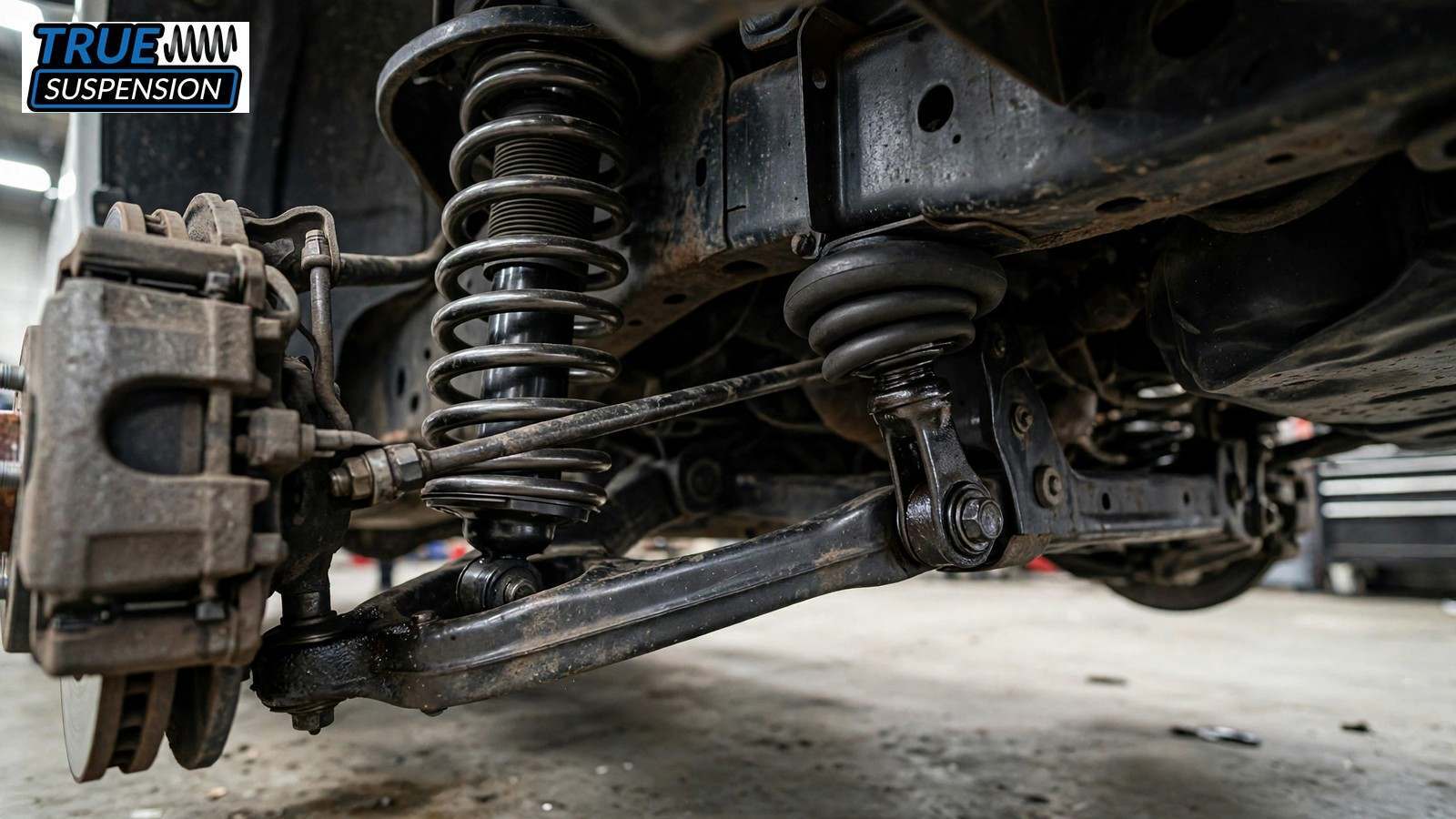
A drop moves the chassis closer to the axle, so a stock shock sits deeper in its stroke at ride height. That lost shock travel means small bumps push the piston to the end of the body fast. Fitting lowered truck shocks restores working range, keeps tires planted, and stops harsh frame hits.
Source, Wikipedia
Howdoes a drop steal shock travel inch by inch?
A two-inch drop removes roughly two inches of compression room before the bump stop meets its pad. The shock reaches full compression sooner over dips, speed bumps, and loaded beds. Drivers feel it as a sharp crash, not a controlled stroke. Correct lowered truck shocks return the missing room and keep damping smooth.
Source, Wikipedia
What do bottoming out and topping out feel like on the road?
Bottoming out feels like a hard bang through the seat when the suspension slams its limit. Topping out feels like a sharp tug as the wheel drops into a pothole and the shock reaches full extension. Both mean the damper works at its edges, where control fades, and mounts take abuse.
Source, Wikipedia
Why does the rear end suffer more than the front on most drops?
Most methods change rear geometry more than front geometry, especially shackle, hanger, and flip kit setups. The rear shock sits at a stronger angle after many drops, which cuts its effective motion. Our guide on what lowering does to your truck explains that shift, and the leaf spring layout shows why rear travel disappears first.
Source, Wikipedia
Quick Summary
- A drop steals compression travel first, so stock shocks reach their limit sooner.
- Bottoming and topping out both signal a shock working beyond its useful range.
- Rear setups lose travel fastest because angle and leaf geometry change most.
Source, Wikipedia
How do you measure a lowered truck for shorter shocks?
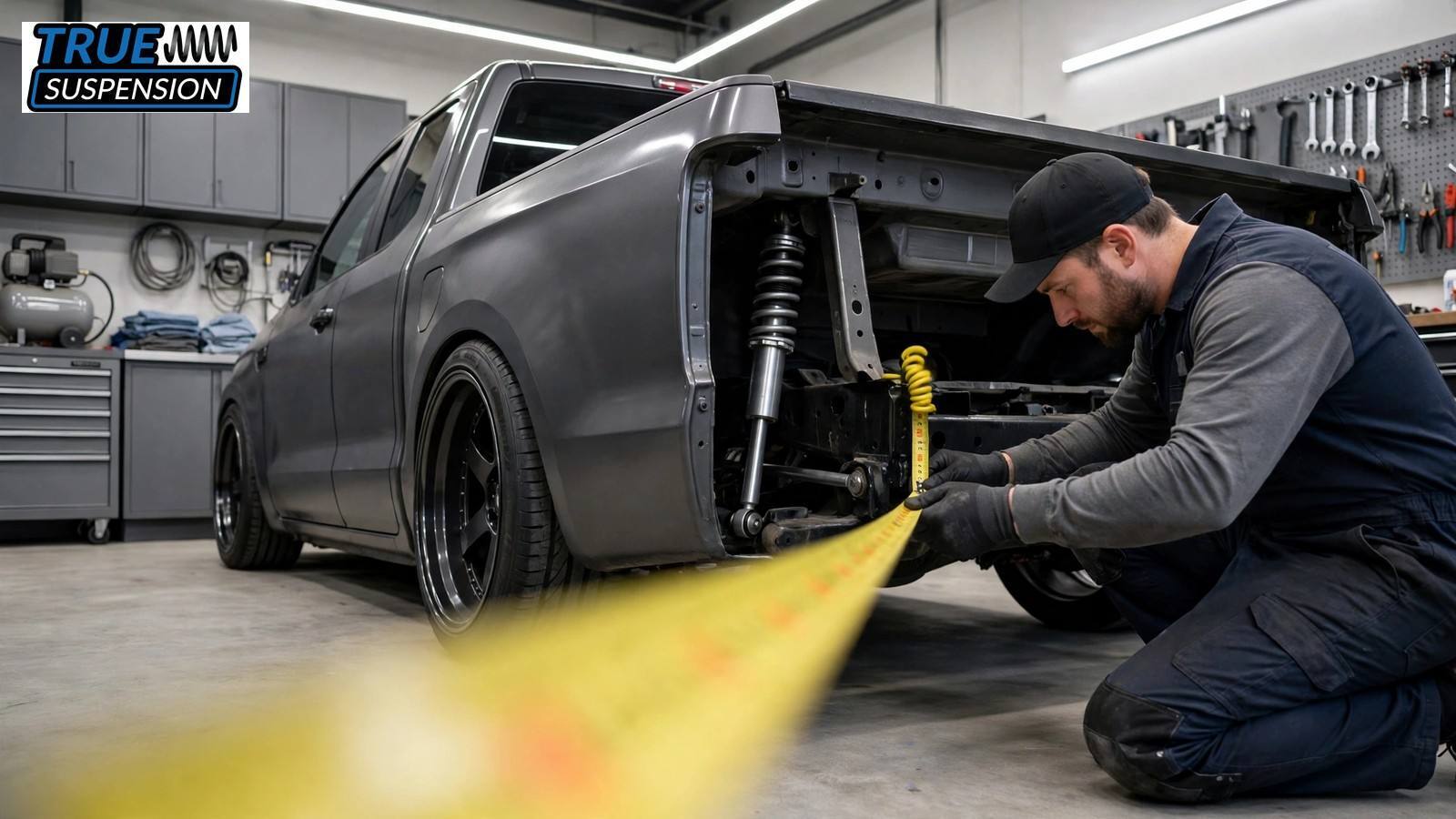
Measuring starts at ride height on level ground, with the truck loaded as it usually drives. Record the distance between shock mounts, then compare it with extended and collapsed lengths from the maker. Choosing lowered truck shocks from real numbers prevents guesswork, protects shock travel, and keeps enough stroke for bumps and rebound.
Source, Wikipedia
How to measure extended and collapsed length at ride height?
Support the truck, then measure center to center between the shock mounts at ride height. Note the length with the suspension fully drooped and compressed, using care around the bump stop. Those three figures define the working window. The replacement should sit near mid stroke at rest, not near either hard limit.
Source, Wikipedia
Why you measure on the ground and not on a lift?
A lift unloads the suspension, so measurements describe droop instead of normal driving position. On the ground, springs carry real weight,t and the shock sits at its working point. That accuracy matters for wheel alignment and ride height alike, because small errors grow into harsh bottoming or weak control on the road.
Source, Wikipedia
How much compression and rebound travel to keep in reserve?
A healthy setup keeps roughly one third of travel for rebound and two thirds for compression, though splits vary by truck. Kits can manage length mechanically, and this Silverado and Sierra leveling kit with front shock extenders shows that approach. Keeping that reserve protects the damper most on repeated rough roads.
Source, Wikipedia
|
Drop amount |
Travel left on stock shocks |
Smarter move |
|
2 inches |
About 2 inches less compression travel |
Shorter shocks matched to the drop |
|
3 to 4 inches |
Stock shocks sit near the bump stops |
Shorter shocks and a bump stop check |
|
5 inches or more |
Stock shocks bottom out on small bumps |
Shorter shocks plus relocation brackets |
Quick Summary
- Measure at ride height on the ground, where the truck actually drives.
- A good shock rests near mid stroke with reserve for compression and rebound.
- Extenders help mild drops, while shorter shocks suit bigger drops.
Source, Wikipedia
What do shorter shocks actually fix on a dropped truck?
A factory-length shock on a lowered truck runs too close to full compression at rest, so small bumps push it onto its bump stops. Shorter lowered truck shocks restore working travel and keep the piston moving through fluid instead of crashing metal to metal. The truck rides calmer and tracks straighter.
Source, Wikipedia
How does restored travel calm the harsh and crashing ride?
Restored travel gives room to absorb a bump before anything bottoms out, removing most of the harsh crash drivers feel. Matched lowered truck shocks stroke through their middle range where damping feels smooth and controlled. Wheels follow dips instead of skipping across them, and passengers stop bracing for every sharp edge.
Source, Wikipedia
Why does damping control matter more at the new ride height?
Damping control decides how fast the spring returns its stored energy after a bump, and a lowered truck changes that timing. A soft shock lets the body float and roll, while a firm one turns small inputs into sharp kicks. Correct valving keeps body motion settled without punishing the cabin.
Source, Wikipedia
When shorter shocks alone are not enough?
Shorter shocks cannot cure every drop problem, especially when springs, bump stops, or alignment are also wrong. A truck still bottoming out may need corrected stops or a small notch for axle clearance. Reading guidance on keeping factory ride quality after height changes shows how travel, alignment, and damping work as one system.
Source, Wikipedia
Quick Summary
- Shorter shocks restore travel and stop the harsh bottoming feel
- Correct damping keeps body motion calm at the new ride height
- TrueSuspension in Scottsdale helps match shock length to each drop
Source, Wikipedia
How does shock relocation change shock angle and geometry?
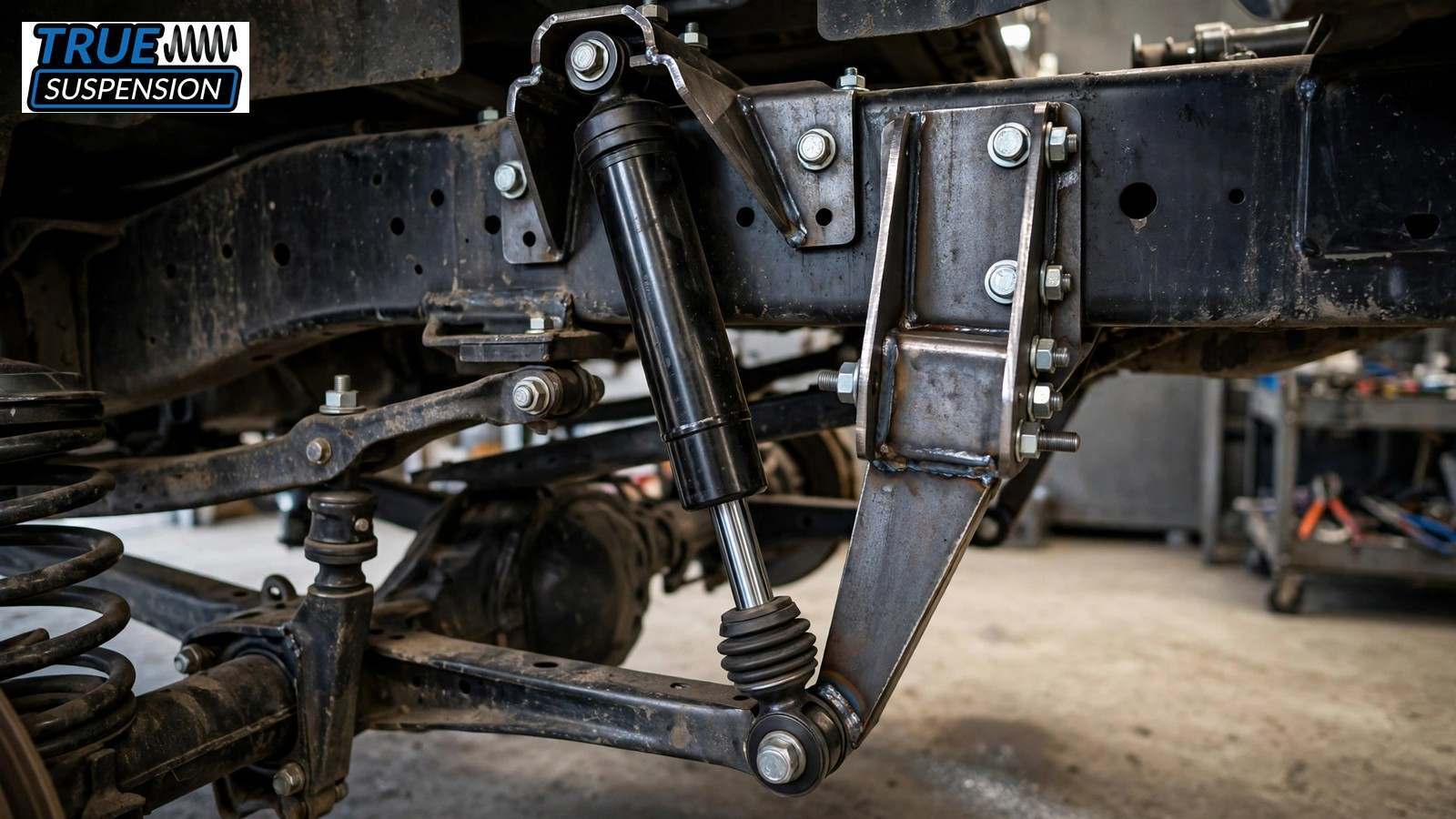
Relocation moves one shock mount so the shock sits at a better angle and uses its full stroke at the lowered height. A more upright shock responds faster to wheel movement and damps motion with less wasted travel. Fitted with matched lowered truck shocks, relocation helps a dropped truck ride smoother and corner flatter.
Source, Wikipedia
What does elocation bracket move and why does the angle matter?
A relocation bracket moves the lower mount up or inward on the axle, or shifts the upper mount on the frame rail. That move changes the angle between the shock and axle path. When the shock lines up with wheel travel, each inch of wheel movement creates more piston movement, giving the damper real authority.
Source, Wikipedia
Why does a laid-back shock lose travel and damping strength?
A shock laid far back at a flat angle moves its piston very little as the wheel moves, so damping feels weak and travel disappears quickly. The suspension then leans on springs and bump stops for control they were never meant to provide. Standing the shock upright restores leverage and sharpens response.
Source, Wikipedia
Upper mount or lower mount, which end should move
Most dropped trucks move the lower mount because the axle end offers simple brackets and clear gains without cutting the bed floor. Upper mount moves can help on custom builds where frame space allows. This weld-on axle bracket kit for four-link builds shows how builders fix mount position at the axle.
Source, Wikipedia
Quick Summary
- Relocation restores shock angle and usable stroke
- A more upright shock damps wheel movement with sharper control
- TrueSuspension stocks brackets and matched shocks, and its team helps compare options
Source, Wikipedia
What changes for front shocks on a lowered truck?
Front drops change the shock working range before anything else. A stock length unit sits closer to full compression at rest, so small bumps use up the remaining travel fast. Matching lowered truck shocks to the new ride height restores that range, giving a calmer front end and steadier braking.
Source, Wikipedia
Coil spring and strut front ends after a drop.
Many late model trucks use a coil spring around a strut, so lowering springs or drop struts shorten the whole assembly. The damper then works lower in its stroke, and valving can feel firmer over sharp edges. A matched shorter unit keeps the piston centered and helps the spring control body roll.
Source, Wikipedia
Control arm angles and shock angle at the new height
A drop tilts the upper and lower control arms and leans the shock from its ideal angle. Even a small angle change slows damper response, because the shock moves less per inch of wheel travel. On classic trucks, this classic Ford front drop I-beam kit lowers the front while keeping geometry closer to factory intent.
Source, Wikipedia
Quick Summary
- Front drops use stock travel fast, so matching length restores control
- Strut front ends and angled arms need a shock matched to the corrected geometry
- The TrueSuspension team in Scottsdale helps owners sort front drop hardware
Source, Wikipedia
Why do rear shocks cause most of the trouble on lowered trucks?
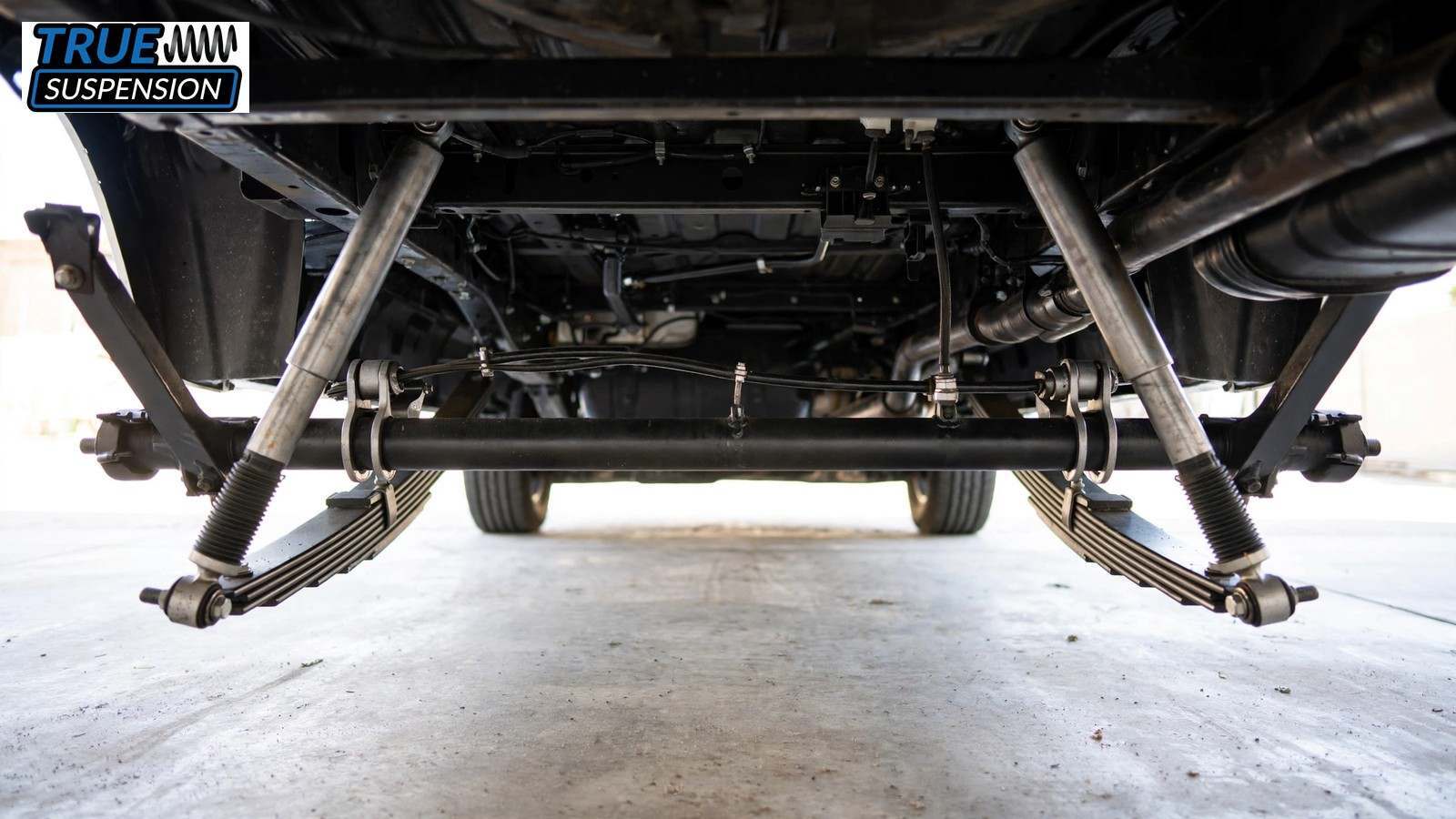
Rear ends cause the most grief because a big drop moves the axle much closer to the frame than a mild front drop. The shock loses extension and compression room, then bottoms or tops out on bumps. Choosing lowered truck shocks with the right collapsed and extended lengths solves much of that trouble.
Source, Wikipedia
Leaf spring rear ends and what an axle flip does to shock length
On a leaf spring rear end, an axle flip moves the axle from below the springs to above them, giving a large drop at once. That move pushes the shock mounts closer together, so a stock length shock sits nearly closed at rest. A shorter shock restores usable stroke and stops the damper acting as a bump stop.
Source, Wikipedia
Shackle and hanger drops and the shock angle problem
A shackle and hanger drop lowers the rear by moving the spring mounting points, yet the shock mounts stay close to stock. That mismatch leans the shock further, so it responds slowly and can bind. Fitting the Sierra rear lowering shackles kit helps owners match the drop hardware, then measure for the corrected angle.
Source, Wikipedia
Bed floor clearance and crossmember mount options
Deep drops bring the axle, driveshaft, and shock tops close to the bed floor and crossmembers, leaving little travel room. A frame notch adds clearance above the axle, and relocated upper mounts stand the shock upright. The C10 bolt-on frame notch kit gives classic truck owners a clean path to that clearance.
Source, Wikipedia
Quick Summary
- Axle flips close the shock mounts, so stock shocks sit nearly closed at rest.
- Shackle drops lean the shock over, and matched TrueSuspension hardware helps owners measure the fi.x
- Frame notches and relocated mounts add clearance above the axle
Source, Wikipedia
How do ride quality and suspension travel trade off?
Every drop trades some factory travel for stance, and the goal is enough controlled movement for real roads. Too little compression travel brings harsh bottoming, while too little extension lets tires skskip. Well-matchedowered truck shocks protect the remaining travel, so the truck feels planted without turning expansion joints into sharp jolts.
Source, Wikipedia
Travel you gain against travel you give up.
Shorter shocks and relocation brackets give back stroke at the lowered height, and the returned travel keeps the ride composed. The trade is simple, because the truck can no longer use its full upward travel. Drivers gain control on normal roads and give up margin for deep potholes and rough unpaved tracks.
Source, Wikipedia
Staggered rear shocks and axle wrap control
Many classic trucks stagger the rear shocks, one ahead of the axle, one behind it for better control. That layout fights axle wrap under power, because the opposed dampers resist twisting that leaf springs alone cannot manage. Keeping both shocks at healthy angles preserves that benefit after a drop and keeps traction smooth.
Source, Wikipedia
|
Approach |
What it changes |
Best for |
|
Shorter shocks only |
Restores travel, keeps the stock mounts |
Mild to moderate drops |
|
Relocation brackets only |
Corrects the shock angle, moves one mount |
Deep drops with a laid back shock |
|
Both together |
Full travel at the correct angle |
Slammed trucks that still work daily |
Quick Summary
- Shorter shocks and relocation return usable stroke, while the truck gives up margin over tall obstacles
- Compare leveling options in the guide on air bags versus torsion bars for truck leveling before choosinghardwarer.e
- TrueSuspension offers a broad selection, and its Scottsdale team helps balance stance with ride comfort.
Source, Wikipedia
How do you choose the right shock length and valving?
Start by measuring the ride height and matching collapsed length and extended length to the actual drop. Riders who pick lowered truck shocks by travel range and valving feel steadier control, cleaner rebound,d and less harshness. A matched set protects mounts and bushings, because the shock works in its middle range.
Source, Wikipedia
How to match collapsed length to your drop amount?
Measure eye to eye with the suspension loaded, then compare that figure with the collapsed figure listed for each shock. Your drop shortens the working space, so allow room for bumps and dips. Leave margin before metal contact, check bump stop clearance, and confirm the mounting points line up without forcing hardware.
Source, WikipediGas-chargeded or hydraulic: what each feels like on a daily drive
Gas-charged designs resist fade and respond quickly, so the truck feels firmer and sharper over repeated bumps. Hydraulic designs often feel softer and more relaxed at low speed, which some drivers prefer around town. Neither is automatically better, because damping tune, tire choice, and spring rate shape the final ride.
Source, Wikipedia
Howdoe the Scottsdale team use one proven kit as a measuring reference?
Parts Bench Note: the Scottsdale team uses one proven kit as the reference for shock length and valving on similar drops. Owners check the Ford F-150 complete lift kit with front lift struts and rear TS Nitro control shocks to compare specs and fitment for their year. That baseline keeps the advice consistent.
Source, Wikipedia
Quick Summary
- Measure collapsed length against the actual drop before picking any shock.
- Compare gas-charged and hydraulic feel for your driving mix.
- Use one proven matched kit as the reference for length and valving.
Source, Wikipedia
How do you fit shorter shocks and relocation brackets step by step?
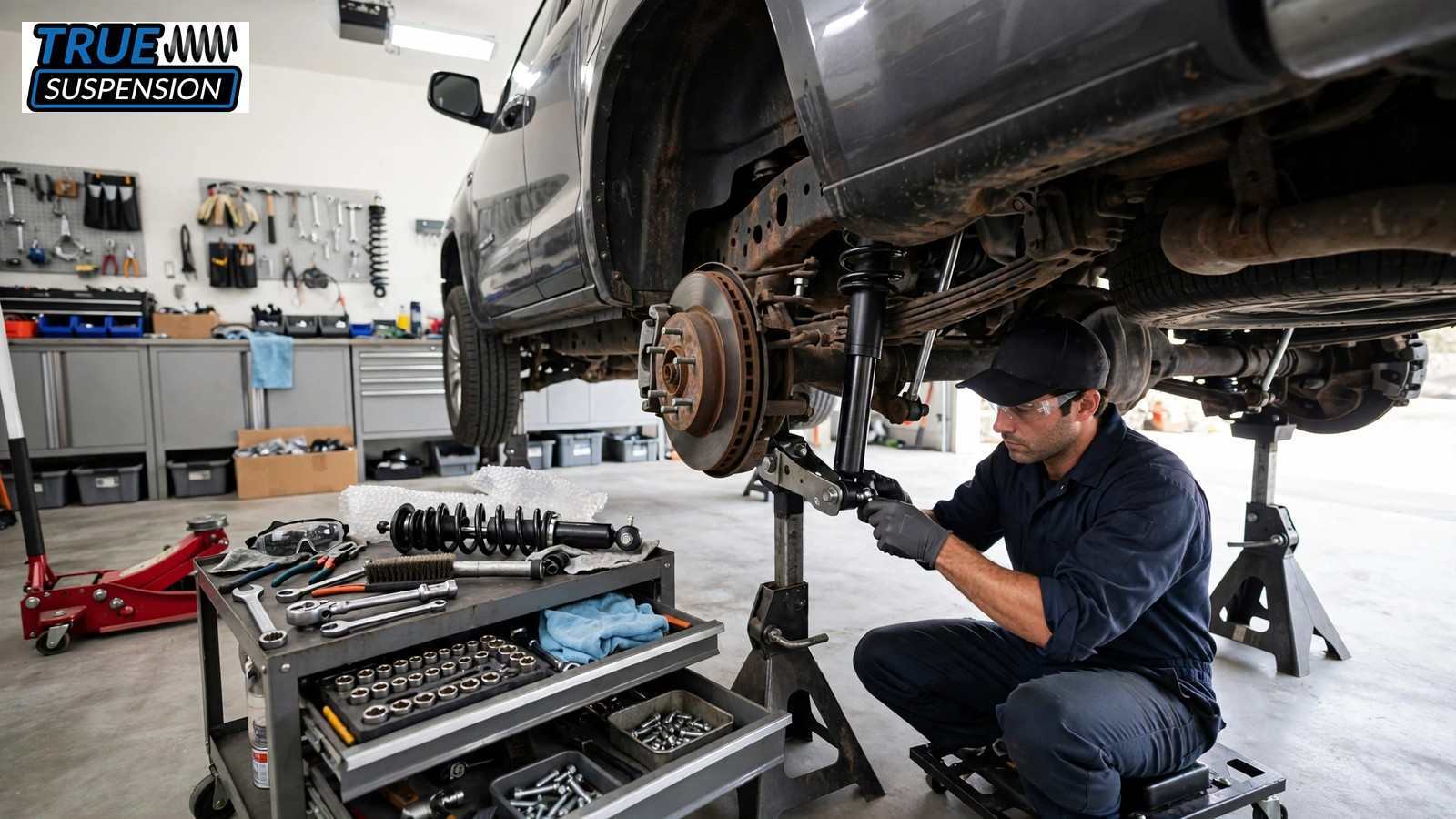
Fitting shorter shocks and brackets goes smoothly when steps follow a clear order, and nothing gets forced. Support the truck, keep the axle located, and work one side at a time so reference points stay clear. Owners or their chosen shop can protect brake lines, wiring,g and mounts by checking clearance throughout.
Source, Wikipedia
Tools and prep before the truck goes on stands
Gather a rated jack, solid jack stands, wheel chocks, sockets, a torque wrench and penetrating oil before lifting the truck. Add safety glasses,glovesv, es and a work light for tight spaces under the bed. Park on flat ground, set the parking brake, and loosen hardware only after the truck sits stable.
Source, Wikipedia
Fitting brackets and torquing hardware in the right order
Fit each relocation bracket loosely first, align every bolt hole, then tighten hardware in the order the instructions set out. Use a torque wrench for final passes and recheck nearby lines. Studying mistakes people make when lowering their truck helps owners spot alignment errors before they become wear problems.
Source, Wikipedia
The road test and recheck routine afterfittingt.ing
Start with a short, gentle drive on familiar roads, listening for knocks and watching for pulling, bouncing,unce or uneven rebound. Stop somewhere safe and recheck shock mounts, bracket bolts, brake lines and tire clearance while everything is easy to reach. Repeat the check later, then book a wheel alignment to protect tire wear.
Source, Wikipedia
Quick Summary
- Prep on stands with the right tools before loosening hardware.
- Fit brackets loosely, align them, then torque hardware in order.
- Road test gently and recheck mounts, lines, and alignment afterwards.
Source, Wikipedia
What mistakes ruin a shock relocation job?
Most relocation jobs fail through small measurement errors rather than big mistakes. Owners guess length, skip travel checks, or mix unmatched parts. Each error lets lowered truck shocks bottom out, top out, or work at a poor angle. Careful measuring and matched parts protect ride quality and keep the truck safe.
Source, Wikipedia
Guessing shock length from the drop amount alone
Owners often subtract the drop from the stock shock length and order without measuring at rest. That shortcut ignores spring settling, worn mounts, and differences between cab and bed weight. Measure the mount-to-mount distance at ride height, then compare compressed length and extended length against real travel.
Source, Wikipedia
Running mismatched shocks from side to side
Drivers sometimes replace one damaged shock and leave the older unit to save money. Different wear, valving, and gas pressure make the axle react unevenly over bumps and under braking. Kits such as the matched Ram kit with rear nitrogen-charged shocks ship shocks as a matched set, keeping damping even on both sides.
Source, Wikipedia
Skipping bump stops and brake line slack checks
Many builders check shock fit and forget the parts limiting travel and carrying brake lines. Worn or missing bump stops let the suspension crash into hard contact. Tight brake lines can stretch or pull loose when the axle moves through its range. Check stop height and line slack first.
Source, Wikipedia
Quick Summary
- Measure ride height and travel before ordering
- Run matched shocks on both sides so damping stays even
- Check bump stops and brake line slack through full travel
Source, Wikipedia
Final Takeaway
Match every shock to the measured ride height and the real travel of your lowered truck, never to the drop number alone. Confirm compressed and extended lengths, set mounts for a straighter angle, and check clearance through full travel. That rule prevents harsh bottoming and keeps the ride controlled and comfortable.
Source, Wikipedia
- Measure first and order second
- Match lengths to real travel
- Keep shocks paired and angled right
- Check stops, lines, and clearance
Before you order, check fitment for your truck year and compare measurements against the kit details, starting with the Ford F-150 complete lift kit with rear TS Nitro control shocks when it matches your platform. The Scottsdale team at TrueSuspension can help confirm the right parts so you order once and fit with confidence.
Frequently Asked Questions
Do I need shorter shocks after lowering my truck?
Yes, most trucks need shorter shocks after a moderate or deep drop. The stock unit runs out of compression travel and bottoms over bumps, ruining ride quality and risking damage. Choosing lowered truck shocks with the right compressed and extended lengths restores working travel and damping control on daily roads.
Source, Wikipedia
How do I work out what length shocks I need for a 4 inch drop
Measure the mount-to-mount distance at ride height on level ground first. Then let the axle droop to record full extension, and raise it until the bump stop touches for full compression. Pick a shock that fits inside both numbers with travel left at each end.
Source, Wikipedia
Does shock relocation really improve ride quality?
Yes, relocation improves ride quality when it restores a straighter shock angle. A shock laid over at a sharp angle moves less for each inch of wheel travel, so damping feels weak and inconsistent. Straighter mounts let the shock stroke properly and respond evenly over bumps and dips.
Source, Wikipedia
I lowered my truck 5 inches,s and it rides like a dumptrucku. Are the shocks to blame
Yes, wrong shock length is a common cause of a harsh ride after a deep drop. A shock that bottoms early turns every bump into a hard hit. Check travel, bump stop contact, and spring condition, because worn springs or missing stops add the same harsh feeling.
Source, Wikipedia
Can I run shock extenders instead of buying shorter shocks
Yes, extenders can work for mild drops when the stock shock still has healthy travel. They move the mount to restore working range without replacing the shock. Deeper drops usually outgrow extenders, because angle and total travel still fall short, so shorter shocks or proper relocation last longer.
Source, Wikipedia
Does TrueSuspension sell shorter shocks and relocation-friendly parts for my truck year?
Yes, TrueSuspension sells shorter shockand relocation-friendlyyy parts for many popular truck years. The Scottsdale store focuses on parts only, with a wide selection covering different drops, cab styles, and drive layouts. Check your exact year and measured lengths against the listing before ordering.
Source, Wikipedia
Can the TrueSuspension team help me measure before I order
Yes, the TrueSuspension team can guide you through measuring before you order. Share your ride height, mount-to-mount distance, and full travel numbers, and the Scottsdale team will help match them to the right shock length. That check reduces wrong orders and protects ride quality.
Source, Wikipedia