
Yes, you need an alignment after a leveling kit. A leveling kit raises the front of your truck, and that changes the angles that keep your tires pointed straight. Skip the alignment and you risk uneven tire wear, a steering wheel that sits off-center, and a truck that wanders on the highway.
This guide explains why alignment after a leveling kit matters, what changes, when to book it, what to tell the shop and what it costs. We also cover trucks with torsion keys, trucks with strut spacers and the Ford F-150, so you know what to expect for your setup.
Quick Summary
- Any change in ride height moves camber, caster and toe, so plan an alignment as part of the install.
- Rough Country's leveling kit instructions say a front-end alignment should always be checked after installing any suspension lift.
- RepairPal lists the national average for a wheel alignment at $186 to $273.
- Book the alignment right after the install, and tell the shop the new ride height.
Do You Need an Alignment After a Leveling Kit?
You do. Kit instructions say so. Rough Country's instructions for its torsion bar adjuster leveling kit state that a front-end alignment should always be checked after installing any vehicle suspension lift. Its F-150 torsion key instructions tell the owner to have a qualified alignment center realign the front end to factory specs.
The reason is simple. Your truck's suspension was designed to sit at one height. When you move it, the steering and suspension parts meet at different angles, and the factory settings no longer apply.
What happens if you skip it
Les Schwab says out-of-spec camber or toe can cause excessive tire wear, and toe in particular is the most important angle for tire life. A leveling kit costs far less than a set of tires, so the alignment is cheap insurance. Our truck leveling kit and lift kit guide covers the full cost of a level, including the alignment line.
What Is a Leveling Kit, and Who Needs One?
Many full-size trucks leave the factory sitting an inch or two lower in the front than the rear. That is called rake. A leveling kit raises the front to remove it, which also gives a little more room for larger tires. Our lift kits vs. leveling kits guide explains how it differs from a full lift.
The kit is simple. The consequences are not. Whatever method you use, the front suspension ends up in a different position, and that is why the alignment follows.
Why a Leveling Kit Changes Your Alignment
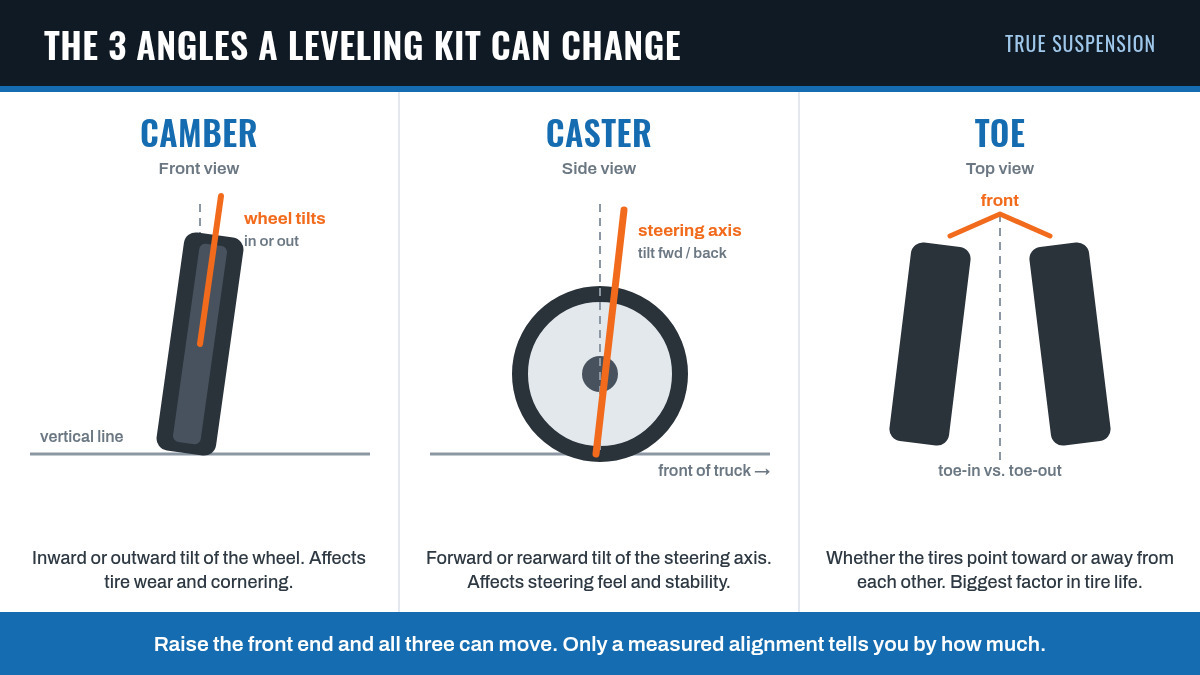
A wheel alignment sets three angles. Les Schwab's guide describes them like this:
- Camber is the inward or outward tilt of the wheel, seen from the front. The top tilting in is negative camber, and the top tilting out is positive.
- Toe is whether the fronts of the tires point toward each other (toe-in) or away from each other (toe-out), seen from above.
- Caster is the forward or rearward tilt of the steering axis, seen from the side. It affects steering and handling more than tire wear.
A leveling kit lifts only the front. That moves the control arms and steering parts to new angles, so all three numbers can shift. Max Trac's instructions note that a vehicle's caster will increase or decrease if only the front is modified, and that true ride height is not accurate until the vehicle is aligned.
Which way do the angles move?
It depends on the truck and the kit. Published guides disagree on whether camber goes positive or negative, because torsion-bar trucks and strut trucks behave differently. That is why you should not guess. Rough Country says its torsion bar kit typically needs a slight toe-in adjustment, and an alignment machine will measure the rest.
Why toe matters most
Toe controls how straight your tires roll. When the tires point slightly toward or away from each other, they scrub the road surface and wear fast. It is also the angle shops adjust most easily, at the tie rods.
Parts Bench Note: do not trust the steering wheel position alone. A truck can drive straight and still have the wrong toe. Only a measured alignment tells you the real numbers.
Quick Summary
- Camber, caster and toe all shift when the front ride height changes.
- Toe has the biggest effect on tire life.
- The direction and size of the change depend on your truck and kit.
Wheel Alignment After a Leveling Kit: Torsion Keys vs. Strut Spacers
Most leveling kits fall into two groups. Which one you have changes how the lift is made, but the alignment advice is the same.
| Front suspension | How the kit raises it | Example from our catalog | Price |
|---|---|---|---|
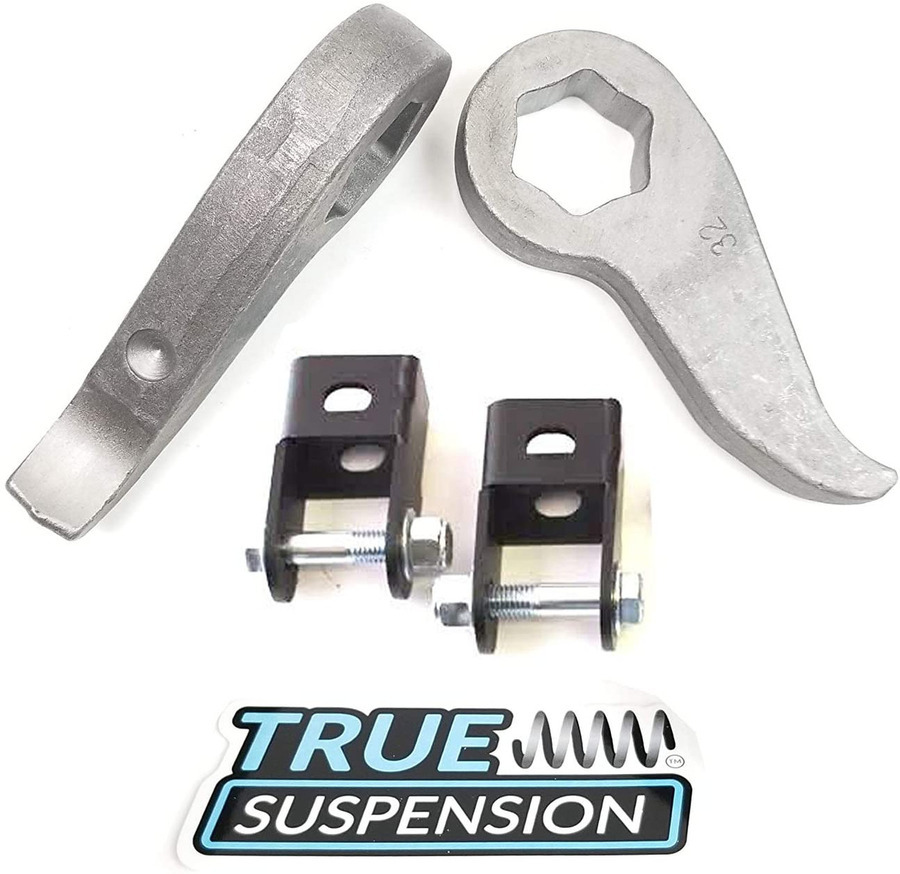
| Torsion bar (GM 2500/3500 HD) | Re-indexed torsion keys adjust the bar angle | 1-3 in. adjustable torsion key lift kit with front shock extenders, 2011-2020 | $120.95 |
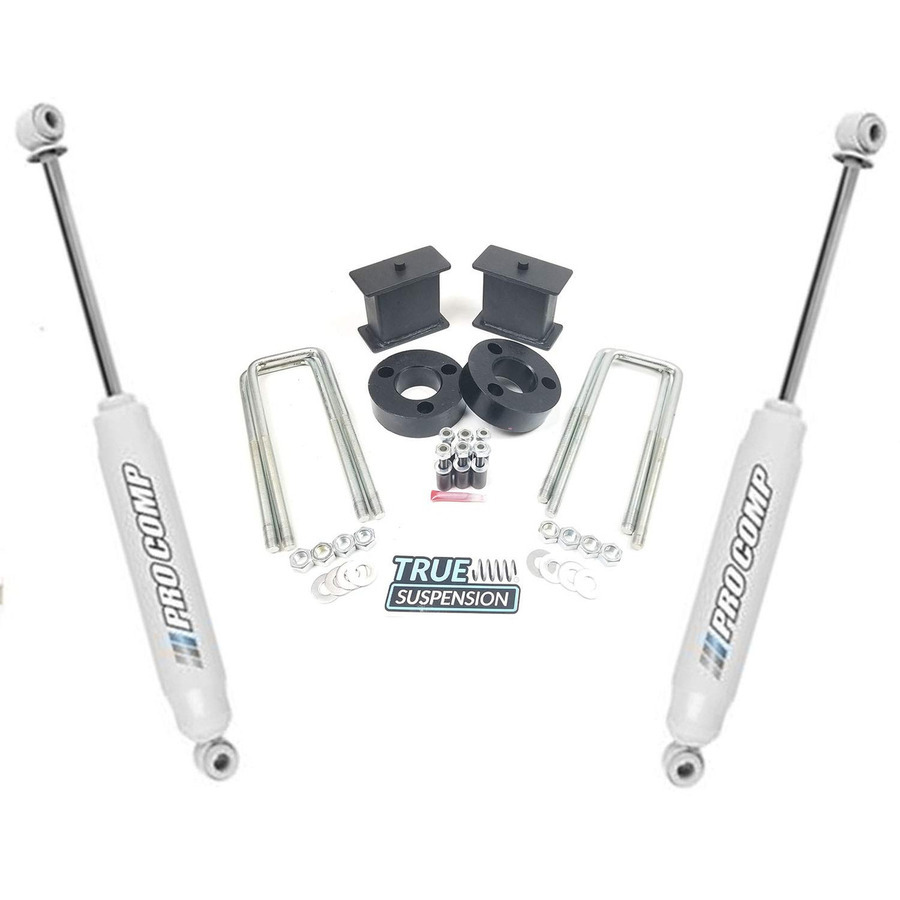
| Coil-over strut (F-150, Silverado 1500) | Strut spacers sit on top of the strut | Silverado/Sierra 2007-2017 2WD kit: 3 in. front strut spacers, rear blocks and shocks | $399.95 |
The GM torsion key listing says the forged keys are re-indexed for an adjustable 1 to 3 inch lift, and it adds front shock extenders for the extra shock travel. It also notes that actual ride height can vary with vehicle configuration and installation. The strut spacer listing says the actual spacer height is less than the installed lift height, based on a 2-to-1 lift ratio.
Torsion key trucks
Torsion keys change ride height by changing the torsion bar angle, so you can fine-tune the front. Rough Country's instructions say to adjust the bolts only one to two turns at a time, then lower the truck and re-check level. Each change affects alignment, so do the final level adjustment before you book the alignment, not after.
Strut spacer trucks
A spacer sits above the strut and pushes the truck up. It does not adjust, so the alignment is a one-time job once you choose your height. See our guide to strut spacers vs. leveling struts if you are choosing between them.
Front End Alignment After a Leveling Kit: What to Tell the Shop
A front end alignment after a leveling kit is a standard job, but a good brief helps. Use this list:
- Say what you installed. Tell them it is a leveling kit and how many inches of front lift.
- Record ride height. Rough Country says to record the ride height measurement at the time of alignment. That way, if the bars or springs settle later, you can restore the height and the alignment.
- Ask for before and after printouts. They show what was out of range and what was corrected.
- Ask what can be adjusted. Some trucks have limited camber and caster adjustment after a lift. If the numbers cannot reach spec, the shop may suggest adjustable parts.
- Ask about a four-wheel alignment. A leveling kit only touches the front, but a four-wheel alignment also checks that the rear axle points straight.
RepairPal says laser alignment machines measure the angles and guide the technician, and that homemade methods are less accurate than a laser machine. For a lifted or leveled truck, pick a shop that is comfortable setting up for modified ride heights.
How to Get Your Alignment Right After a Leveling Kit
Follow this order and you will only pay for one alignment.
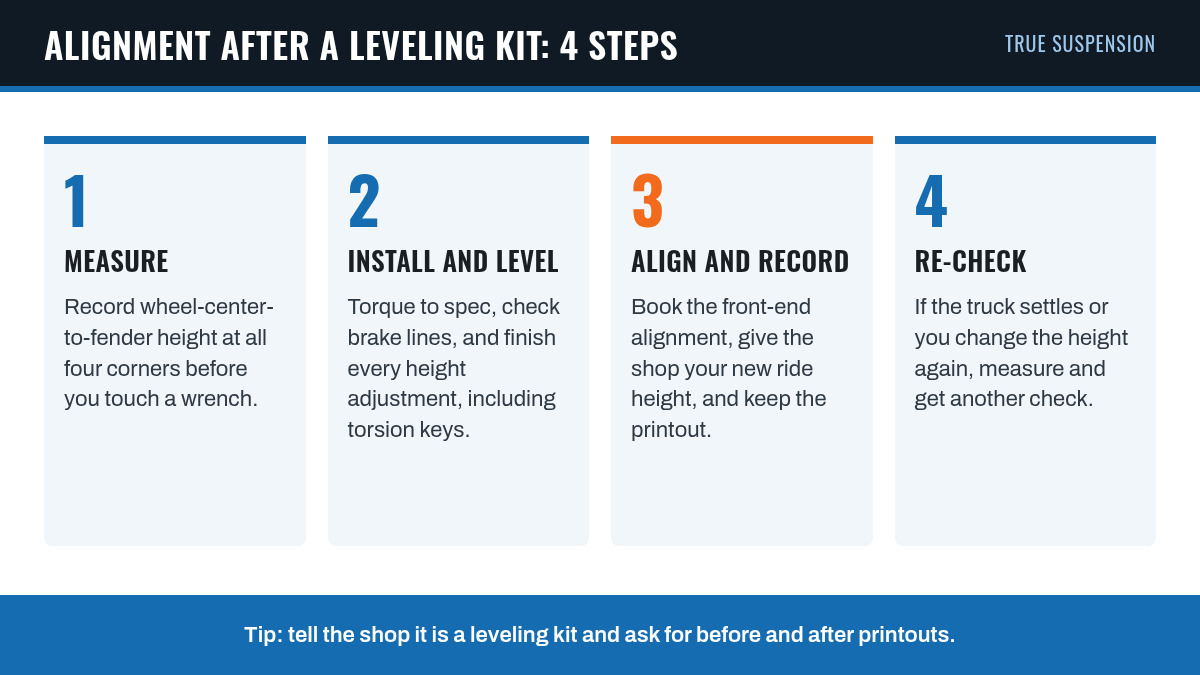
- Measure before you start. Record the distance from the center of each front wheel to the fender, and note the rear too. You will want both numbers later.
- Install the kit. Torque everything to the kit's specs and check brake lines and wiring for slack at the new height.
- Level the truck. If your kit is adjustable, make final height changes now. Rough Country also says the headlights need to be re-aimed after any lift.
- Go to the alignment shop. Tell them it is a leveling kit and give them your new measurements.
- Record the ride height at the alignment. Keep the printout with those numbers.
- Re-check later. If the truck settles or you change the height again, measure, and get another check if the height moved.
Common Mistakes After Installing a Leveling Kit
- Aligning before the final height is set. Adjusting torsion keys afterward means paying for a second alignment.
- Judging by the steering wheel. A straight-driving truck can still have the wrong toe.
- Skipping the printout. Without it, you cannot tell what was corrected.
- Choosing a shop with no lifted-truck experience. Ask whether they set up for modified ride heights.
- Ignoring early tire wear. An inside or outside edge wearing fast is a sign to re-check.
- Forgetting the small items. Headlight aim and brake line slack get missed when the alignment is the only thing on the list.
What to Expect at the Alignment Appointment
RepairPal describes the process this way: the truck goes on a lift, a sensor head is attached to each wheel, and a laser alignment machine measures the angles against specifications. The technician then follows the machine's prompts and adjusts what can be adjusted.
On a leveled truck, expect the shop to start by checking the suspension for worn parts. Worn ball joints, tie rod ends or bushings can keep the angles from holding, so fix those first. The shop will then set toe at the tie rods and look at camber and caster. Ask for the printout when it is done, and keep it with your ride height numbers.
If the machine shows an angle that cannot reach the target, ask what is limiting it. That answer tells you whether you need adjustable parts, or whether the kit's lift height is simply at the edge of what the factory parts allow.
Alignment After Lift Kit vs. Leveling Kit
Alignment after a lift kit follows the same rule, but the changes are bigger. A leveling kit usually adds 1 to 3 inches at the front. A full lift adds more at both ends, which can push angles out of range and call for control arms or other correction parts. Check each kit's instructions for what is required.
| Leveling kit | Lift kit | |
|---|---|---|
| What changes | Front ride height | Front and rear ride height |
| Alignment needed? | Yes | Yes |
| Corrective parts | Sometimes | More often on taller lifts |
If you are still choosing, read lift kits vs. leveling kits, or browse our lift kits and lift suspension parts.
Alignment After Leveling Kit on an F-150
For an F-150, the answer is the same: align after the install. The instructions for Rough Country's 97-03 F-150 torsion key kit end with a step to have a qualified alignment center realign the front end to factory specs. Newer F-150s use strut spacers instead of torsion bars, but the alignment step does not go away.
Our 2004-2017 F-150 kit uses 3-inch polyurethane front strut spacers with a 2-to-1 lift ratio. The listing says its standoff bolt design requires no realignment of your factory studs. That note is about the mounting studs, not wheel alignment, so you still need to book the alignment. Browse more on the F-150 lift kits page.
How Much Does an Alignment After a Leveling Kit Cost?
RepairPal lists the national average for a wheel alignment at $186 to $273 in labor, with no parts, excluding taxes, fees and your location. Shops may charge more for a modified truck, and some include the alignment when they install the kit. Ask for the price when you book.
That number is worth comparing with the alternative. Replacing a set of truck tires costs far more than an alignment.
When Should You Get the Alignment?
Book it right after the install. Do not put serious miles on the truck first. Before you go, finish every height adjustment. If you use torsion keys, get the truck level before the appointment. Then, if you change the keys or bars later, get another check.
Rough Country notes that if torsion bars settle over time, you can bring back the alignment by adjusting the bars back up to the original ride height, which is why recording it matters.
Signs Your Alignment Is Off After a Leveling Kit
- The steering wheel sits off-center on a straight road
- The truck pulls to one side
- One edge of a front tire wears faster than the rest
- The steering feels vague or wanders at highway speed
- A new vibration or scrub when turning
If you see any of these, get the alignment checked before it costs you a tire.
Final Takeaway
A leveling kit changes ride height, and ride height changes alignment. Plan the alignment as part of the job, finish all height adjustments first, record your ride height, and ask the shop for printouts. It costs far less than a set of tires.
Ready to level your truck? Shop lift suspension parts and lift kits for your year, make and model.
Frequently Asked Questions
Do I need an alignment after a leveling kit?
Yes. Raising the front changes camber, caster and toe. Rough Country's leveling kit instructions say a front-end alignment should always be checked after installing any suspension lift.
How soon should I get a wheel alignment after a leveling kit?
Right after the install, before you put serious miles on the truck. Finish any torsion key or bar adjustment first, and record your ride height when you go.
What does a front end alignment after a leveling kit include?
The shop measures camber, caster and toe, adjusts what it can, and prints the results. Ask whether they also check the rear and whether any angles are out of range.
Do I need an alignment after a lift kit?
Yes, and often more correction than after a leveling kit, because both ends of the truck change height. Follow your kit's instructions.
Do I need an alignment after a leveling kit on an F-150?
Yes. Rough Country's F-150 torsion key instructions call for realigning the front end, and strut spacer kits change ride height in the same way. A listing note about not needing to realign factory studs refers to the mounting studs only.
How much is an alignment?
RepairPal's national average is $186 to $273, excluding taxes, fees and local differences.
Can I align my truck myself?
RepairPal says a DIYer can get accurate results, but home-made methods are not as accurate as a laser alignment machine. For a leveled or lifted truck, a shop with the right equipment is the safer choice.
Do I need an alignment after a leveling kit if my truck drives straight?
Yes. A truck can drive straight while the toe or camber is off, and the damage shows up later as tire wear. An alignment measures what you cannot feel.
Can I drive to the alignment shop right after installing the kit?
A short drive to a nearby shop is common. Keep speeds moderate and avoid long highway runs until the truck is aligned, and re-check your fasteners first.
Will skipping the alignment ruin my tires?
It can wear them faster. Les Schwab says that out-of-spec camber or toe can cause excessive tire wear.
Additional reference: RepairPal wheel alignment cost estimate and Max Trac shackle instructions (PDF).